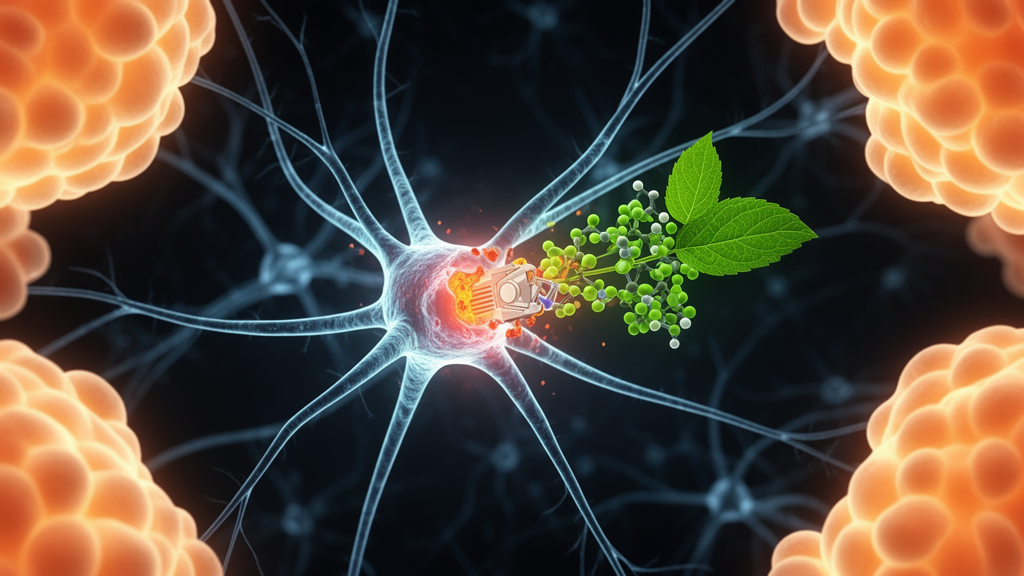
A study combining PC12-cell experiments, rat permanent middle cerebral artery occlusion (pMCAO) models and CKLF1-knockout rats found that notoginsenoside R1 (NGR1), a saponin from Panax notoginseng, reduced ischemic neuronal injury and suppressed pathological metabolic reprogramming. The findings are preclinical and do not establish a clinical benefit in people with stroke.
Researchers first examined NGR1 in differentiated PC12 cells subjected to six hours of oxygen-glucose deprivation (OGD), a laboratory model of ischemic conditions. OGD reduced intracellular ATP and mitochondrial oxygen consumption while increasing extracellular acidification, lactate and lactate dehydrogenase release, indicating impaired mitochondrial function and increased glycolytic activity. NGR1 treatment, particularly at 10 μM, reduced cell death and apoptosis, restored ATP levels and mitochondrial membrane potential, and brought oxygen consumption and extracellular acidification close to baseline values.
The cellular analyses also identified changes in the CKLF1/CCR5 pathway. OGD increased CKLF1, CCR5, IL-1β, phosphorylated mTOR, HIF-1α, PFKFB3 and GLUT3, while AMPK phosphorylation decreased. NGR1 attenuated these changes, and immunofluorescence showed less CKLF1/CCR5/HIF-1α colocalization after treatment. The authors therefore associated NGR1 activity with suppression of the AMPK/mTOR/HIF-1α-linked metabolic shift toward glycolysis.
Computational and biochemical experiments were used to investigate how NGR1 might affect CKLF1. Molecular docking predicted a binding energy of −7.4 kcal/mol, and a 100-nanosecond molecular-dynamics simulation indicated a stable complex. Cellular thermal shift testing showed that 10 μM NGR1 increased CKLF1’s thermal denaturation temperature by 7.4 °C, while DARTS experiments showed reduced proteolysis of CKLF1 in treated cell lysates. These results supported a direct physical interaction, although binding-affinity constants were not measured.
In male Sprague-Dawley rats subjected to pMCAO, intraperitoneal NGR1 at 10, 20 or 40 mg/kg, administered six hours after ischemia, reduced infarct volume and cerebral edema, improved scores in several neurobehavioral tests and preserved neuronal morphology in the cortex and hippocampal CA1 region. NGR1 also reduced serum IL-1β and TNF-α and increased IL-4 and IL-10. Edaravone was used as a positive control, and NGR1 produced stronger suppression of CKLF1 immunoreactivity at equal doses in the reported comparisons.
Brain-tissue analyses showed that ischemia increased CKLF1 expression and the formation of CKLF1 complexes with CCR5 and HIF-1α in the hippocampus and cortex. NGR1 reduced these protein interactions and lowered the expression of glycolytic mediators, including PFKFB3 and GLUT3. These measurements were made in rat tissue, and the study used whole-brain homogenates that could not distinguish metabolic changes by cell type.
The contribution of CKLF1 was tested in additional male rats lacking the CKLF1 gene. Knockout rats had smaller infarcts, less edema and better neurological scores than wild-type ischemic rats. However, NGR1 did not provide additional improvement in infarct volume, edema, neurological function, neuronal morphology, inflammatory cytokines or the measured AMPK/mTOR/HIF-1α and glycolytic protein changes in knockout animals. Loss of CKLF1 therefore removed the measured protective effects of NGR1 in this model.
The authors noted an important limitation in the knockout results: ischemic metabolic changes in the AMPK/mTOR/HIF-1α pathway and glycolytic proteins remained similar in knockout and wild-type rats, even though knockout reduced injury. They consequently characterized CKLF1 as required for NGR1-mediated metabolic correction rather than the only pathway driving ischemic metabolic reprogramming.
Other limitations include the use of a neuron-like cell line that may not reproduce the metabolism of primary mature neurons, incomplete characterization of NGR1’s pharmacokinetic profile, and the short-term, preclinical nature of the rat experiments. The study reports a mechanistic relationship between NGR1, CKLF1 and neuronal injury in experimental models; it does not show that NGR1 treats ischemic stroke in patients.
Subject of Research: Preclinical study of NGR1 and CKLF1-dependent neuronal metabolic reprogramming after ischemic injury
Article Title: Notoginsenoside R1 attenuates ischemic stroke via CKLF1-dependent suppression of neuronal metabolic reprogramming
Article References: Wang, H., Liu, S., Chen, C., Long, J., Yan, Q., Lin, Y., Li, S., Huang, Y., Yang, S., Lin, M., Liu, X., Yi, F., Tan, Y., Chen, N., Ai, Q., & Yang, Y. (2026). Notoginsenoside R1 attenuates ischemic stroke via CKLF1-dependent suppression of neuronal metabolic reprogramming. Frontiers in Pharmacology, 17, Article 1964218. https://doi.org/10.3389/fphar.2026.1964218
Image Credits: AI Generated
DOI: 10.3389/fphar.2026.1964218
Keywords: notoginsenoside R1, ischemic stroke, CKLF1, CCR5, metabolic reprogramming, neuroprotection, PC12 cells, pMCAO rats, Notoginsenoside, attenuates, ischemic, stroke
News Source: Ophelia Keating. (October 21, 2026). Notoginsenoside R1 reduces ischemic injury in cells and rats through CKLF1-dependent metabolic effects. Scienmag.