Mosses, liverworts, ferns and algae may offer an exciting new research frontier in the global challenge of protecting crops from the threat of disease.
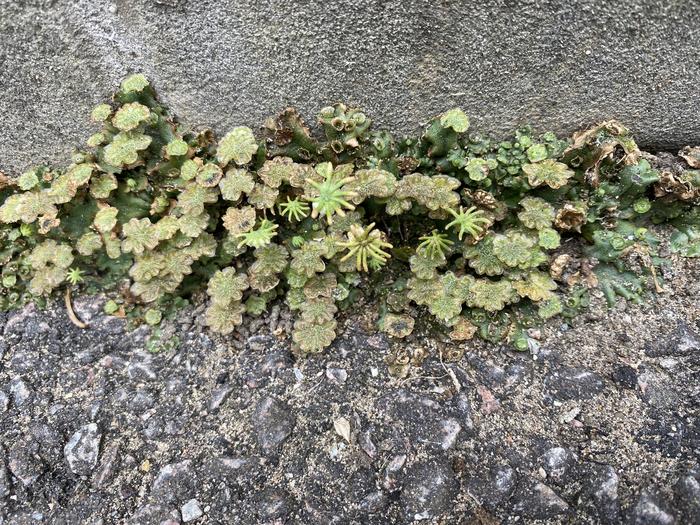
Credit: Dr Phil Carella
Mosses, liverworts, ferns and algae may offer an exciting new research frontier in the global challenge of protecting crops from the threat of disease.
These non-flowering plants are often regarded as unsophisticated compared to their flowering relatives – which include major crops.
However, new research carried out by the John Innes Centre has found that non-flowering bryophytes, and mosses in particular, contain sophisticated immune receptor repertoires.
“The non-vascular and non-flowering bryophytes are often thought of as simple predecessors of flowering plants, but we find that mosses in particular have an expanded set of immune receptors that are perhaps the most complex amongst plants,” said Dr Phil Carella, a group leader at the John Innes Centre and author of the study.
Biotechnological techniques revealed that NLR immune receptor domains which protect plants against pathogens are transferable between flowering and non-flowering plants.
Dr Carella added, “The exciting part of this study is that the diverse immunity found in non-flowering plants like mosses are transferable, so they offer us a source of new resistance genes against pathogens.”
The discovery opens exciting new possibilities for engineering immunity in major crops which are facing a growing threat from emerging and rapidly evolving pathogens exacerbated by climate change.
Plants have developed leucine-rich-repeat (NLR) immune receptors to detect pathogens over millions of years. The NLRs of flowering plants is a well-studied subject, but much less is known about the form and function of receptors from divergent lineages of non-flowering, non-vascular bryophytes.
Bryophytes diverged from flowering plants over 500 million years ago, and knowledge of their immune systems is limited. Using a combination of genetic and computational tools, the team focused on the N-terminal domain of NLR immune receptors that encode the biochemical basis of plant immunity.
They found that there was remarkable structural and functional similarity between immune receptor domains across diverse plant lineages, even though the genetic sequences of these domains was highly variable.
By using transient expression techniques, they transferred immune receptor genes obtained from non-flowering plants like the liverwort Marchantia polymorpha into a flowering plant Nicotiana benthamiana, a type of dwarf tobacco.
Diverse immune receptor domains activated strong immune responses when transiently expressed in flowering plants. The reverse was also true, as researchers found they could functionally transfer an immune domain from flowering plants into to non-flowering plants.
The fact that these domains are transferable and function across plant lineages is a breakthrough in understanding and offers practical applications for crop protection.
“This means that we can use non-flowering plants like mosses or liverworts as a source of new resistance genes against crop pathogens,” explained Dr Carella, “We show that we can indeed leverage the vast evolutionary diversity of immune receptors from across the entirety of the plant kingdom. So, our scope to engineer immunity is therefore a lot larger than we originally thought.”
The team is also exploring the evolutionary novelties encoded in bryophytes as a source of gene discovery that can be used to protect crops against diseases.
Future experiments will seek to identify pathogen molecules that trigger immunity across diverse plants.
The researchers will also try to understand how the components of the immune receptor come together to activate an immune response.
The research also offers biological insight, said Dr Carella, “It is often considered that flowering plants are the pinnacle of evolution. But our study shows that there is likely a complexity of immune receptor biochemistries in non-flowering plants, which could offer a new reservoir for immunity if we can transfer these into crops.”
The N-terminal domains of NLR immune receptors exhibit structural and functional similarities across plant lineages, appears in the July issue of The Plant Cell.
https://academic.oup.com/plcell/article/36/7/2491/7643766
Journal
The Plant Cell
DOI
10.1093/plcell/koae113
Method of Research
Experimental study
Subject of Research
Cells
Article Title
The N-terminal domains of NLR immune receptors exhibit structural and functional similarities across plant lineages
Article Publication Date
7-Jul-2024