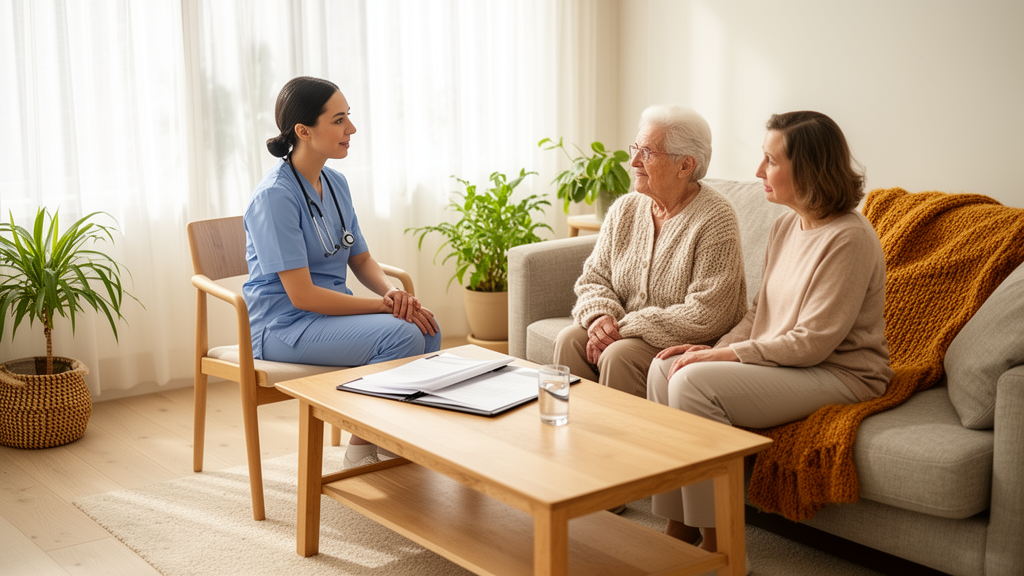
A qualitative study published in BMC Health Services Research examines how general practitioners and cancer care coordinators navigate shared decision-making for home-dwelling patients receiving palliative care in Norway. The research, conducted by a team including Sandra Jahr Svendsen and Ellen Karine Grov, focuses on the collaborative dynamics within primary healthcare settings. As the global population ages and chronic diseases become more prevalent, the demand for high-quality palliative care services in primary healthcare settings is increasing. This study specifically explores the experiences of these two professional groups and how their collaboration influences the quality of care provided to patients in their own homes.
The study employed a qualitative hermeneutic design. Four focus group interviews were conducted with a total of 26 participants. The sample included 12 cancer care coordinators interviewed in autumn 2023 and 14 general practitioners interviewed in spring 2024. Participants were recruited through national professional networks from both urban and rural municipalities across Norway.
The interviews were interpreted using Fleming’s four-phase hermeneutical approach.
Three main themes emerged from the analysis of the focus group data. The first theme, confidence in communication, involves the delicate balance between offering hope and addressing the reality of the patient’s condition.
The second theme, diversity in responsibilities, highlights the varying roles of general practitioners and cancer care coordinators in addressing treatment decisions.
The third theme, understanding one’s role and function in decision-making, is heavily influenced by the complexity of the decisions at hand.
The study concludes that implementing an interprofessional shared decision-making model can enhance collaboration and foster a shared understanding among healthcare providers. By emphasizing confidence in communication and a clear understanding of roles, responsibilities, and functions, the quality of patient-centered care can be improved. The authors suggest that policies should promote frameworks for shared decision-making that empower all team members to contribute to key decisions. Such frameworks can help alleviate patient suffering.
This supportive shared decision-making framework, as outlined in policies, facilitates shared responsibility among healthcare providers. It enables them to achieve patient-centered decisions.
Subject of Research: Shared decision-making in home-based palliative care in Norway
Article Title: Navigating together toward shared decision-making in home-based palliative care – perspectives from general practitioners and cancer care coordinators
Article References: Svendsen, S. J., Grov, E. K., Dobbs, D., & Staats, K. (2026). Navigating together toward shared decision-making in home-based palliative care – perspectives from general practitioners and cancer care coordinators. BMC Health Services Research. https://doi.org/10.1186/s12913-026-16024-6
Image Credits: AI Generated
DOI: 10.1186/s12913-026-16024-6
Keywords: palliative care, shared decision-making, general practitioners, cancer care coordinators, primary healthcare, qualitative research, hermeneutic design, focus group interviews, Norway, interprofessional collaboration, patient-centered care, home-based care, health services research, communication confidence, role clarity, chronic disease management, aging population, rural healthcare, urban healthcare, care coordination
News Source: Ophelia Keating. (November 13, 2026). Norwegian Study Explores Shared Decision-Making in Home Palliative Care. Scienmag.