• HOME
  • NEWS
  • EXPLORE
    • CAREER
      • Companies
      • Jobs
    • EVENTS
    • iGEM
      • News
      • Team
    • PHOTOS
    • VIDEO
    • WIKI
  • BLOG
  • COMMUNITY
    • FACEBOOK
    • INSTAGRAM
    • TWITTER
Wednesday, July 1, 2026
BIOENGINEER.ORG
No Result
View All Result
  • Login
  • HOME
  • NEWS
  • EXPLORE
    • CAREER
      • Companies
      • Jobs
        • Lecturer
        • PhD Studentship
        • Postdoc
        • Research Assistant
    • EVENTS
    • iGEM
      • News
      • Team
    • PHOTOS
    • VIDEO
    • WIKI
  • BLOG
  • COMMUNITY
    • FACEBOOK
    • INSTAGRAM
    • TWITTER
  • HOME
  • NEWS
  • EXPLORE
    • CAREER
      • Companies
      • Jobs
        • Lecturer
        • PhD Studentship
        • Postdoc
        • Research Assistant
    • EVENTS
    • iGEM
      • News
      • Team
    • PHOTOS
    • VIDEO
    • WIKI
  • BLOG
  • COMMUNITY
    • FACEBOOK
    • INSTAGRAM
    • TWITTER
No Result
View All Result
Bioengineer.org
No Result
View All Result
Home NEWS Science News Biology

North pole will be ice-free in summer

Bioengineer by Bioengineer
April 21, 2020
in Biology
Reading Time: 3 mins read
0
IMAGE
Share on FacebookShare on TwitterShare on LinkedinShare on RedditShare on Telegram

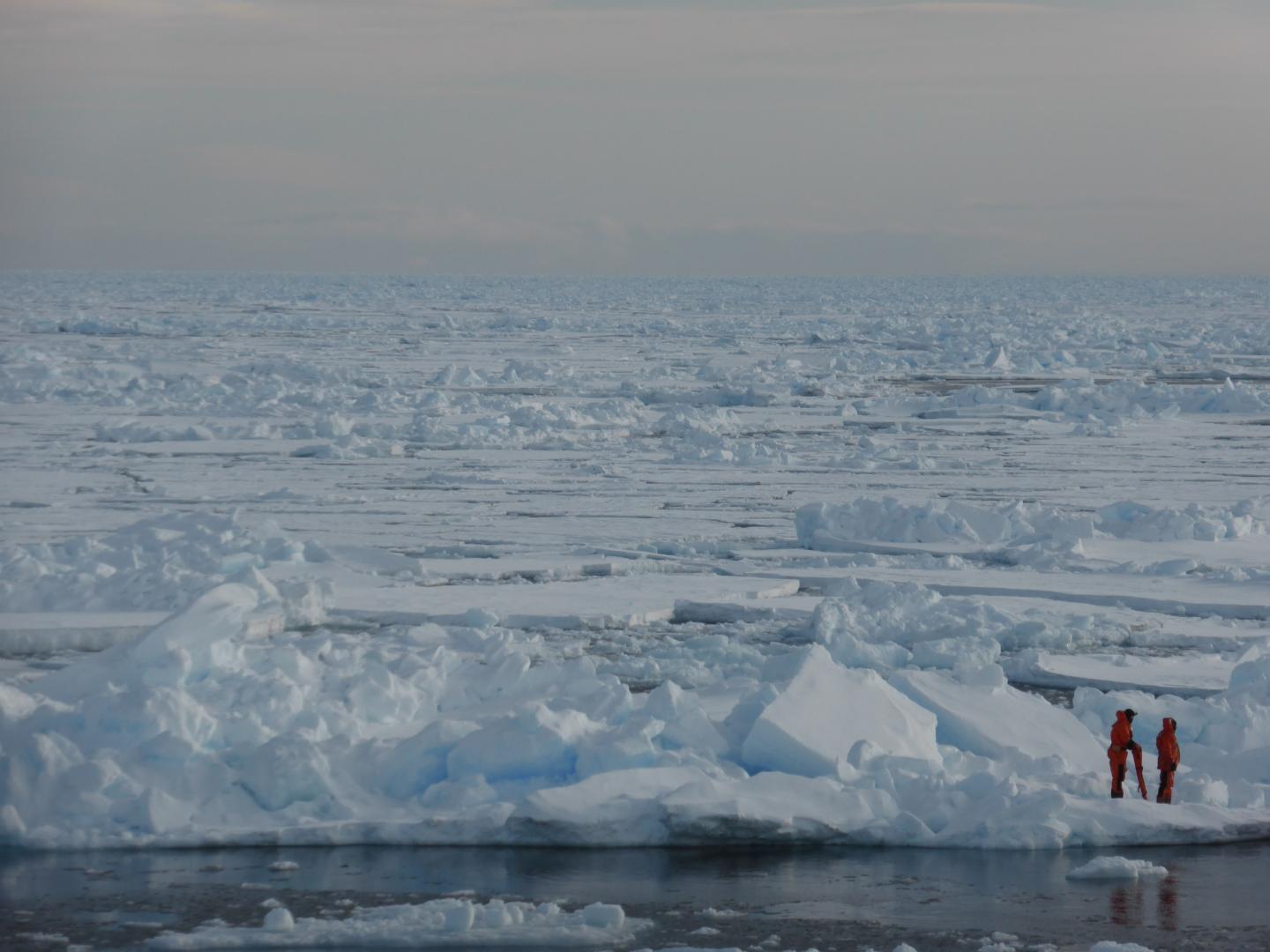
Study shows that if CO2 emissions are reduced rapidly, ice-free years may only occur occasionally
IMAGE

Credit: Dirk Notz

Summer Arctic sea-ice is predicted to disappear before 2050, resulting in devastating consequences for the Arctic ecosystem. The efficacy of climate-protection measures will determine how often and for how long. These are the results of a new study involving 21 research institutes from around the world, including McGill University.

The North Pole is presently covered by sea-ice all year. Each summer, the area of sea-ice coverage decreases and grows again in winter. However, as a result of global warming, the overall area of the Arctic Ocean covered by sea-ice has reduced rapidly over the past few decades. According to the researchers, this substantially affects the Arctic ecosystem and climate. The sea-ice cover is a hunting ground and habitat for polar bears and seals and keeps the Arctic cool by reflecting sunlight.

“While the Arctic sea-ice extent is decreasing during this transition to an ice-free Arctic, the year-to-year variability in extent greatly increases, making life more difficult for local populations and ice-dependent species,” says co-author Bruno Tremblay, Associate Professor in the Department of Atmospheric and Oceanic Sciences at McGill University.

The study published in Geophysical Research Letters analyzed recent results from 40 different climate models. Using these models, the researchers assessed the evolution of Arctic sea-ice cover in a scenario with high CO2 emissions and little climate protection. As expected, summer Arctic sea-ice disappeared quickly in these simulations. Surprisingly, they also found that ice disappeared in some simulations where CO2 emissions were rapidly reduced.

How often the Arctic will lose its sea-ice cover in the future critically depends on future CO2 emissions, the study shows. If emissions are reduced rapidly, ice-free years only occur occasionally. With higher emissions, the Arctic Ocean will become ice-free in most years. This tells us that humans still determine how often the Arctic Ocean will be ice-free in the summer, depending on our future level of emissions, says Tremblay.

###

About the study

“Arctic Sea Ice in CMIP6” by SIMIP Community is published in Geophysical Research Letters. The research was supported by funding from the European Union’s Horizon 2020 Research and Innovation program.

DOI: https://doi.org/10.1029/2019GL086749

Photos (credit: Dirk Notz): https://www.cen.uni-hamburg.de/en/about-cen/news/11-news-2020/2020-04-20-sea-ice-notz.html

About McGill University

Founded in 1821, McGill University is home to exceptional students, faculty, and staff from across Canada and around the world. It is consistently ranked as one of the top universities, both nationally and internationally. It is a world-renowned institution of higher learning with research activities spanning two campuses, 11 faculties, 13 professional schools, 300 programs of study and over 40,000 students, including more than 10,200 graduate students.

McGill’s commitment to sustainability reaches back several decades and spans scales from local to global. The sustainability declarations that we have signed affirm our role in helping to shape a future where people and the planet can flourish.

Media Contact
Shirley Cardenas
[email protected]

Original Source

https://mcgill.ca/newsroom/channels/news/north-pole-will-be-ice-free-summer-321739

Related Journal Article

http://dx.doi.org/10.1029/2019GL086749

Tags: Atmospheric ScienceClimate ChangeClimate ScienceEarth ScienceOceanographyPollution/RemediationTemperature-Dependent Phenomena
Share12Tweet8Share2ShareShareShare2

Related Posts

KAIST Creates AI That Interprets Animal Behavior as a Language — Biology

KAIST Creates AI That Interprets Animal Behavior as a Language

July 1, 2026
New Study Uncovers 3D Genome Organization During Germ Cell Formation Across Evolutionary Time — Biology

New Study Uncovers 3D Genome Organization During Germ Cell Formation Across Evolutionary Time

July 1, 2026

Promising New HIV Vaccine Shows Remarkable Success in Primate Trials

July 1, 2026

UMaine Researchers Discover Woodcocks Charge Deer to Protect Their Nests

June 30, 2026
Please login to join discussion

POPULAR NEWS

  • Detection of EDCs in Breast Milk and Infant Urine Up to Six Months Highlights Early Exposure Risks

    77 shares
    Share 31 Tweet 19
  • Saying Goodbye to PGY-6: Pediatric Fellowship Realities

    103 shares
    Share 41 Tweet 26
  • New Drug Candidate Developed at McMaster Shows Potential for Treating Brain Cancer

    58 shares
    Share 23 Tweet 15
  • KTU Researchers Explore Ultrasound’s Role in Enhancing Blood Flow Beyond Diagnostics

    53 shares
    Share 21 Tweet 13

About

We bring you the latest biotechnology news from best research centers and universities around the world. Check our website.

Follow us

Recent News

New Study Identifies Spring Break as the Most Hazardous Period for Holiday Travel in Florida

Persistent Back Pain? Major Clinical Trial Highlights the Effectiveness of Self-Management Strategies

High-Dose IV Vitamin C Reduces Mortality and Sepsis Risk in Trauma Patients

Subscribe to Blog via Email

Enter your email address to subscribe to this blog and receive notifications of new posts by email.

Join 82 other subscribers
  • Contact Us

Bioengineer.org © Copyright 2023 All Rights Reserved.

Welcome Back!

Login to your account below

Forgotten Password?

Retrieve your password

Please enter your username or email address to reset your password.

Log In
No Result
View All Result
  • Homepages
    • Home Page 1
    • Home Page 2
  • News
  • National
  • Business
  • Health
  • Lifestyle
  • Science

Bioengineer.org © Copyright 2023 All Rights Reserved.