Network leads clinical trials that address antibacterial resistance threats
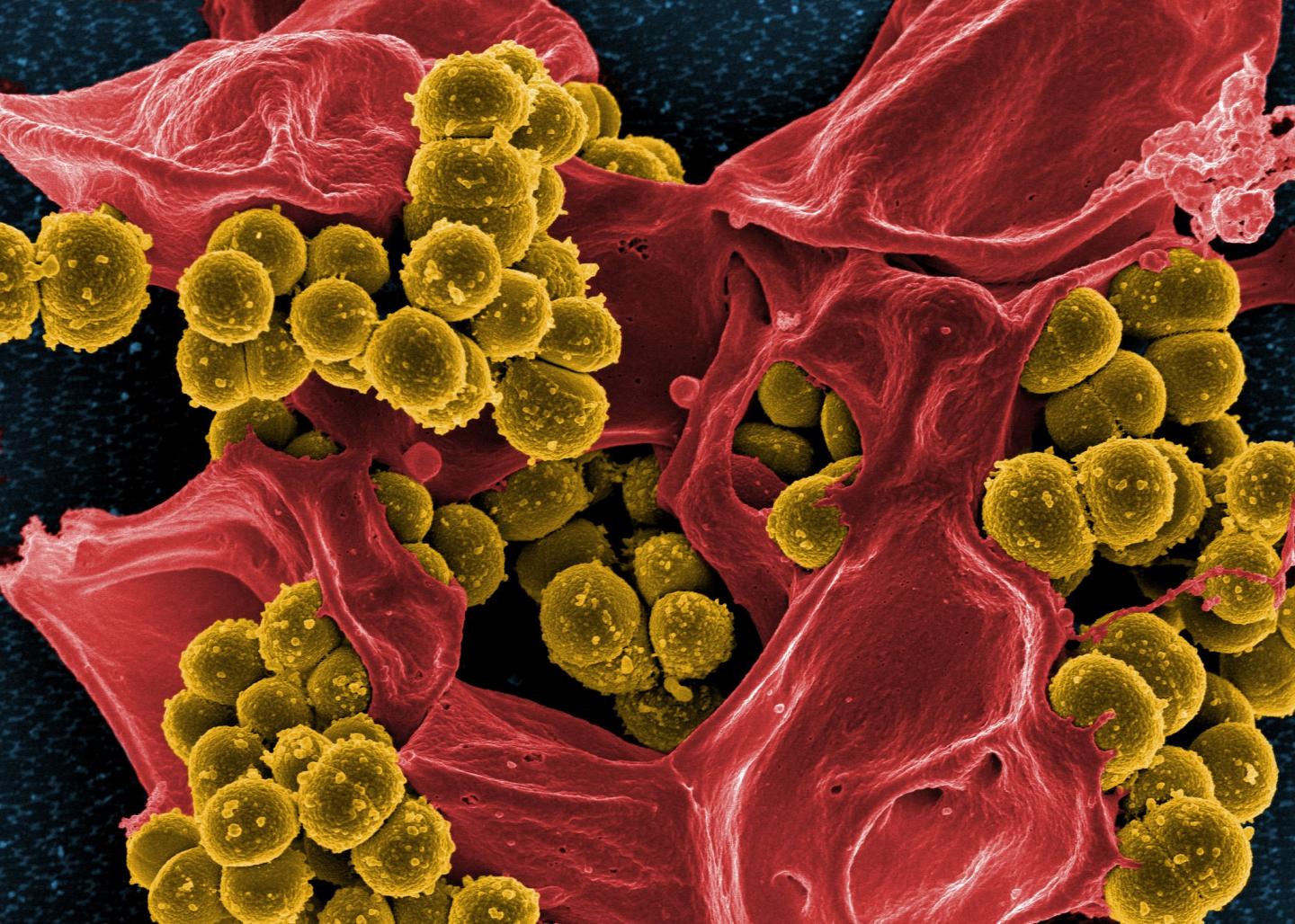
Credit: NIAID
As antibiotic-resistant bacteria become more urgent threats worldwide, the National Institute of Allergy and Infectious Diseases (NIAID), part of the National Institutes of Health, will provide up to $102.5 million in renewed funding over seven years for the Antibacterial Resistance Leadership Group (ARLG). This global consortium of scientific experts leads a comprehensive clinical research network overseeing research on important scientific questions related to antibacterial resistance. The renewed funding from NIAID will provide Duke University, Durham, North Carolina, which will coordinate the ARLG, with support to continue as well as enhance the ARLG’s research activities. According to the Centers for Disease Control and Prevention, antibacterial resistance is already a serious concern–more than 35,000 people die in the United States alone each year from antibiotic-resistant infections.
“Overuse and misuse of antibiotics drives the spread of antibacterial resistance and there is an urgent need for novel strategies to combat these serious infections,” said NIAID Director Anthony S. Fauci, M.D. “The Antibacterial Resistance Leadership Group oversees a unique clinical research network that has made significant contributions to improving the prevention, diagnosis and treatment of antibacterial-resistant infections, and we are pleased to continue our support.”
Since its inception in 2013, the ARLG has established collaborations in 19 countries and conducted more than 40 clinical research studies involving more than 20,000 volunteers. ARLG-supported research has led to more than 130 research articles on a range of topics including antimicrobial stewardship and the epidemiology, diagnosis, and management of infections with antibiotic resistant bacteria. By partnering with other major research networks, such as the European COMBACTE consortium, the ARLG can contribute to large studies with dozens of clinical trial sites working in tandem to enroll study volunteers. Large multicenter studies, such as the Consortium on Resistance Against Carbapenems in Klebsiella pneumoniae (CRACKLE), have yielded important datasets that have generated new understanding and spurred additional research questions.
Under the new grant, the ARLG will place a renewed emphasis on the development of better countermeasures against antibiotic-resistant bacteria. This effort includes a diverse range of innovative, non-antibiotic approaches such as vaccines, bacteriophages (viruses that selectively kill bacteria), and approaches that alter a person’s microbiome to fight infection. The ARLG also will support improved diagnostic tests for identifying antibiotic-resistant microbes. In addition, the ARLG will provide support for research on optimizing the use of existing antibiotics.
Vance Fowler, M.D., of Duke University and Henry Chambers, M.D., of the University of California, San Francisco, will continue to serve as the ARLG principal investigators. The ARLG will now include several centers that will support essential network functions:
- The Scientific Leadership Center will provide administrative guidance and oversight, prioritize the research agenda and ensure timely publication of results.
- The Clinical Operations Center will provide clinical support for studies and trials, select sites, oversee protocol teams and ensure that the trials are aligned with ARLG priorities.
- The Laboratory Center will oversee laboratory research and ensure that the specimens from clinical trials are processed, analyzed, and stored appropriately.
- The Statistics and Data Management Center will assist with study design and analysis to ensure high-quality data.
The ARLG is funded through grant UM1AI104681.
###
NIAID conducts and supports research–at NIH, throughout the United States, and worldwide–to study the causes of infectious and immune-mediated diseases, and to develop better means of preventing, diagnosing and treating these illnesses. News releases, fact sheets and other NIAID-related materials are available on the NIAID website.
About the National Institutes of Health (NIH): NIH, the nation’s medical research agency, includes 27 Institutes and Centers and is a component of the U.S. Department of Health and Human Services. NIH is the primary federal agency conducting and supporting basic, clinical, and translational medical research, and is investigating the causes, treatments, and cures for both common and rare diseases. For more information about NIH and its programs, visit http://www.
NIH…Turning Discovery Into Health®
Media Contact
Elizabeth Deatrick
[email protected]
301-402-1663