The National Institute of Allergy and Infectious Diseases (NIAID), part of the National Institutes of Health, has released its plan for advancing H5N1 influenza basic research and translating those findings into strategies and interventions that can benefit people. The research agenda focuses on four key objectives: increasing understanding of the biology of H5N1 viruses and the factors that influence their ability to transmit and cause disease; developing and evaluating prevention strategies, such as vaccines; advancing existing and novel treatments, including antivirals and monoclonal antibodies; and supporting strategies for detecting H5N1 virus. The NIAID Research Agenda for 2024 H5N1 Influenza – May 2024 aligns with the NIAID role in the federal public health response to the U.S. outbreak of H5N1 influenza in people, dairy cows and other animals.
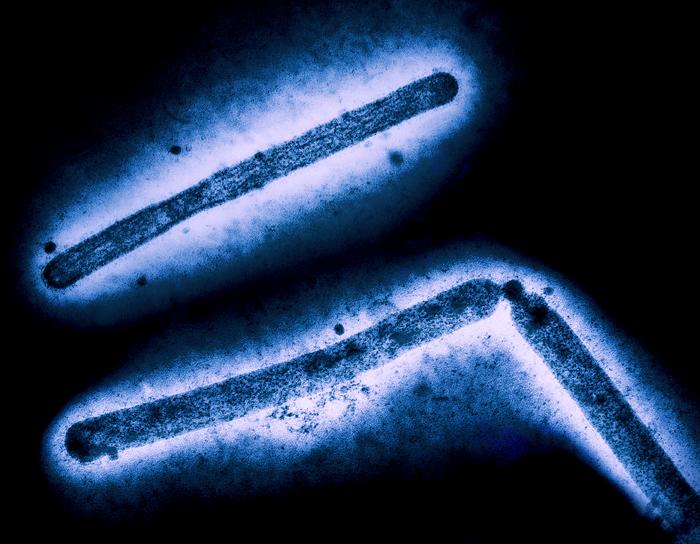
Credit: CDC and NIAID
The National Institute of Allergy and Infectious Diseases (NIAID), part of the National Institutes of Health, has released its plan for advancing H5N1 influenza basic research and translating those findings into strategies and interventions that can benefit people. The research agenda focuses on four key objectives: increasing understanding of the biology of H5N1 viruses and the factors that influence their ability to transmit and cause disease; developing and evaluating prevention strategies, such as vaccines; advancing existing and novel treatments, including antivirals and monoclonal antibodies; and supporting strategies for detecting H5N1 virus. The NIAID Research Agenda for 2024 H5N1 Influenza – May 2024 aligns with the NIAID role in the federal public health response to the U.S. outbreak of H5N1 influenza in people, dairy cows and other animals.
Since 2003, H5N1 influenza viruses have circulated in 23 countries, primarily affecting wild birds and poultry resulting in nearly 900 reported human cases, primarily among people who have had close contact with infected birds. In the past few years, however, a highly pathogenic avian influenza virus called HPAI H5N1 has spread to infect more than 50 animal species. In late March 2024, an HPAI H5N1 outbreak was reported among dairy cows in Texas. Although the virus so far has not shown genetic evidence of acquiring the ability to spread from person-to-person, public health officials are closely monitoring the outbreak as part of overarching pandemic preparedness efforts.
The NIAID H5N1 research agenda builds on the Institute’s longstanding influenza research efforts. It addresses the current outbreak in U.S. dairy cows including potential human-to-human transmission of H5N1 influenza viruses. NIAID will leverage both its domestic and international research infrastructures to achieve the plan’s objectives.
WHAT:
NIAID Research Agenda for 2024 H5N1 Influenza – May 2024
WHO:
NIAID Director Jeanne Marrazzo, M.D., M.P.H., is available to discuss the research agenda.
NIAID conducts and supports research—at NIH, throughout the United States, and worldwide—to study the causes of infectious and immune-mediated diseases, and to develop better means of preventing, diagnosing and treating these illnesses. News releases, fact sheets and other NIAID-related materials are available on the NIAID website.
About the National Institutes of Health (NIH): NIH, the nation’s medical research agency, includes 27 Institutes and Centers and is a component of the U.S. Department of Health and Human Services. NIH is the primary federal agency conducting and supporting basic, clinical, and translational medical research, and is investigating the causes, treatments, and cures for both common and rare diseases. For more information about NIH and its programs, visit https://www.nih.gov/.
NIH…Turning Discovery Into Health®