The National Institutes of Health has launched a clinical trial testing whether a monoclonal antibody, dupilumab, can reduce asthma attacks and improve lung function and asthma symptoms in children with poorly controlled allergic asthma who live in low-income urban neighborhoods. The investigators also aim to define the activity levels of asthma-associated gene networks that correspond to specific health outcomes during antibody treatment in these children, most of whom are anticipated to be Black or Hispanic. The National Institute of Allergy and Infectious Diseases (NIAID), part of NIH, is sponsoring and co-funding the trial, called Prevention of Asthma Exacerbations Using Dupilumab in Urban Children and Adolescents, or PANDA.
Credit: NHLBI
The National Institutes of Health has launched a clinical trial testing whether a monoclonal antibody, dupilumab, can reduce asthma attacks and improve lung function and asthma symptoms in children with poorly controlled allergic asthma who live in low-income urban neighborhoods. The investigators also aim to define the activity levels of asthma-associated gene networks that correspond to specific health outcomes during antibody treatment in these children, most of whom are anticipated to be Black or Hispanic. The National Institute of Allergy and Infectious Diseases (NIAID), part of NIH, is sponsoring and co-funding the trial, called Prevention of Asthma Exacerbations Using Dupilumab in Urban Children and Adolescents, or PANDA.
Dupilumab is approved by the U.S. Food and Drug Administration as an add-on maintenance treatment for certain types of moderate-to-severe asthma in people ages 6 years and older. However, little data exist on the effectiveness of the drug in Black and Hispanic children, even though severe asthma disproportionately affects U.S. children in these racial and ethnic groups. The new NIAID study will help fill this knowledge gap.
“We need to find out how well approved asthma drugs work for disadvantaged children of color living in urban areas, and whether biological markers can help predict how the drugs affect their asthma,” said NIAID Director Anthony S. Fauci, M.D. “The PANDA trial is an important step toward these goals.”
NIAID, Regeneron Pharmaceuticals, Inc., and Sanofi are co-funding the Phase 2 trial. The NIAID-funded Childhood Asthma in Urban Settings (CAUSE) Network is conducting the study at seven medical centers located in Aurora, Colorado; Boston; Chicago; Cincinnati; New York and Washington, D.C. Leading the trial is Daniel J. Jackson, M.D., professor of pediatrics and medicine in the School of Medicine and Public Health at the University of Wisconsin-Madison. Regeneron and Sanofi are donating dupilumab and a matched placebo for the trial.
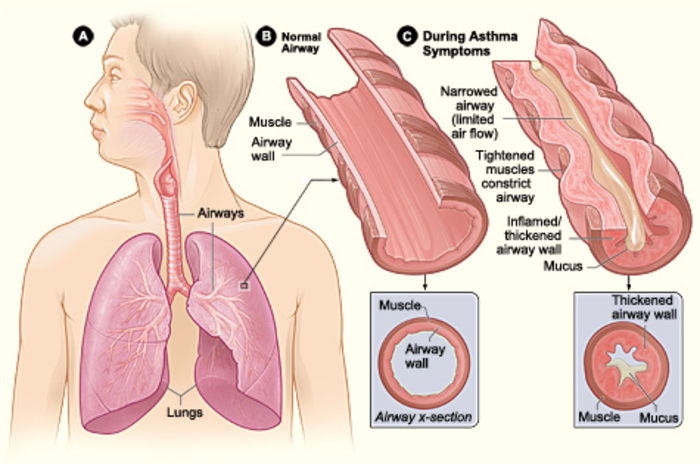
Chronic inflammation of the airways is a prominent feature of asthma. During an asthma attack, the airway lining swells, muscles around the airways contract, and the airways produce extra mucus, substantially narrowing the space for air to move in and out of the lungs. An estimated 2.26 million U.S. children and adolescents experienced an asthma attack in 2019, according to the Centers for Disease Control and Prevention.
Black and Hispanic children who live in low-income urban environments in the United States are at particularly high risk for asthma that is prone to attacks. These children often have many allergies and are exposed to both high levels of indoor allergens and traffic-related pollution, which can make their asthma even more difficult to control.
In an earlier study, NIAID-supported investigators identified numerous networks of genes that are activated together and are associated with asthma attacks in minority children and adolescents living in low-income urban settings. Some of these gene networks are specifically associated with a systemic allergic response called Type 2 inflammation, shown to play a major role in asthma in this population. Because dupilumab works by blocking interleukin 4 and interleukin 13, two small proteins involved in Type 2 inflammation, the PANDA investigators hypothesize that the drug will reduce asthma attacks and improve lung function and asthma symptoms in study participants.
The PANDA study team will enroll approximately 240 participants ages 6 to 17 years who have poorly controlled allergic asthma that is prone to attacks and who have biological markers of Type 2 inflammation. The children will be assigned at random in a 2:1 ratio to receive injections of either dupilumab or a placebo every two weeks for a year. No one will know who receives which type of injection until the end of the trial. All participants also will receive asthma care based on guidelines developed under the auspices of the National Heart, Lung, and Blood Institute, part of NIH.
The PANDA study team will measure participants’ lung function and markers of airway inflammation numerous times during the trial. The study team also will collect nasal secretions several times after the first injection―mainly within the first two weeks―and twice after the last injection. In addition, when a participant has a cold, which can make asthma symptoms worse, the study team will collect blood samples and nasal secretions.
RNA, a form of genetic material, will be extracted from cells in the nasal secretions and will be sequenced and analyzed to determine the activity of the gene networks identified in the earlier study. The PANDA investigators will examine relationships between the activity levels of these networks and the children’s clinical responses to dupilumab. In particular, the researchers will look for changes in gene network activity over time and will explore whether activity levels at one point can forecast a later clinical response. The scientists hope this information will help clarify how dupilumab works at the molecular level and why some children who receive the drug nevertheless have asthma attacks.
More information about the PANDA trial, including study site locations and contacts, is available in ClinicalTrials.gov under study identifier NCT05347771.
NIAID conducts and supports research—at NIH, throughout the United States, and worldwide—to study the causes of infectious and immune-mediated diseases, and to develop better means of preventing, diagnosing and treating these illnesses. News releases, fact sheets and other NIAID-related materials are available on the NIAID website.
About the National Institutes of Health (NIH): NIH, the nation’s medical research agency, includes 27 Institutes and Centers and is a component of the U.S. Department of Health and Human Services. NIH is the primary federal agency conducting and supporting basic, clinical, and translational medical research, and is investigating the causes, treatments, and cures for both common and rare diseases. For more information about NIH and its programs, visit www.nih.gov.
NIH…Turning Discovery Into Health®