


Stanley Hazen, M.D., Ph.D., Mark Brown, Ph.D., and their teams will continue to study the role of microbial pathways and cardiometabolic diseases
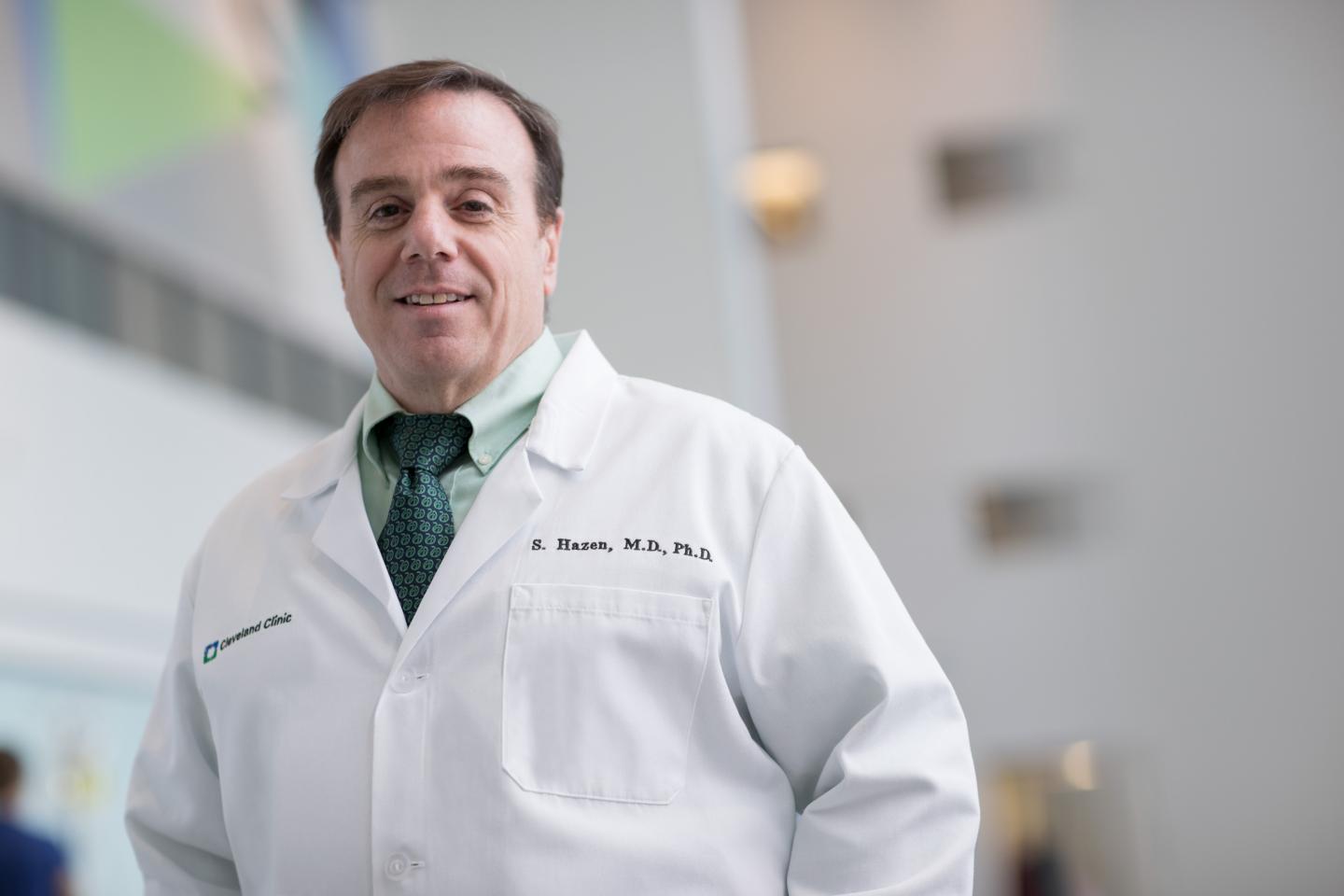
Credit: Cleveland Clinic
CLEVELAND: The National Institutes of Health has awarded more than $12 million to Cleveland Clinic researchers to study the critical link between gut microbial pathways and the development of cardiometabolic diseases.
The team is led by Stanley Hazen, M.D., Ph.D, director of Cleveland Clinic’s Center for Microbiome & Human Health.
Cardiometabolic diseases encompasses cardiovascular conditions like heart attack, stroke, hypertension and heart failure and metabolic diseases such as type 2 diabetes and obesity.
Dr. Hazen and his collaborators on the projects – J. Mark Brown, Ph.D.; Zeneng Wang, Ph.D.; Lynn Hajjar, Ph.D.; and Joe DiDonato, Ph.D. – will explore the concept that gut microbes act as a key endocrine “organ” that converts digested nutrients into chemical signals that function like hormones, creating physiological changes in the person. The researchers will focus on specific novel pathways linked to atherosclerosis, thrombosis and obesity, as well as the participation of specific gut microbe-driven pathways in increased susceptibility to cardiovascular and metabolic diseases.
The new research program is one of the first Program Project grants funded by NIH focused on the gut microbiome, a rapidly growing field that shows numerous links to human health and disease. The award is from the National Heart, Lung and Blood Institute (NHLBI) of the NIH.
The Program will consist of three specialized Projects and four supporting cores. The Projects will:
- explore how newly identified gut microbial pathways affect thrombosis and atherosclerosis
- investigate how microbial metabolites act like hormones to drive disease in a high-fat environment
- and identify specific microbial genes and metabolites that are responsible for enhancing cardiovascular disease.
The three Projects will be led by Drs. Hazen and Brown, both of Cleveland Clinic’s Lerner Research Institute, and Dr. Michael Fischbach, of Stanford University. The four supporting cores will be led by Drs. Hazen, Brown, Wang and Hajjar, all from the Lerner Research Institute.
“Heart disease is the leading killer in the United States and we are only now beginning to understand this critical area of research,” said Dr. Hazen. “We are grateful to the NIH for this funding and excited about the potential this research has to open up new avenues for improving health and combating cardiovascular disease.”
In addition to his role at the Center for Microbiome & Human Health, Dr. Hazen chairs the Lerner Research Institute Department of Cardiovascular & Metabolic Sciences and is co-section head of Preventive Cardiology & Rehabilitation in the Miller Heart & Vascular Institute of Cleveland Clinic. He also holds the Jan Bleeksma Chair in Vascular Cell Biology and Atherosclerosis.
Dr. Hazen and his team have made pioneering discoveries in atherosclerosis and inflammatory disease research, including the seminal discovery linking gut microbial pathways to cardiovascular disease and metabolic diseases, including atherosclerosis, thrombosis, heart failure and chronic kidney disease. His team showed that TMAO (trimethylamine N-oxide) – a gut bacteria byproduct formed during digestion – contributes to the development of cardiovascular disease, including heart attacks and strokes.
High levels of TMAO in the blood have been shown to be a powerful tool for predicting future heart attack, stroke and death risks, according to previous research initially spearheaded by Dr. Hazen and his team, and subsequently replicated around the world. TMAO testing is now widely available and in clinical use as a result.
###
Dr. Hazen was elected to the prestigious National Academy of Medicine in 2016 and was named by the American Heart Association (AHA) as a Distinguished Scientist for 2017.
Dr. Hazen is named as co-inventor on pending and issued patents held by the Cleveland Clinic relating to cardiovascular diagnostics and therapeutics, and has the right to receive royalty payment for inventions or discoveries related to cardiovascular diagnostics or therapeutics. Dr. Hazen also reports having been paid as a consultant for P&G, and receiving research funds from P&G.
About Cleveland Clinic
Cleveland Clinic is a nonprofit multispecialty academic medical center that integrates clinical and hospital care with research and education. Located in Cleveland, Ohio, it was founded in 1921 by four renowned physicians with a vision of providing outstanding patient care based upon the principles of cooperation, compassion and innovation. Cleveland Clinic has pioneered many medical breakthroughs, including coronary artery bypass surgery and the first face transplant in the United States. U.S. News & World Report consistently names Cleveland Clinic as one of the nation’s best hospitals in its annual “America’s Best Hospitals” survey. Among Cleveland Clinic’s 66,000 employees are more than 4,200 salaried physicians and researchers and 16,600 nurses, representing 140 medical specialties and subspecialties. Cleveland Clinic’s health system includes a 165-acre main campus near downtown Cleveland, 11 regional hospitals in northeast Ohio, more than 180 northern Ohio outpatient locations – including 18 full-service family health centers and three health and wellness centers – and locations in southeast Florida; Las Vegas, Nev.; Toronto, Canada; Abu Dhabi, UAE; and London, England. In 2018, there were 7.9 million total outpatient visits, 238,000 hospital admissions and observations, and 220,000 surgical cases throughout Cleveland Clinic’s health system. Patients came for treatment from every state and 185 countries. Visit us at clevelandclinic.org. Follow us at twitter.com/CCforMedia and twitter.com/ClevelandClinic. News and resources available at newsroom.clevelandclinic.org.
Media Contact
Alicia Reale
[email protected]



