• HOME
  • NEWS
  • EXPLORE
    • CAREER
      • Companies
      • Jobs
    • EVENTS
    • iGEM
      • News
      • Team
    • PHOTOS
    • VIDEO
    • WIKI
  • BLOG
  • COMMUNITY
    • FACEBOOK
    • INSTAGRAM
    • TWITTER
Sunday, July 12, 2026
BIOENGINEER.ORG
No Result
View All Result
  • Login
  • HOME
  • NEWS
  • EXPLORE
    • CAREER
      • Companies
      • Jobs
        • Lecturer
        • PhD Studentship
        • Postdoc
        • Research Assistant
    • EVENTS
    • iGEM
      • News
      • Team
    • PHOTOS
    • VIDEO
    • WIKI
  • BLOG
  • COMMUNITY
    • FACEBOOK
    • INSTAGRAM
    • TWITTER
  • HOME
  • NEWS
  • EXPLORE
    • CAREER
      • Companies
      • Jobs
        • Lecturer
        • PhD Studentship
        • Postdoc
        • Research Assistant
    • EVENTS
    • iGEM
      • News
      • Team
    • PHOTOS
    • VIDEO
    • WIKI
  • BLOG
  • COMMUNITY
    • FACEBOOK
    • INSTAGRAM
    • TWITTER
No Result
View All Result
Bioengineer.org
No Result
View All Result
Home NEWS Science News Biology

Night-time lighting changes how species interact

Bioengineer by Bioengineer
July 26, 2018
in Biology
Reading Time: 2 mins read
0
Share on FacebookShare on TwitterShare on LinkedinShare on RedditShare on Telegram
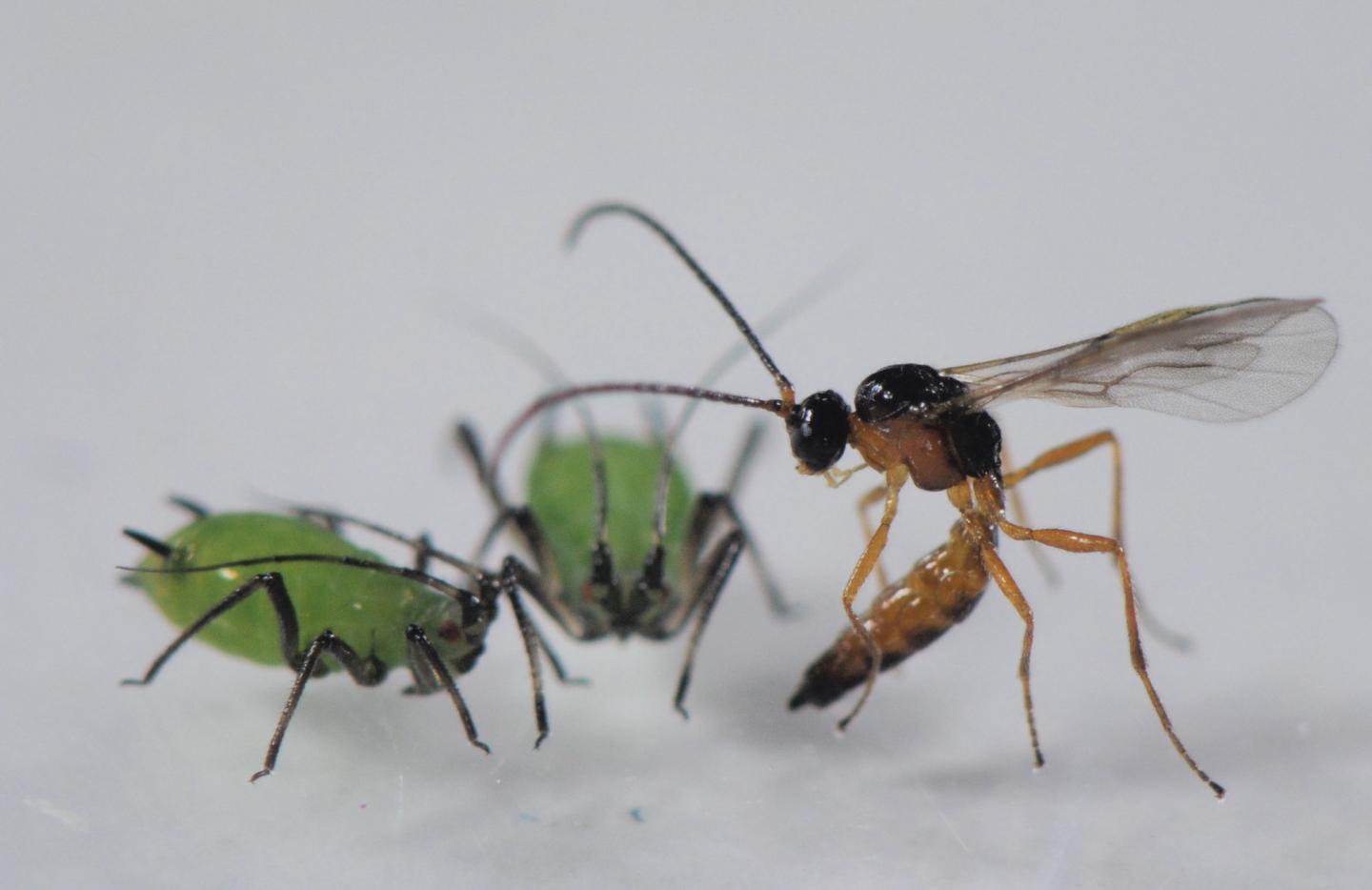
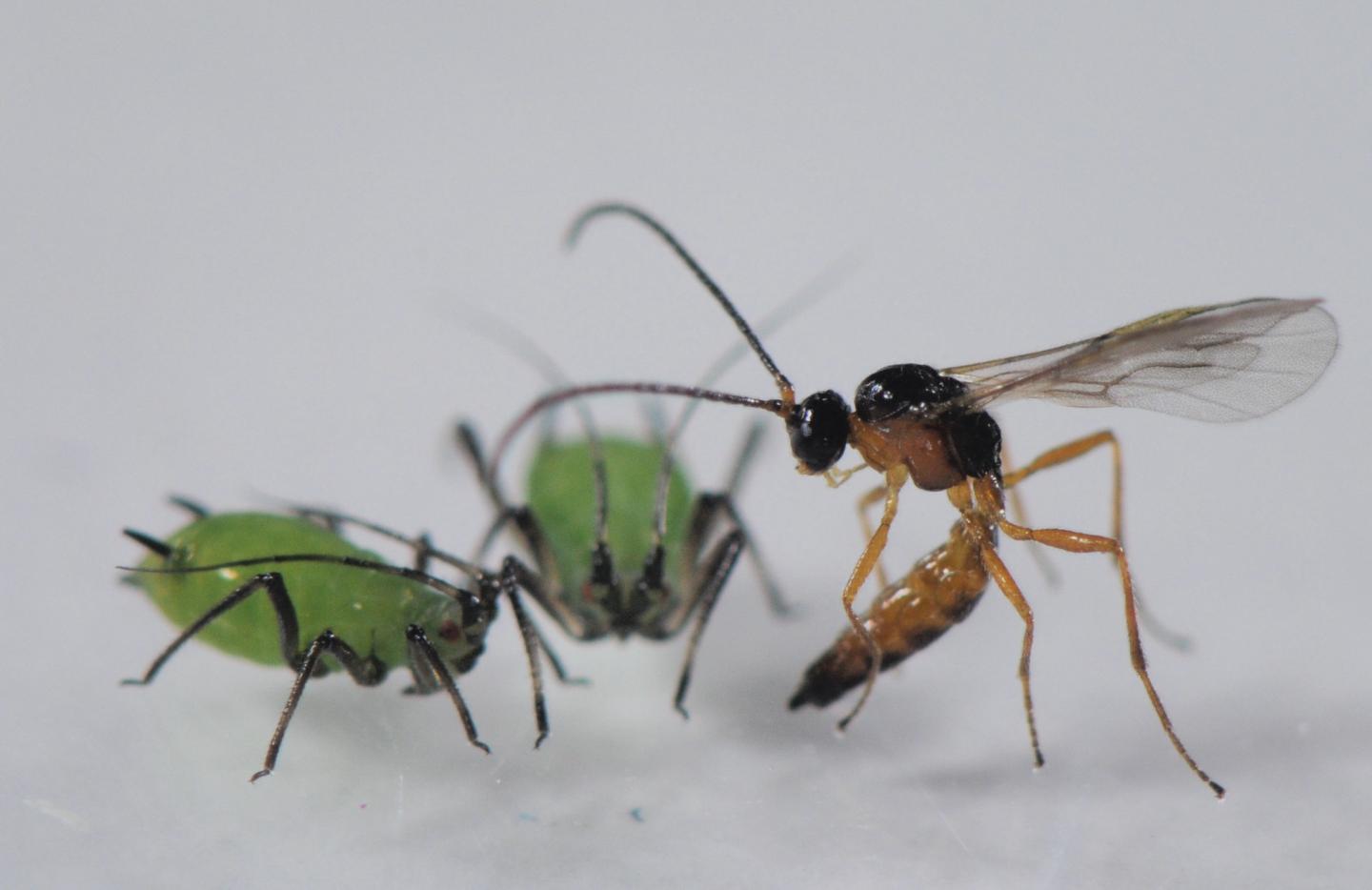
IMAGE

Credit: Dirk Sanders

Night-time lighting from streetlights and other sources has complex and unexpected effects on communities of plants and animals, new research shows. Previous studies have shown that artificial lighting affects a wide variety of individual species, including many moths and bats.

But little has been known about how the feeding links between different species – known as food webs – are changed by artificial light.

By studying communities of plants, aphids and parasitoid wasps in the UK, University of Exeter scientists found the effects of night-time lighting changed depending on the brightness of the light.

At low levels of lighting, equivalent to sky-glow from a nearby town or light further away from street lights, the parasitoid wasps had a hunting advantage that meant they killed twice as many aphids. But with brighter lighting, these wasps became distracted and flew away from the aphids. With much of the world – including 88% of Europe – now subject to some level of artificial night-time lighting, the researchers say it could be having a "widespread impact" on the way many different kinds of species interact.

"We might have expected that any effect of artificial light would increase with the brightness of the light – but that isn't what happened," said Dr

Dirk Sanders, of the Environment and Sustainability Institute on the University of Exeter's Penryn Campus in Cornwall.

"Under low light these wasps became far more efficient hunters, leading to a reduction in the number of aphids, but brighter lighting made them more and more distracted.

"This shows that even low lighting – the most common level of light pollution – can have a major impact.

"It also demonstrates the complex ways lighting affects ecosystems."

The scientists, who carried out the study in Cornwall, chose aphids and parasitoid wasps because these are very common both in the British countryside and more widely.

However, as project lead Professor Kevin Gaston observed: "The potential for similar effects to occur in many different ecosystems is huge."

The paper, published in the journal Current Biology, is entitled: "Low levels of artificial light at night strengthen top-down control in insect food web."

###

It was funded by the Natural Environment Research Council.

Media Contact

Alex Morrison
[email protected]
44-013-927-24828
@uniofexeter

http://www.exeter.ac.uk

Related Journal Article

http://dx.doi.org/10.1016/j.cub.2018.05.078
Share12Tweet8Share2ShareShareShare2

Related Posts

Han directs new $15M NIH center for organ-on-chip technology

Han directs new $15M NIH center for organ-on-chip technology

July 11, 2026
Bacteriophages Enable Next-Gen Smart Pathogen Detection Sensors

Bacteriophages Enable Next-Gen Smart Pathogen Detection Sensors

July 10, 2026

Temperature Fluctuations Have Greater Impact Than Previously Believed

July 10, 2026

New Study Uncovers Biology Behind Glioma Cancer Progression

July 10, 2026
Please login to join discussion

POPULAR NEWS

  • Detection of EDCs in Breast Milk and Infant Urine Up to Six Months Highlights Early Exposure Risks

    77 shares
    Share 31 Tweet 19
  • New Drug Candidate Developed at McMaster Shows Potential for Treating Brain Cancer

    58 shares
    Share 23 Tweet 15
  • KTU Researchers Explore Ultrasound’s Role in Enhancing Blood Flow Beyond Diagnostics

    53 shares
    Share 21 Tweet 13
  • 高齢者の骨粗鬆症治療の持続性比較

    51 shares
    Share 20 Tweet 13

About

We bring you the latest biotechnology news from best research centers and universities around the world. Check our website.

Follow us

Recent News

KAIST Creates AI to Detect Early Cerebrovascular Disease Signs at Home

Anthropometric Traits and Metabolic Biomarkers Linked to Pancreatic Cancer Risk

Sedentary Time and Sleep Impact Cognitive Health in Older Diabetics

Subscribe to Blog via Email

Enter your email address to subscribe to this blog and receive notifications of new posts by email.

Join 85 other subscribers
  • Contact Us

Bioengineer.org © Copyright 2023 All Rights Reserved.

Welcome Back!

Login to your account below

Forgotten Password?

Retrieve your password

Please enter your username or email address to reset your password.

Log In
No Result
View All Result
  • Homepages
    • Home Page 1
    • Home Page 2
  • News
  • National
  • Business
  • Health
  • Lifestyle
  • Science

Bioengineer.org © Copyright 2023 All Rights Reserved.