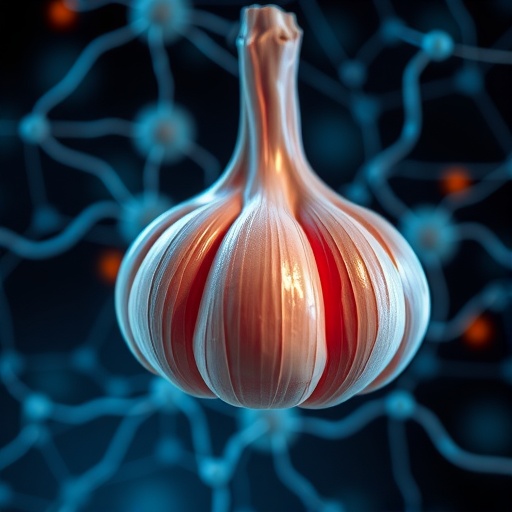
A humble bulb of garlic has long occupied a curious space between folk remedy and pharmacology, and a new study is now giving that reputation a firm molecular footing. Researchers in China have shown that diallyl trisulfide, or DATS, an organosulfur compound released when garlic is crushed or chewed, can shut down a key growth-signaling hub in gastric cancer cells, jam the machinery that drives cell division, and push the cells into self-destruction through the cell’s built-in death receptor pathway. The work, published in Food Science and Biotechnology, offers one of the most detailed mechanistic pictures yet of how this garlic-derived compound acts on one of the world’s most lethal cancers.
Gastric cancer remains a formidable clinical challenge. It ranks among the leading causes of cancer-related death globally, and projections based on the Global Burden of Disease Study 2021 suggest the burden will remain substantial through 2035. Treatment options, from neoadjuvant chemotherapy to preoperative chemoradiotherapy, have improved outcomes for some patients, but advanced disease still carries a poor prognosis. Against this backdrop, food-derived bioactive compounds with defined anticancer mechanisms have attracted growing attention, both for potential chemoprevention and for the possibility of sensitizing tumors to existing therapies.
The research team, led by Jianli Li and Zhongyuan Qu at Harbin University of Commerce, together with colleagues at the Chinese Academy of Agricultural Sciences and the university’s Engineering Research Center on Natural Antineoplastic Drugs, focused on AGS human gastric carcinoma cells. Their central question was upstream of the usual suspects: what happens at the level of GP130, the shared signal-transducing receptor subunit, also known as glycoprotein 130, that relays interleukin-6 family cytokine signals into the cell?
GP130 sits at the top of a signaling cascade with outsized importance in cancer. When cytokines such as IL-6 engage the receptor complex, GP130 activates the JAK kinases, which in turn phosphorylate STAT3, a transcription factor that drives expression of genes promoting proliferation, survival, and immune evasion. GP130 signaling also feeds into two other pro-survival pathways, the phosphoinositide 3-kinase–AKT axis and the RAS–RAF–MEK–ERK cascade. Chronic inflammation-associated cancers, gastric cancer among them, frequently exploit this triad. Constitutive GP130 activation has been shown to accelerate the transformation of human hepatocytes, and IL-6/STAT3 signaling promotes invasion and metastasis in gastric cancer through epithelial-to-mesenchymal transition.
The new findings show that DATS strikes at this hub directly. In treated AGS cells, GP130 protein levels dropped, and downstream phosphorylation of both STAT3 and AKT and ERK declined accordingly. With the pro-survival signaling network weakened, a transcription factor named FOXO3a, normally held in check by AKT-mediated phosphorylation and exclusion from the nucleus, was activated. FOXO3a is a well-established regulator of cell-cycle arrest and apoptosis genes, and its reactivation is a recurring theme in the response of tumor cells to dietary phytochemicals.
Perhaps the most striking effects, however, were on mitosis itself. The researchers observed that DATS-treated cells accumulated in mitotic arrest, a state confirmed biochemically by increased phosphorylation of histone H3, the canonical molecular marker of condensed mitotic chromosomes. The compound disrupted the CDK1–cyclin B1 axis, the engine that drives cells into and through mitosis. CDK1 activity is governed by cyclin B1 binding and by the phosphatase CDC25C, and perturbation of this axis is a recognized route to so-called mitotic catastrophe, a form of cell death that occurs when cells with damaged mitotic machinery attempt, and fail, to divide.
The spindle assembly checkpoint, the quality-control system that halts anaphase until every chromosome is properly attached to the mitotic spindle, was also altered. Proteins such as BUBR1 and BUB1, which coordinate checkpoint signaling through Aurora kinase B-mediated phosphorylation, showed changed levels in the treated cells. Consistent with a stressed and disorganized mitotic apparatus, the actin microfilament cytoskeleton became disorganized, compounding the mechanical chaos inside the dividing cells. Defects in mitotic checkpoint control are a hallmark of cancer and a known route to drug resistance, which makes deliberate checkpoint sabotage a double-edged but therapeutically interesting strategy: in a tumor cell already teetering on the edge of genomic chaos, forcing an unresolved mitotic arrest tends to end in apoptotic death.
That is precisely what the researchers documented next. DATS triggered apoptosis in the AGS cells through the extrinsic, or death receptor–dependent, pathway, rather than relying solely on intrinsic mitochondrial cues. Death receptor apoptosis engages cell-surface receptors such as those in the tumor necrosis factor family, activating caspase cascades directly from outside the cell. This extrinsic route, combined with the mitotic catastrophe primed by checkpoint disruption, means DATS attacks gastric cancer cells from two distinct directions at once.
The study is not the first to implicate DATS in gastric cancer. Previous work showed that the compound suppresses tumor growth by attenuating the Nrf2/AKT pathway while activating stress kinases p38 and JNK, and that it potentiates the efficacy of cisplatin, a mainstay gastric cancer chemotherapy. DATS has also been reported to induce apoptosis and mitotic arrest in AGS cells through reactive oxygen species–mediated activation of AMP-activated protein kinase, and to enhance the chemosensitivity of gastric cancer cells to docetaxel by epigenetic upregulation of metallothionein 2A, blunting NF-κB activation. More recently, DATS was found to inhibit gastric cancer stem cell properties through the ΔNp63/sonic hedgehog pathway. The new study adds GP130 to this growing roster of molecular targets, positioning the compound as an upstream suppressor of the IL-6 signaling axis rather than a mere downstream cytotoxin.
The authors are careful in their interpretation. They conclude that DATS exerts antiproliferative effects in AGS cells through mitotic disruption and apoptosis, with GP130-related signaling likely representing a contributing component of the response rather than a single sufficient cause. That caution is scientifically appropriate: cell-culture studies cannot establish that GP130 suppression alone accounts for the phenotype, and DATS is known to be a chemically reactive compound that modifies multiple cellular proteins. But the convergence of evidence, reduced GP130, diminished STAT3, AKT, and ERK phosphorylation, FOXO3a activation, CDK1–cyclin B1 disruption, checkpoint protein alteration, cytoskeletal disarray, and death receptor apoptosis, paints a coherent picture of a food-derived molecule with genuine, multi-pronged anticancer pharmacology.
For the food science community, the findings carry a broader message. Garlic byproducts are increasingly studied as sources of valuable bioactive compounds, and organosulfur compounds such as DATS and its cousin diallyl disulfide have been investigated as tools to overcome drug resistance in other cancers, including breast cancer and lung cancer, where DATS modulated gut microbiota and the PPARγ/NF-κB pathway in a tobacco carcinogen-induced model. Mechanistic studies of this kind help bridge the gap between dietary epidemiology, which has long suggested inverse associations between allium vegetable intake and gastric cancer risk, and molecular biology capable of explaining why.
Translational caveats remain, of course. Concentrations effective in cultured cells may not be achievable through diet alone, and DATS is chemically unstable in the body, rapidly metabolized. Nanotechnology-based delivery systems, an active frontier in gastric cancer research, may eventually help bridge that gap, and combination strategies with existing drugs such as cisplatin and docetaxel are already supported by preclinical data. What this study contributes is mechanistic clarity: a garlic-derived organosulfur compound can reach up into the IL-6/GP130 signaling hub, collapse the pro-survival network downstream of it, freeze cancer cells in a doomed mitosis, and guide them into apoptosis through their own death receptors. In the ongoing search for gentler, food-inspired weapons against one of the world’s deadliest cancers, that is a meaningful step forward.
The study was supported by the Heilongjiang Provincial Natural Science Foundation, the Basic Research Support Program for Outstanding Young Teachers of Heilongjiang Province, the Fundamental Research Funds in Universities of Heilongjiang Province, and Jixi science and technology research projects. The authors report no competing financial interests. Data are available from the corresponding author upon reasonable request.
Subject of Research: Anticancer mechanisms of diallyl trisulfide, a garlic-derived organosulfur compound, in human gastric cancer cells
Subject of Research: Biology
Article Title: Diallyl trisulfide suppresses GP130-dependent signaling to induce mitotic arrest and death receptor-dependent apoptosis in gastric cancer cells
Article References: Li, J., Ren, H., Zhang, L., Liu, K., Wang, J., Zhou, L., Sun, J., Qu, Z., & Zou, X. (2026). Diallyl trisulfide suppresses GP130-dependent signaling to induce mitotic arrest and death receptor‑dependent apoptosis in gastric cancer cells. Food Science and Biotechnology. https://doi.org/10.1007/s10068-026-02285-8
Image Credits: AI Generated
DOI: 10.1007/s10068-026-02285-8
Keywords: Diallyl trisulfide (DATS), Garlic organosulfur compounds, Gastric cancer, GP130, STAT3, Mitotic arrest, Spindle assembly checkpoint, Death receptor-dependent apoptosis, FOXO3a, CDK1-cyclin B1, AGS cells, Food-derived bioactive compounds
Cite Scienmag News
APA MLA Chicago
Nathaniel Bowman. (September 6, 2026). Garlic compound blocks key signal, triggering gastric cancer cell death. Scienmag. https://scienmag.com/garlic-compound-blocks-key-signal-triggering-gastric-cancer-cell-death/
Nathaniel Bowman. “Garlic compound blocks key signal, triggering gastric cancer cell death.” Scienmag, 6 September 2026, https://scienmag.com/garlic-compound-blocks-key-signal-triggering-gastric-cancer-cell-death/. Accessed 6 September 2026.
Nathaniel Bowman. “Garlic compound blocks key signal, triggering gastric cancer cell death.” Scienmag. September 6, 2026. https://scienmag.com/garlic-compound-blocks-key-signal-triggering-gastric-cancer-cell-death/
Copy citation Download RIS
Tags: apoptosis induction in cancer cellsbioactive compounds from foodbioactive food compounds in cancer therapychallenges in gastric cancer treatmentchemoprevention with garlic compoundsDiallyl trisulfidegarlic and cancer cell death pathwaysgarlic and cancer preventiongarlic compounds and apoptosis in cancer cellsGarlic-derived compoundgarlic’s molecular anti-cancer mechanismsgarlic’s molecular anticancer mechanismsgarlic’s role in chemopreventiongastric cancer cell deathgastric cancer treatmentglobal gastric cancer burdenmolecular mechanisms of garlic in oncologynatural bioactive compounds for cancer preventionnovel mechanisms of garlic in cancer treatmentorganosulfur compounds in cancer therapysignal transduction inhibition in gastric cancertargeting cancer cell division with natural compoundstargeting growth signaling pathways in gastric cancer