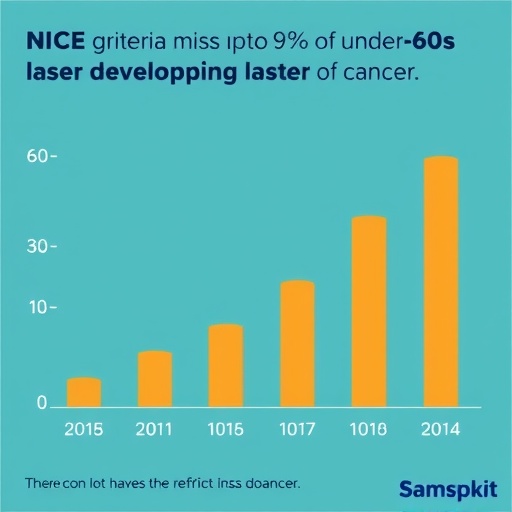
A widely used breast cancer referral system in England may be overlooking the vast majority of women under 50 who are at elevated risk of developing the disease, according to new research from the University of Cambridge and The Institute of Cancer Research, London. The study found that current criteria from the National Institute for Health and Care Excellence (NICE) identified only a small fraction of younger women who later developed breast cancer, while a broader multifactorial assessment could detect substantially more of those at risk.
Breast cancer is the most commonly diagnosed cancer worldwide and accounts for approximately one in four cancer cases among women. Although the disease is more common with increasing age, it remains one of the leading causes of death in women under 50. Detecting elevated risk earlier can create opportunities for enhanced screening, genetic counselling, preventive medication, lifestyle intervention, or other forms of specialist care before cancer develops or while it is still more treatable.
In England, women are generally referred by their GP for specialist breast cancer risk assessment when their family history meets thresholds defined by NICE. These criteria are designed to identify women whose inherited risk may be substantially higher than average, including those with several close relatives affected by breast or related cancers. However, the new analysis suggests that a family-history-based approach alone may fail to capture many women whose risk is influenced by a combination of genetic, reproductive, lifestyle and other factors.
Researchers analysed data from 1,258 women under the age of 50 who took part in the Breast Cancer Now Generations Study between 2004 and 2011. They compared the performance of the NICE referral criteria with several approaches based on BOADICEA, a multifactorial breast cancer risk model developed at the University of Cambridge with support from Cancer Research UK. BOADICEA incorporates information such as family history, genetic variants, reproductive history, lifestyle characteristics and other clinically relevant factors to estimate an individual’s likelihood of developing breast cancer.
The difference between the approaches was striking. Applying the NICE criteria would have referred approximately 1.4% of women under 50 for further assessment, including just 4.4% of those who went on to develop breast cancer within the following decade. By contrast, a full BOADICEA assessment would have classified 26.5% of women as being at above-population risk and eligible for further evaluation. That group included 34.8% of women who subsequently developed breast cancer within 10 years—around eight times as many future cases as the current referral approach identified.
The researchers reported that NICE criteria may miss as many as 95% of women under 50 who develop breast cancer within 10 years, as well as up to 95% of younger women whose risk is higher than average. One major explanation is that 73% of the women in the study who developed breast cancer within the 10-year period did not have a family history of the disease. Because family history is central to the current referral pathway, these women would not necessarily trigger a GP referral, even though their overall risk could be elevated for other reasons.
Multifactorial risk models are designed to address this limitation by combining many modest risk factors rather than relying on a single indicator. Genetic information may include rare inherited mutations with strong effects, such as changes in BRCA1 or BRCA2, as well as more common genetic variants that each contribute a small amount to risk. When these factors are combined with reproductive history, body weight, alcohol consumption, breast density and other characteristics, the resulting estimate can provide a more detailed picture than family history alone. However, the researchers stressed that broader assessment would require significant investment in primary care, genetic testing, specialist services and follow-up.
A nationwide programme offering full BOADICEA assessments to every woman under 50 would therefore have important practical consequences. Most women classified as being at increased risk would not develop breast cancer during the assessment period, meaning that additional referrals could place pressure on already limited services and potentially increase anxiety. There would also be questions about access, data collection, consent, genetic counselling and whether the benefits of earlier detection or prevention would be distributed fairly across different communities. The study’s authors said that implementation must be evaluated for safety, cost-effectiveness and equity rather than adopted solely on the basis of improved case detection.
A second study by the same research team examined public attitudes toward breast cancer risk assessment among women aged 30 to 49. Participants generally preferred proactive invitations for assessment instead of having to approach their GP because of concerns about family history. They also supported strategies capable of identifying more women at increased risk, even when those strategies required additional appointments or genetic testing. Researchers are now testing how multifactorial risk assessment could work in routine general practice. Cancer Research UK and Breast Cancer Now said the findings should inform the ongoing review of NICE family-history guidance, while emphasising that any change would need appropriate funding, trained staff and clear support for women receiving risk information.
Subject of Research: People
Article Title: Comparison of NICE criteria with the BOADICEA multifactorial risk model to guide breast cancer risk assessment and referral amongst women under age 50 within primary care
News Publication Date: 4 August 2026
Web References: ISRCTN17376192
References: Frost R, et al. “Comparison of NICE criteria with the BOADICEA multifactorial risk model to guide breast cancer risk assessment and referral amongst women under age 50 within primary care.” British Journal of Cancer, 4 August 2026. DOI: 10.1038/s41416-026-03547-2. Dennison RA, et al. “Priorities for breast cancer risk assessment in UK women under age 50: A survey and discrete choice experiment.” British Journal of Cancer, 4 August 2026. DOI: 10.1038/s41416-026-03546-3
Keywords: breast cancer, cancer risk assessment, BOADICEA, NICE, genetic testing, primary care, early detection, women under 50, multifactorial risk, breast cancer prevention
Tags: breast cancer epidemiology in women under 50breast cancer risk assessmentbreast cancer screening guidelines Englandearly breast cancer risk identificationgenetic counseling for breast cancerimpact of early detection on breast cancer outcomesimproving risk assessment protocolslimitations of NICE criteria in young womenmultifactorial risk assessment for breast cancerNICE breast cancer referral criteriapreventive strategies for high-risk womenunder-50s breast cancer detection