Credit: Kromek
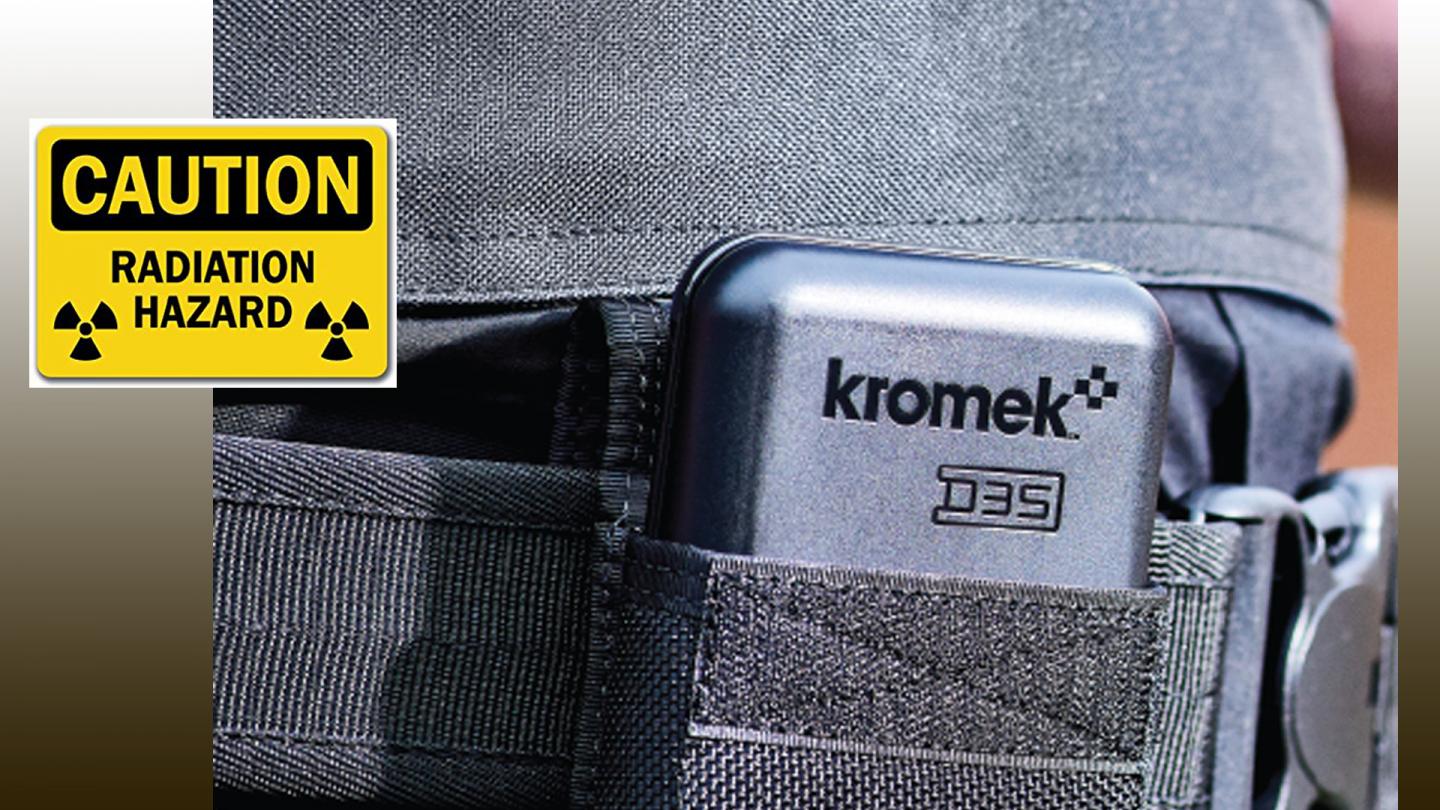
A UK company, with a base in Huddersfield, is pioneering the development and manufacture of compact, technically-advanced electronic devices that detect and monitor radiation. The devices, similar in size and cost to a smartphone, are being sold around the world and the firm's close research links with the town's University have helped ensure that they remain at the leading edge of the technology.
Kromek is a radiation detection technology company focusing on the security, medical and nuclear markets. Its products enable the identification of cancerous tissues and hazardous materials – including explosives – and the analysis of radioactive materials.
Kromek has manufacturing centres in County Durham and Pittsburgh in the U.S. but its neutron research and development unit is at the University of Huddersfield's 3M Buckley Innovation Centre. The company has successfully completed two Knowledge Transfer Partnerships (KTPs) with the University's School of Computing and Engineering.
Both projects have now received an official rating of "Very Good" from Government body Innovate UK. It provides financial backing for KTPs, which enable ambitious firms to benefit from the research expertise of universities. A KTP Associate – usually a recent graduate – is embedded within the firm for the duration of the project.
In the case of Kromek, University of Huddersfield electronic engineering graduates Richard Haigh and Toby Izod were the associates for the successive projects, and their academic supervisor was Dr Pete Mather, who is Course Leader for the University's electronics degrees.
Richard's two-year KTP looked at improvements to the electronics of the Kromek devices, while Toby concentrated on the sensors and the power supply. After the success of their projects, both graduates are now full-time employees of the firm and they are also completing their Master's degrees.
The Kromek link has also proved valuable because the firm has offered year-long work placements to School of Computing and Engineering students, as part of their degree courses, said Dr Mather. He played a key role in the firm establishing its research and development base in Huddersfield, when he learned that the firm's Neutron Product Director Dr Ed Marsden was looking for premises. Dr Mather pointed out the advantages offered by the 3M BIC.
Dr Marsden, who designed the original electronic circuitry for the Kromek device, said that the two KTPs had helped to keep the technology pushing forward.
"The first KTP was to develop the electronic signal processing chain to optimise the performance. That was very successful and helped develop the product we call the D3S, which is our handheld detector, originally developed for the U.S. government's Defense Advanced Research Projects Agency.
"This device now has two detectors- a neutron detector and a gamma. The second KTP was to further enhance the neutron detector in particular. This involved some materials development, some sensor development and some new electronics."
New, increasingly sophisticated generations of the devices are under development, said Dr Marsden. In addition to sectors such as homeland security and the nuclear industry, users include first responders and fire fighters who need to be aware of potential risks when they enter buildings. Environmental monitoring – checking for any spread in radiation after an incident such as Chernobyl – is another potential use.
The Kromek devices are used in tandem with smartphones, which transmit the continuously updated radiation data and can be used as standalone real-time infield isotope ID or can be linked via a cloud-augmented wide area networks, continuously mapping radiation levels to guard against the threat of a radiological dirty bomb.
###
Media Contact
Jayne Amos
[email protected]
01-484-472-982
@HudUniPR
http://www.hud.ac.uk/
Original Source
https://www.hud.ac.uk/news/2018/may/radiationmonitoringresearchwinsgraduatesaktptoprating/