• HOME
  • NEWS
  • EXPLORE
    • CAREER
      • Companies
      • Jobs
    • EVENTS
    • iGEM
      • News
      • Team
    • PHOTOS
    • VIDEO
    • WIKI
  • BLOG
  • COMMUNITY
    • FACEBOOK
    • INSTAGRAM
    • TWITTER
Thursday, June 25, 2026
BIOENGINEER.ORG
No Result
View All Result
  • Login
  • HOME
  • NEWS
  • EXPLORE
    • CAREER
      • Companies
      • Jobs
        • Lecturer
        • PhD Studentship
        • Postdoc
        • Research Assistant
    • EVENTS
    • iGEM
      • News
      • Team
    • PHOTOS
    • VIDEO
    • WIKI
  • BLOG
  • COMMUNITY
    • FACEBOOK
    • INSTAGRAM
    • TWITTER
  • HOME
  • NEWS
  • EXPLORE
    • CAREER
      • Companies
      • Jobs
        • Lecturer
        • PhD Studentship
        • Postdoc
        • Research Assistant
    • EVENTS
    • iGEM
      • News
      • Team
    • PHOTOS
    • VIDEO
    • WIKI
  • BLOG
  • COMMUNITY
    • FACEBOOK
    • INSTAGRAM
    • TWITTER
No Result
View All Result
Bioengineer.org
No Result
View All Result
Home NEWS Science News Chemistry

Next-gen smartphones to keep their cool

Bioengineer by Bioengineer
October 7, 2020
in Chemistry
Reading Time: 3 mins read
0
IMAGE
Share on FacebookShare on TwitterShare on LinkedinShare on RedditShare on Telegram

IMAGE

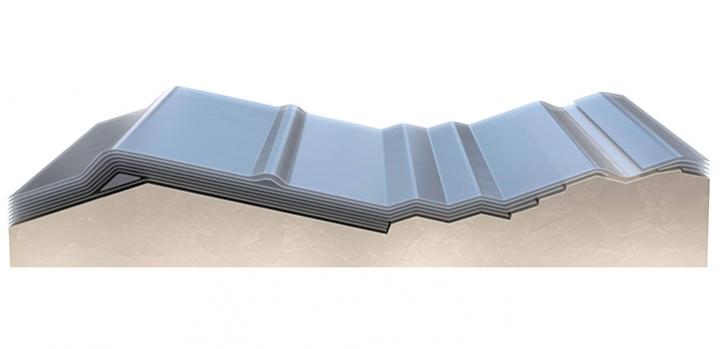
Credit: © 2020 KAUST; Xavier Pita

The powerful electronics packed inside the latest smartphones can be a significant challenge to keep cool. KAUST researchers have developed a fast and efficient way to make a carbon material that could be ideally suited to dissipating heat in electronic devices. This versatile material could also have additional uses ranging from gas sensors to solar cells.

Many electronic devices use graphite films to draw away and dissipate the heat generated by their electronic components. Although graphite is a naturally occurring form of carbon, heat management of electronics is a demanding application and usually relies on use of high-quality micrometer-thick manufactured graphite films. “However, the method used to make these graphite films, using polymer as a source material, is complex and very energy intensive,” says G. Deokar, a postdoc in Pedro Costa’s lab, who led the work. The films are made in a multistep process that requires temperatures of up to 3200 degrees Celsius and which cannot produce films any thinner than a few micrometers.

Deokar, Costa and their colleagues have developed a quick, energy-efficient way to make graphite sheets that are approximately 100 nanometers thick. The team grew nanometer-thick graphite films (NGF) on nickel foils using a technique called chemical vapor deposition (CVD) in which the nickel catalytically converts hot methane gas into graphite on its surface. “We achieved NGFs with a CVD growth step of just five minutes at a reaction temperature of 900 degrees Celsius,” Deokar says.

The NGFs, which could be grown in sheets of up to 55 square centimeters, grew on both sides of the foil. It could be extracted and transferred to other surfaces without the need of a polymer supporting layer, which is a common requirement when handling single-layer graphene films.

Working with electron microscopy specialist Alessandro Genovese, the team captured cross-sectional transmission electron microscopy (TEM) images of the NGF on nickel. “Observing the interface of the graphite films to the nickel foil was an unprecedented achievement that will shed additional light on the growth mechanisms of these films,” Costa says.

In terms of thickness, NGF sits between commercially available micrometer-thick graphite films and single-layer graphene. “NGFs complement graphene and industrial graphite sheets, adding to the toolbox of layered carbon films,” Costa says. Due to its flexibility, for example, NGF could lend itself to heat management in flexible phones now starting to appear on the market. “NGF integration would be cheaper and more robust than what could be obtained with a graphene film,” he adds.

However, NGFs could find many applications in addition to heat dissipation. One intriguing feature, highlighted in the TEM images, was that some sections of the NGF were just a few carbon sheets thick. “Remarkably, the presence of the few-layer graphene domains resulted in a reasonable degree of visible light transparency of the overall film,” Deokar says. The team proposed that conducting, semitransparent NGFs could be used as a component of solar cells, or as a sensor material for detecting NO2 gas. “We plan to integrate NGFs in devices where they would act as a multifunctional active material,” Costa says.

###

Media Contact
KAUST Discovery team
[email protected]

Original Source

https://discovery.kaust.edu.sa/en/article/1032/next-gen-smartphones-to-keep-their-cool

Related Journal Article

http://dx.doi.org/10.1088/1361-6528/aba712

Tags: Chemistry/Physics/Materials SciencesElectrical Engineering/ElectronicsHardwareMaterialsNanotechnology/MicromachinesPolymer ChemistryResearch/DevelopmentTechnology/Engineering/Computer Science
Share12Tweet8Share2ShareShareShare2

Related Posts

AI and Physics Collaborate to Design Advanced Hydrogen Storage Materials

June 25, 2026

International Team Including Dresden Scientists Develops Novel Designer Proteins for Advanced Study of Living Tissue

June 25, 2026

New Study Uncovers Key Factors Driving Water Chemistry in Nanoscale Environments

June 25, 2026

Plasma Technology Extends Catalyst Lifespan in Hydrogen Production

June 24, 2026
Please login to join discussion

POPULAR NEWS

  • Saying Goodbye to PGY-6: Pediatric Fellowship Realities

    103 shares
    Share 41 Tweet 26
  • Multi-Hospital Study Reveals Long Covid Burden Is Twice as High as Current Estimates

    92 shares
    Share 36 Tweet 23
  • Detection of EDCs in Breast Milk and Infant Urine Up to Six Months Highlights Early Exposure Risks

    77 shares
    Share 31 Tweet 19
  • New Drug Candidate Developed at McMaster Shows Potential for Treating Brain Cancer

    58 shares
    Share 23 Tweet 15

About

We bring you the latest biotechnology news from best research centers and universities around the world. Check our website.

Follow us

Recent News

Tracking Lanthanide-Labeled Microplastics in Plants

POSTECH Researchers Slash Cost of Reconstituted Cell-Free Systems by 95%

AI and Physics Collaborate to Design Advanced Hydrogen Storage Materials

Subscribe to Blog via Email

Success! An email was just sent to confirm your subscription. Please find the email now and click 'Confirm' to start subscribing.

Join 82 other subscribers
  • Contact Us

Bioengineer.org © Copyright 2023 All Rights Reserved.

Welcome Back!

Login to your account below

Forgotten Password?

Retrieve your password

Please enter your username or email address to reset your password.

Log In
No Result
View All Result
  • Homepages
    • Home Page 1
    • Home Page 2
  • News
  • National
  • Business
  • Health
  • Lifestyle
  • Science

Bioengineer.org © Copyright 2023 All Rights Reserved.