• HOME
  • NEWS
  • EXPLORE
    • CAREER
      • Companies
      • Jobs
    • EVENTS
    • iGEM
      • News
      • Team
    • PHOTOS
    • VIDEO
    • WIKI
  • BLOG
  • COMMUNITY
    • FACEBOOK
    • INSTAGRAM
    • TWITTER
Monday, September 28, 2026
BIOENGINEER.ORG
No Result
View All Result
  • Login
  • HOME
  • NEWS
  • EXPLORE
    • CAREER
      • Companies
      • Jobs
        • Lecturer
        • PhD Studentship
        • Postdoc
        • Research Assistant
    • EVENTS
    • iGEM
      • News
      • Team
    • PHOTOS
    • VIDEO
    • WIKI
  • BLOG
  • COMMUNITY
    • FACEBOOK
    • INSTAGRAM
    • TWITTER
  • HOME
  • NEWS
  • EXPLORE
    • CAREER
      • Companies
      • Jobs
        • Lecturer
        • PhD Studentship
        • Postdoc
        • Research Assistant
    • EVENTS
    • iGEM
      • News
      • Team
    • PHOTOS
    • VIDEO
    • WIKI
  • BLOG
  • COMMUNITY
    • FACEBOOK
    • INSTAGRAM
    • TWITTER
No Result
View All Result
Bioengineer.org
No Result
View All Result
Home NEWS Science News Biology

Newly found bacteria fights climate change, soil pollutants

Bioengineer by Bioengineer
February 20, 2020
in Biology
Reading Time: 2 mins read
0
IMAGE
Share on FacebookShare on TwitterShare on LinkedinShare on RedditShare on Telegram

IMAGE

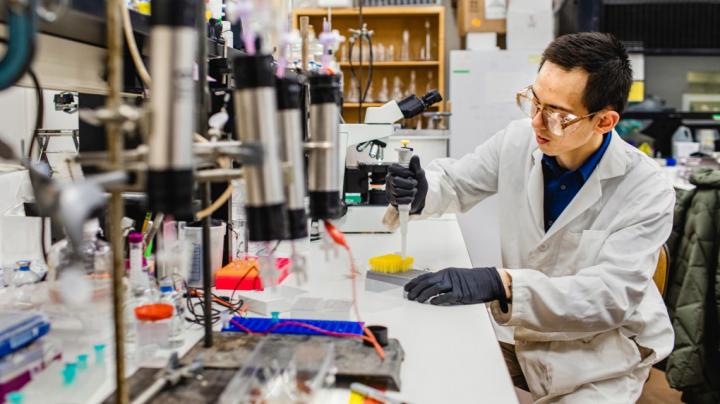
Credit: Allison Usavage, Cornell University

ITHACA, N.Y. – Cornell University researchers have found a new species of soil bacteria that is particularly adept at breaking down organic matter, including the cancer-causing chemicals that are released when coal, gas, oil and refuse are burned.

Dan Buckley, professor of microbial ecology and five other Cornell researchers, along with colleagues from Lycoming College, described the new bacterium in a paper published in the International Journal of Systematic and Evolutionary Microbiology.

The newly discovered bacteria belong to the genus Paraburkholderia, which are known for their ability to degrade aromatic compounds and, in some species, the capacity to form root nodules that fix atmospheric nitrogen.

The first step was sequencing the bacterium’s ribosomal RNA genes, which provided genetic evidence that madseniana was a unique species. In studying the new bacteria, the researchers noticed that madseniana is especially adept at breaking down aromatic hydrocarbons, which make up lignin, a major component of plant biomass and soil organic matter. Aromatic hydrocarbons are also found in toxic PAH pollution.

This means that the newly identified bacteria could be a candidate for biodegradation research and an important player in the soil carbon cycle.

In the case of madseniana, Buckley’s lab wants to learn more about the symbiotic relationship between the bacteria and forest trees. Initial research suggests that trees feed carbon to the bacteria, and in turn the bacteria degrade soil organic matter, thereby releasing nutrients such as nitrogen and phosphorus for the trees.

Understanding how bacteria break down carbon in soil could hold the key to the sustainability of soil and the ability to predict the future of global climate.

###

This research was supported the USDA National Institute of Food and Agriculture through a McIntire Stennis grant.

Cornell University has dedicated television and audio studios available for media interviews supporting full HD, ISDN and web-based platforms.

Media Contact
Jeff Tyson
[email protected]
607-793-5769

Original Source

http://news.cornell.edu/stories/2020/02/newly-found-bacteria-fights-climate-change-soil-pollutants

Related Journal Article

http://dx.doi.org/10.1099/ijsem.0.004029

Tags: BiologyClimate ChangeEcology/Environment
Share13Tweet8Share2ShareShareShare2

Related Posts

Engineered mini CRISPR enzyme gets a 60-fold power boost for gene editing

Engineered mini CRISPR enzyme gets a 60-fold power boost for gene editing

September 27, 2026
Vitamin D Receptor Gene Variants Tied to Diabetic Foot Ulcer Risk in Kerala Study

Vitamin D Receptor Gene Variants Tied to Diabetic Foot Ulcer Risk in Kerala Study

September 27, 2026

Approved Metabolism Drugs Rescue Disease Signs in SMA Mice

September 27, 2026

Infant Gut Microbes and Diet-Derived Metabolites Linked to Childhood Asthma Risk

September 27, 2026
Please login to join discussion

POPULAR NEWS

  • Trunk Control May Hold a Key to Balance and Fall Risk in Older Adults

    29 shares
    Share 12 Tweet 7
  • AI Tells Doctors When It Is Unsure About Cancer Treatment Success

    29 shares
    Share 12 Tweet 7
  • Engineered mini CRISPR enzyme gets a 60-fold power boost for gene editing

    29 shares
    Share 12 Tweet 7
  • When Autism Diagnoses Fade: Early Intervention and Milder Symptoms Mark Children Who Lose the Label

    29 shares
    Share 12 Tweet 7

About

We bring you the latest biotechnology news from best research centers and universities around the world. Check our website.

Follow us

Recent News

Trunk Control May Hold a Key to Balance and Fall Risk in Older Adults

AI Tells Doctors When It Is Unsure About Cancer Treatment Success

Engineered mini CRISPR enzyme gets a 60-fold power boost for gene editing

Subscribe to Blog via Email

Enter your email address to subscribe to this blog and receive notifications of new posts by email.

Join 85 other subscribers
  • Contact Us

Bioengineer.org © Copyright 2023 All Rights Reserved.

Welcome Back!

Login to your account below

Forgotten Password?

Retrieve your password

Please enter your username or email address to reset your password.

Log In
No Result
View All Result
  • Homepages
    • Home Page 1
    • Home Page 2
  • News
  • National
  • Business
  • Health
  • Lifestyle
  • Science

Bioengineer.org © Copyright 2023 All Rights Reserved.