• HOME
  • NEWS
  • EXPLORE
    • CAREER
      • Companies
      • Jobs
    • EVENTS
    • iGEM
      • News
      • Team
    • PHOTOS
    • VIDEO
    • WIKI
  • BLOG
  • COMMUNITY
    • FACEBOOK
    • INSTAGRAM
    • TWITTER
Sunday, May 10, 2026
BIOENGINEER.ORG
No Result
View All Result
  • Login
  • HOME
  • NEWS
  • EXPLORE
    • CAREER
      • Companies
      • Jobs
        • Lecturer
        • PhD Studentship
        • Postdoc
        • Research Assistant
    • EVENTS
    • iGEM
      • News
      • Team
    • PHOTOS
    • VIDEO
    • WIKI
  • BLOG
  • COMMUNITY
    • FACEBOOK
    • INSTAGRAM
    • TWITTER
  • HOME
  • NEWS
  • EXPLORE
    • CAREER
      • Companies
      • Jobs
        • Lecturer
        • PhD Studentship
        • Postdoc
        • Research Assistant
    • EVENTS
    • iGEM
      • News
      • Team
    • PHOTOS
    • VIDEO
    • WIKI
  • BLOG
  • COMMUNITY
    • FACEBOOK
    • INSTAGRAM
    • TWITTER
No Result
View All Result
Bioengineer.org
No Result
View All Result
Home NEWS Science News Chemistry

Newly discovered enzymes are not heavy metal fans

Bioengineer by Bioengineer
May 25, 2021
in Chemistry
Reading Time: 3 mins read
0
IMAGE
Share on FacebookShare on TwitterShare on LinkedinShare on RedditShare on Telegram

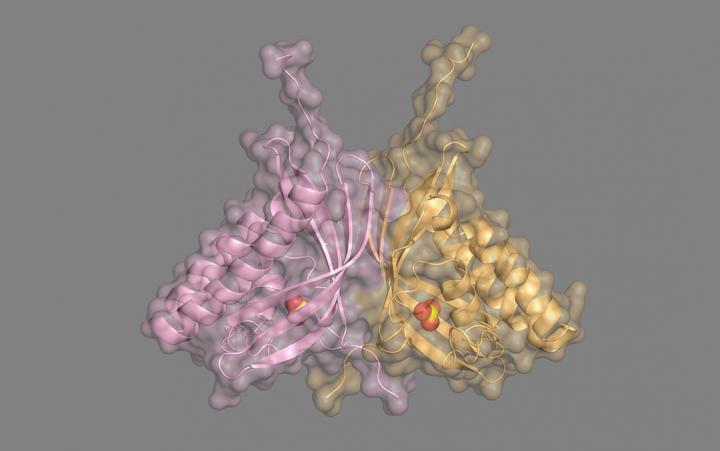
Researchers at Tsukuba University discover a new group of carbonic anhydrase enzymes that do not require any metal ions for their activity, which improves our knowledge of the global carbon cycle and may be applicable to artificial photosynthesis
IMAGE

Credit: University of Tsukuba

Tsukuba, Japan – Carbonic anhydrases are essential enzymes that are present in virtually all living things; all eight classes of carbonic anhydrases that have been identified to date need a metal ion to function. But now, researchers from Japan have discovered that metal is not crucial for all carbonic anhydrases.

In a study published this month in BMC Biology, researchers from the Faculty of Life and Environmental Sciences at the University of Tsukuba have described two members of the COG4337 protein family that are the first known examples of carbonic anhydrase enzymes that do not require a metal ion to function.

Carbonic anhydrases catalyze the conversion of carbon dioxide (CO2) into bicarbonate (HCO3-), and vice versa. They are central to a wide range of physiological processes, including regulation of acid-base balance, respiration, and photosynthesis, and are crucial for all carbon-based life, from bacteria to humans. All previously identified classes of carbonic anhydrase contain a metal cofactor — zinc, cadmium, cobalt, or manganese — that is essential for the activity of these enzymes, so when the researchers at the University of Tsukuba identified that the COG4337 proteins were similar to known carbonic anhydrases, they expected metal ions to be important for these new proteins too.

“Because the active site of most carbonic anhydrases contains a metal ion that facilitates interconversion between CO2 and HCO3-, we were surprised to find that the COG4337 proteins did not require any of the eight different metals we tested, and actually were less functional in the presence of zinc,” lead author Professor Yoshihisa Hirakawa says.

When the researchers made a model of COG4337 protein structure, they found that there was an active site, or pocket, that may hold on to CO2 while the enzyme converts it to HCO3-. Interestingly, unlike other carbonic anhydrases, these novel enzymes don’t seem to carry out the reverse reaction of converting HCO3- to CO2. In addition, the investigators saw that these COG4337 proteins tend to congregate in the plastids and mitochondria of the microalga Bigelowiella natans, which is where CO2 metabolism takes place.

“These proteins are expressed by many cyanobacteria and eukaryotic microalgae that live in environments with fairly diverse metal contents. It is possible that this enzyme evolved in an ancestral microbe to adapt to metal-poor environments, such as the open ocean,” Professor Hirakawa explains.

Given the widespread expression of carbonic anhydrases in ecologically important species of microalgae, this novel type of metal-independent carbonic anhydrases may play an important role in the global carbon cycle. Understanding more about how these enzymes work could also be useful for artificial photosynthesis, an important source of renewable energy.

###

The article, “Characterization of a novel type of carbonic anhydrase that acts without metal cofactors,” was published in BMC Biology as DOI:10.1186/s12915-021-01039-8.

Media Contact
Naoko Yamashina
[email protected]

Related Journal Article

http://dx.doi.org/10.1186/s12915-021-01039-8

Tags: BacteriologyBiochemistryBioinformaticsBiologyCell BiologyClimate ChangeEcology/EnvironmentEvolutionMicrobiologyMolecular Biology
Share12Tweet8Share2ShareShareShare2

Related Posts

Miniature Sensor Uses Light to Detect Touch — Chemistry

Miniature Sensor Uses Light to Detect Touch

May 8, 2026
Iron Minerals Determine Whether Dissolved Organic Matter Fuels Microbes or Becomes Long-Term Carbon Storage — Chemistry

Iron Minerals Determine Whether Dissolved Organic Matter Fuels Microbes or Becomes Long-Term Carbon Storage

May 8, 2026

Kate Evans Appointed Associate Lab Director for Biological and Environmental Systems Science at ORNL

May 8, 2026

Advancing Multiscale Modeling and Overcoming Operational Challenges in Autothermal COâ‚‚-to-Methanol Reactors

May 8, 2026
Please login to join discussion

POPULAR NEWS

  • Research Indicates Potential Connection Between Prenatal Medication Exposure and Elevated Autism Risk

    840 shares
    Share 336 Tweet 210
  • New Study Reveals Plants Can Detect the Sound of Rain

    727 shares
    Share 290 Tweet 181
  • Scientists Investigate Possible Connection Between COVID-19 and Increased Lung Cancer Risk

    68 shares
    Share 27 Tweet 17
  • Salmonella Haem Blocks Macrophages, Boosts Infection

    61 shares
    Share 24 Tweet 15

About

We bring you the latest biotechnology news from best research centers and universities around the world. Check our website.

Follow us

Recent News

Evaluating Digoxin Use in Patients with Symptomatic Rheumatic Heart Disease

Evaluating the Effectiveness and Safety of Digitalis Glycosides in Treating Heart Failure

Urdu Fall Risk Questionnaire Adapted for Elderly

Subscribe to Blog via Email

Enter your email address to subscribe to this blog and receive notifications of new posts by email.

Join 82 other subscribers
  • Contact Us

Bioengineer.org © Copyright 2023 All Rights Reserved.

Welcome Back!

Login to your account below

Forgotten Password?

Retrieve your password

Please enter your username or email address to reset your password.

Log In
No Result
View All Result
  • Homepages
    • Home Page 1
    • Home Page 2
  • News
  • National
  • Business
  • Health
  • Lifestyle
  • Science

Bioengineer.org © Copyright 2023 All Rights Reserved.