• HOME
  • NEWS
  • EXPLORE
    • CAREER
      • Companies
      • Jobs
    • EVENTS
    • iGEM
      • News
      • Team
    • PHOTOS
    • VIDEO
    • WIKI
  • BLOG
  • COMMUNITY
    • FACEBOOK
    • INSTAGRAM
    • TWITTER
Wednesday, April 1, 2026
BIOENGINEER.ORG
No Result
View All Result
  • Login
  • HOME
  • NEWS
  • EXPLORE
    • CAREER
      • Companies
      • Jobs
        • Lecturer
        • PhD Studentship
        • Postdoc
        • Research Assistant
    • EVENTS
    • iGEM
      • News
      • Team
    • PHOTOS
    • VIDEO
    • WIKI
  • BLOG
  • COMMUNITY
    • FACEBOOK
    • INSTAGRAM
    • TWITTER
  • HOME
  • NEWS
  • EXPLORE
    • CAREER
      • Companies
      • Jobs
        • Lecturer
        • PhD Studentship
        • Postdoc
        • Research Assistant
    • EVENTS
    • iGEM
      • News
      • Team
    • PHOTOS
    • VIDEO
    • WIKI
  • BLOG
  • COMMUNITY
    • FACEBOOK
    • INSTAGRAM
    • TWITTER
No Result
View All Result
Bioengineer.org
No Result
View All Result
Home NEWS Science News Chemistry

Newcastle University research reveals remarkable variability in coral heat tolerance

Bioengineer by Bioengineer
September 12, 2022
in Chemistry
Reading Time: 3 mins read
0
Study species and habitat II
Share on FacebookShare on TwitterShare on LinkedinShare on RedditShare on Telegram

Marine heat waves have decimated corals in recent years and the future looks bleak for tropical reefs if the pace of climate change continues at current rates.
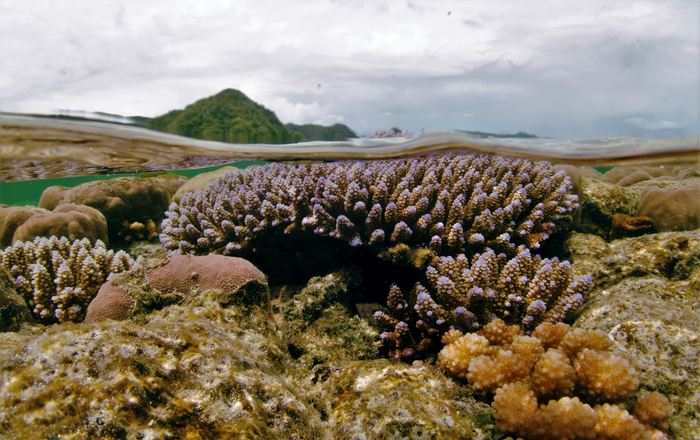
Study species and habitat II

Credit: Liam Lachs

Marine heat waves have decimated corals in recent years and the future looks bleak for tropical reefs if the pace of climate change continues at current rates.

A new study has shown how much heat stress corals can cope with and how much this varies from one individual coral to another. The team from Newcastle University and the Palau International Coral Reef Center exposed corals taken from a single reef to an experimental marine heatwave. Remarkably, they found that double the heat stress dosage was required to induce bleaching and mortality in the most-tolerant 10%, compared to the least-tolerant 10%.

Publishing their findings in the journal Proceedings Of The Royal Society B: Biological Sciences, the researchers found that by the end of the heat stress exposure, all of the least-tolerant corals were dead, while the most-tolerant remained alive. Surprisingly, this variation did not appear to be related to the type of symbiotic algae the corals were associated with, suggesting the coral itself was more heat tolerant.  

Study Co-Author, Dr James Guest, from the School of Natural and Environmental Sciences, commented on this, saying: “It is well known that corals vary in their tolerance to heat stress among species and in different locations, but marine scientists have rarely examined how much variation there is among corals living side by side on the same reef. Despite these corals experiencing the same conditions, we found a remarkable variation in heat tolerance among individuals, suggesting capacity for adaptation if some of the toughest corals are able to survive marine heatwaves”.

Study Lead Authors, Dr Adriana Humanes Schumann and Liam Lachs from the same research group, said: “Individual variation in heat tolerance is critical if corals are to adapt to higher temperatures. We show that under an ambitious future emissions scenario, the differences we have found equate to up to 17 years of delay until the onset of annual bleaching and mortality conditions. However, this delay is limited to only 10 years under a high emissions scenario.

“For coral reefs to persist through the coming century, coral adaptation must keep pace with ocean warming. However, at the same time, the global emissions reductions of greenhouse gasses countries have already committed to need to be realised to give corals a fighting chance.”

The study, alongside future climate projections, has the potential to feed into policy-relevant metrics that can directly inform coral reef conservation and restoration actions.

Reference

Humanes, A., Lachs, L., Beauchamp, E., Bythell, J., Edwards, A., & Golbuu, Y. et al. (2022). Within-population variability in coral heat tolerance indicates climate adaptation potential. Proceedings Of The Royal Society B: Biological Sciences, 289(1981). doi: 10.1098/rspb.2022.0872


Journal

Proceedings of the Royal Society B Biological Sciences

DOI

10.1098/rspb.2022.0872

Method of Research

Observational study

Subject of Research

Not applicable

Article Title

Within-population variability in coral heat tolerance indicates climate adaptation potential

Article Publication Date

31-Aug-2022

Share12Tweet8Share2ShareShareShare2

Related Posts

Creating Desktop Particle Accelerators to Open New Frontiers in Scientific Research

Creating Desktop Particle Accelerators to Open New Frontiers in Scientific Research

April 1, 2026
Photochargeable Semiconductor Powers Efficient Amine Coupling

Photochargeable Semiconductor Powers Efficient Amine Coupling

April 1, 2026

From Cells to Smart Gels: Advancing Frontiers in Motion Science

March 31, 2026

Tides Amplify Biochar’s Carbon Capture Efficiency in Coastal Wetlands

March 31, 2026

POPULAR NEWS

  • blank

    Revolutionary AI Model Enhances Precision in Detecting Food Contamination

    96 shares
    Share 38 Tweet 24
  • Imagine a Social Media Feed That Challenges Your Views Instead of Reinforcing Them

    1006 shares
    Share 398 Tweet 249
  • Promising Outcomes from First Clinical Trials of Gene Regulation in Epilepsy

    51 shares
    Share 20 Tweet 13
  • Popular Anti-Aging Compound Linked to Damage in Corpus Callosum, Study Finds

    43 shares
    Share 17 Tweet 11

About

We bring you the latest biotechnology news from best research centers and universities around the world. Check our website.

Follow us

Recent News

FGFR2b Links to Biomarkers, Tumor Diversity, Survival

Frailty, Malnutrition Link Falls to Daily Functioning

Dactylides D, E: Novel 22-Membered Polyol Macrolides

Subscribe to Blog via Email

Enter your email address to subscribe to this blog and receive notifications of new posts by email.

Join 78 other subscribers
  • Contact Us

Bioengineer.org © Copyright 2023 All Rights Reserved.

Welcome Back!

Login to your account below

Forgotten Password?

Retrieve your password

Please enter your username or email address to reset your password.

Log In
No Result
View All Result
  • Homepages
    • Home Page 1
    • Home Page 2
  • News
  • National
  • Business
  • Health
  • Lifestyle
  • Science

Bioengineer.org © Copyright 2023 All Rights Reserved.