• HOME
  • NEWS
  • EXPLORE
    • CAREER
      • Companies
      • Jobs
    • EVENTS
    • iGEM
      • News
      • Team
    • PHOTOS
    • VIDEO
    • WIKI
  • BLOG
  • COMMUNITY
    • FACEBOOK
    • INSTAGRAM
    • TWITTER
Sunday, May 10, 2026
BIOENGINEER.ORG
No Result
View All Result
  • Login
  • HOME
  • NEWS
  • EXPLORE
    • CAREER
      • Companies
      • Jobs
        • Lecturer
        • PhD Studentship
        • Postdoc
        • Research Assistant
    • EVENTS
    • iGEM
      • News
      • Team
    • PHOTOS
    • VIDEO
    • WIKI
  • BLOG
  • COMMUNITY
    • FACEBOOK
    • INSTAGRAM
    • TWITTER
  • HOME
  • NEWS
  • EXPLORE
    • CAREER
      • Companies
      • Jobs
        • Lecturer
        • PhD Studentship
        • Postdoc
        • Research Assistant
    • EVENTS
    • iGEM
      • News
      • Team
    • PHOTOS
    • VIDEO
    • WIKI
  • BLOG
  • COMMUNITY
    • FACEBOOK
    • INSTAGRAM
    • TWITTER
No Result
View All Result
Bioengineer.org
No Result
View All Result
Home NEWS Science News Health

New treatment target verification for myelodysplastic syndrome

Bioengineer by Bioengineer
June 8, 2020
in Health
Reading Time: 2 mins read
0
IMAGE
Share on FacebookShare on TwitterShare on LinkedinShare on RedditShare on Telegram

IMAGE

Credit: Dr. Goro Sashida

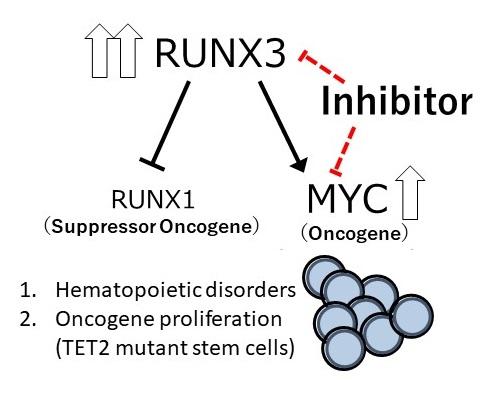
A research group from Kumamoto University, Japan analyzed the pathophysiology of myelodysplastic syndrome (MDS), a blood cancer that presents often in the elderly, and found the presence of the transcription factor RUNX3, thereby revealing a cancer growth function for what had been considered a tumor suppressor. Additional analyses of human MDS cells and model mice found an abnormal gene expression mechanism linked to the initiation and propagation of MDS stem cells, and confirmed RUNX3 as a new therapeutic target.

MDS is a refractory cancer that is resistant to anticancer drugs. It originates from hematopoietic stem cells and causes hematopoietic failure. Recent advances in comprehensive DNA sequencing analysis have largely revealed the major genetic mutations within MDS but much remains unknown about the mechanisms that cause it. Thus, the International Research Center for Medical Sciences (IRCMS) research group turned their focused toward the transcription factor RUNX3 and investigated its role in the development of MDS.

They first analyzed the correlation between RUNX3 expression levels in human MDS cells and life prognosis, and confirmed that patients with higher RUNX3 expression had a worse prognosis. Next, since RUNX3 expression in human MDS cells has a high frequency of mutation in TET2 gene, they created RUNX3-expressing MDS model mice deficient in the TET2 gene. RUNX3-expressing TET2-deficient MDS cells were found to suppress the expression level and function of RUNX1, a transcription factor in the same gene family as RUNX3 and is essential for normal hematopoiesis. This indicates a new mechanism of cancer development that suppresses normal functions through interactions between family genes. The researchers also found that RUNX3 cooperates with the MYC gene, a known oncogene, to grow MDS cells. Inhibition of MYC function significantly suppressed the proliferation of RUNX3-expressing cells.

“Further progress in future research is expected to lead to the development of new therapeutic methods targeting the transcription factor RUNX3 in the refractory cancer myelodysplastic syndrome,” said Professor Goro Sashida who lead this study. “Our results are also expected to be beneficial in the study of other hematological cancers where the transcription factor RUNX plays an important role such as Down’s syndrome-related leukemia.”

###

This research was posted online in Cancer Research on 27 April 2020.

[Source]

Yokomizo-Nakano, T., Kubota, S., Bai, J., Hamashima, A., Morii, M., Sun, Y., … Sashida, G. (2020). Overexpression of RUNX3 represses RUNX1 to drive transformation of myelodysplastic syndrome. Cancer Research, canres.3167.2019. doi:10.1158/0008-5472.can-19-3167

Media Contact
J. Sanderson & N. Fukuda
[email protected]

Related Journal Article

http://dx.doi.org/10.1158/0008-5472.can-19-3167

Tags: cancerGenesGeneticsGerontologyHematologyInternal MedicineMedicine/Health
Share12Tweet8Share2ShareShareShare2

Related Posts

Evaluating Digoxin Use in Patients with Symptomatic Rheumatic Heart Disease

May 10, 2026

Evaluating the Effectiveness and Safety of Digitalis Glycosides in Treating Heart Failure

May 10, 2026

Urdu Fall Risk Questionnaire Adapted for Elderly

May 10, 2026

Key Pharmacological Markers for HIV Prevention in MSM

May 10, 2026
Please login to join discussion

POPULAR NEWS

  • Research Indicates Potential Connection Between Prenatal Medication Exposure and Elevated Autism Risk

    840 shares
    Share 336 Tweet 210
  • New Study Reveals Plants Can Detect the Sound of Rain

    727 shares
    Share 290 Tweet 181
  • Scientists Investigate Possible Connection Between COVID-19 and Increased Lung Cancer Risk

    68 shares
    Share 27 Tweet 17
  • Salmonella Haem Blocks Macrophages, Boosts Infection

    61 shares
    Share 24 Tweet 15

About

We bring you the latest biotechnology news from best research centers and universities around the world. Check our website.

Follow us

Recent News

Evaluating Digoxin Use in Patients with Symptomatic Rheumatic Heart Disease

Evaluating the Effectiveness and Safety of Digitalis Glycosides in Treating Heart Failure

Urdu Fall Risk Questionnaire Adapted for Elderly

Subscribe to Blog via Email

Enter your email address to subscribe to this blog and receive notifications of new posts by email.

Join 82 other subscribers
  • Contact Us

Bioengineer.org © Copyright 2023 All Rights Reserved.

Welcome Back!

Login to your account below

Forgotten Password?

Retrieve your password

Please enter your username or email address to reset your password.

Log In
No Result
View All Result
  • Homepages
    • Home Page 1
    • Home Page 2
  • News
  • National
  • Business
  • Health
  • Lifestyle
  • Science

Bioengineer.org © Copyright 2023 All Rights Reserved.