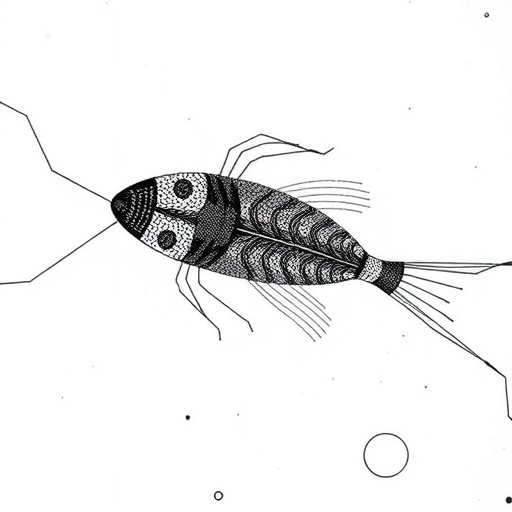
Liver flukes, specifically Clonorchis sinensis and various Opisthorchis species, have long posed a concealed yet formidable health threat predominantly across East Asia and the Mekong River basin. These parasitic trematodes embed themselves in human bile ducts, leading to severe hepatobiliary complications including cholangitis, fibrosis, and even cholangiocarcinoma, a type of bile duct cancer. Despite their significant morbidity burden affecting millions globally, comprehensive understanding of their transmission ecology and control remains fragmented. A groundbreaking systematic review published in Science in One Health has synthesised available mechanistic transmission models, revealing new dimensions of liver fluke epidemiology and positing transformative directions for integrated control.
The review critically evaluated 18 studies from an initial suite of over 500 records, honing in on mathematical frameworks deploying ordinary differential equations to simulate population-level transmission dynamics. Such modeling offers a quantitative lens for parsing complex multi-host life cycles, including influences from environmental reservoirs and anthropogenic behaviors. What emerges is a nuanced appreciation that human hosts serve as the primary reservoir sustaining endemic liver fluke transmission, contradicting earlier assumptions that animal hosts like cats and dogs predominantly maintain parasite circulation. This insight reorients public health strategies towards prioritizing human-focused interventions.
Crucially, the models expose how international trade in fish — vital intermediate hosts harbouring larval stages — facilitates the geographic dissemination of liver flukes. Fish movement patterns intersect with local ecological variables, human socio-behavioral factors, and environmental conditions to create heterogeneous transmission ‘hotspots’. This spatial heterogeneity complicates uniform control policies, signaling the necessity for tailored, context-specific approaches. Transmission intensity and parasite burden can consequently vary dramatically even within small geographic corridors, underlining the importance of integrating spatially resolved data into intervention planning.
The systematic review strongly advocates for multifaceted intervention strategies. Mass drug administration (MDA) with anthelmintics remains a cornerstone but is often insufficient when deployed in isolation. The modeling outcomes underscore the synergistic impact achievable through coupling MDA with widespread health education campaigns designed to shift risky dietary customs—chiefly the consumption of raw or undercooked freshwater fish, a primary infection route. Improving water quality and sanitation infrastructure further disrupts transmission by mitigating snail intermediate host populations and decreasing environmental contamination with parasite eggs, thereby complementing pharmacological and behavioral efforts.
Behavioral dynamics emerge as pivotal in shaping intervention success. High adherence rates to MDA and sustained behavioral change are essential for achieving meaningful reductions in infection prevalence and transmission interruption. Unfortunately, models indicate that suboptimal compliance can swiftly erode the benefits of well-designed programs, emphasizing the strategic need for ongoing community engagement, risk communication, and social mobilization. Understanding and incorporating behavioral heterogeneity—variations in individual and community responses to health messaging—remains an unmet research frontier.
Environmental drivers also demand enhanced representation in future transmission models. The current literature inadequately accounts for seasonal fluctuations in temperature and water sources which influence snail population dynamics and parasite viability. For instance, warmer temperatures can accelerate parasite development cycles, while water body contamination shapes spatial distribution of infective stages. Integrating these abiotic factors into predictive models will better inform timing and targeting of control measures, fostering more adaptive public health responses capable of mitigating outbreaks.
Equally critical is the underexplored role of animal reservoirs such as domestic cats and dogs. Their contribution to sustained endemicity is currently poorly quantified, posing a significant research gap. Expanding surveillance and developing sophisticated models accounting for multi-host interactions may unveil hidden transmission pathways and identify novel intervention targets. This highlights the imperative of embracing the One Health paradigm, which explicitly recognizes the interconnectedness of human, animal, and environmental health in managing parasitic diseases.
Empirical findings also reinforce the complexity introduced by spatial heterogeneity. Transmission dynamics vary immensely across different ecological and socio-cultural landscapes, necessitating control programs to be locally tailored. One-size-fits-all policies risk ineffectiveness or resource wastage. Instead, adaptive frameworks incorporating local epidemiological data, cultural practices, and socio-economic conditions can optimize resource allocation and maximize impact. Collaboration among cross-disciplinary experts—including epidemiologists, ecologists, social scientists, and engineers—will be paramount.
Policy implications from this comprehensive review are profound. First, precision public health strategies must replace generic approaches, relying on granular epidemiological and behavioral data. Second, community engagement must move from episodic interventions towards sustained partnerships, empowering communities as active collaborators rather than passive recipients. Third, interdisciplinary collaboration and capacity building will strengthen implementation fidelity and innovation. Finally, increased investment in research that refines modeling methods and deepens understanding of animal reservoirs and environmental variables is essential to advance control efforts.
Looking ahead, the fight against liver flukes epitomizes the broader challenges inherent in controlling neglected tropical diseases (NTDs) within constrained resource settings. The synergy of robust mathematical models and empirical field data, framed within an integrative One Health approach, can bridge gaps between theoretical understanding and practical intervention. Surveillance systems leveraging real-time data and behavioral insights, paired with adaptive control frameworks, offer promising avenues for scalable, sustainable impact.
This systematic review sets a new benchmark, demonstrating that sophisticated modeling not only elucidates transmission pathways but also illuminates pathways for more efficient, evidence-based control programs. The compelling evidence that human reservoirs drive persistence and that multifactorial intervention packages outperform monotherapies should galvanize policymakers and stakeholders alike. Prioritizing integrated surveillance, enhanced behavioral research, and cross-sector collaboration will be key to breaking transmission cycles and alleviating the disabling burden imposed by liver flukes worldwide.
As global health attention continues to shift towards comprehensive NTD control under the Sustainable Development Goals umbrella, liver flukes must no longer be relegated to the periphery. Strategic investment in interdisciplinary research and community-focused programs will accelerate progress towards elimination. This endeavor, grounded in science and driven by holistic principles, promises transformative health benefits for millions living in endemic regions and beyond.
Subject of Research: Modeling the transmission dynamics of liver flukes (Clonorchis sinensis and Opisthorchis spp.)
Article Title: Modeling the transmission dynamics of liver flukes (Clonorchis sinensis and Opisthorchis spp.): a systematic review and future perspectives
News Publication Date: 22-Apr-2026
Web References: http://dx.doi.org/10.1016/j.soh.2026.100155
Image Credits: Xiao-Ping Han, Yu-Ying Zhu, Men-Bao Qian
Keywords: Liver fluke, Clonorchis sinensis, Opisthorchis spp., transmission dynamics, mathematical modeling, One Health, parasitic infection, mass drug administration, behavioral change, environmental sanitation, neglected tropical diseases, spatial heterogeneity
Tags: cholangiocarcinoma risk factorsClonorchis sinensis epidemiologyenvironmental reservoirs of liver flukeshepatobiliary parasitic infectionshuman reservoirs in parasite transmissionimpact of international fish trade on parasite spreadintegrated liver fluke control strategiesliver fluke transmission dynamicsmathematical modeling of parasitic diseasesmulti-host parasite life cyclesOpisthorchis species health impactordinary differential equations in epidemiology