• HOME
  • NEWS
  • EXPLORE
    • CAREER
      • Companies
      • Jobs
    • EVENTS
    • iGEM
      • News
      • Team
    • PHOTOS
    • VIDEO
    • WIKI
  • BLOG
  • COMMUNITY
    • FACEBOOK
    • INSTAGRAM
    • TWITTER
Friday, June 26, 2026
BIOENGINEER.ORG
No Result
View All Result
  • Login
  • HOME
  • NEWS
  • EXPLORE
    • CAREER
      • Companies
      • Jobs
        • Lecturer
        • PhD Studentship
        • Postdoc
        • Research Assistant
    • EVENTS
    • iGEM
      • News
      • Team
    • PHOTOS
    • VIDEO
    • WIKI
  • BLOG
  • COMMUNITY
    • FACEBOOK
    • INSTAGRAM
    • TWITTER
  • HOME
  • NEWS
  • EXPLORE
    • CAREER
      • Companies
      • Jobs
        • Lecturer
        • PhD Studentship
        • Postdoc
        • Research Assistant
    • EVENTS
    • iGEM
      • News
      • Team
    • PHOTOS
    • VIDEO
    • WIKI
  • BLOG
  • COMMUNITY
    • FACEBOOK
    • INSTAGRAM
    • TWITTER
No Result
View All Result
Bioengineer.org
No Result
View All Result
Home NEWS Science News Biology

New subspecies of the rarest Palaearctic butterfly found in the Arctic Circle of Yakutia

Bioengineer by Bioengineer
September 8, 2020
in Biology
Reading Time: 2 mins read
0
IMAGE
Share on FacebookShare on TwitterShare on LinkedinShare on RedditShare on Telegram

IMAGE

Credit: Dr Roman V. Yakovlev

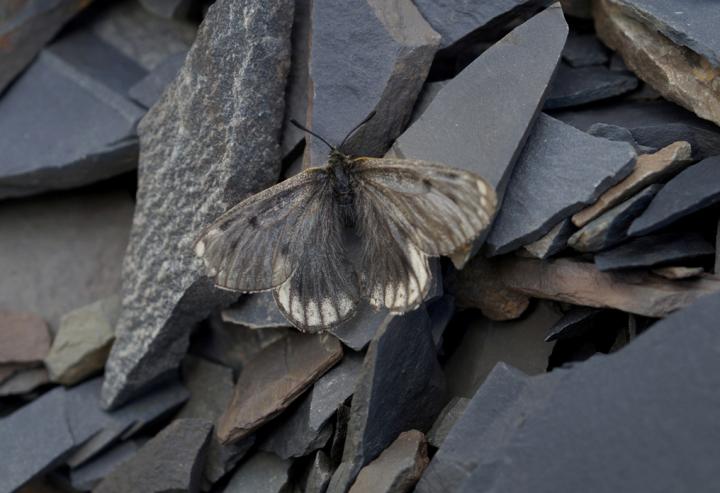
An isolated population of the rarest Palaearctic butterfly species: the Arctic Apollo (Parnassius arcticus), turned out to be a new to science subspecies with distinct looks as well as DNA. Named Parnassius arcticus arbugaevi, the butterfly is described in a recent paper, published in the peer-reviewed, open-access scientific journal Acta Biologica Sibirica.

“Thanks to the field studies of our colleague and friend Yuri Bakhaev, we obtained unique butterfly specimens from the Momsky Range in North-Eastern Yakutia. This mountain range, which is about 500 km long, has until now been a real ‘blank spot’ in terms of biodiversity research,” explains the lead author of the study, Dr Roman Yakovlev, affiliated with Tomsk State University and Altai State University.

“With the kind permission of Mikhail Ivanov, Director of the Momsky National Park, entomological collections were carried out in various parts of the park. Hard-to-reach areas were visited with the help of inspector Innokenty Fedorov,” he adds.

Then, amongst the specimens, the scientists spotted butterflies that at first they thought to be the rarest species for the entire Palaearctic: the Arctic Apollo, a species endemic to Russia and North-Eastern Yakutia, which had only been known from the Suntar-Khayata and Verkhoyansk mountains.

Later, however, the team noticed that the curious specimens were larger on average, had more elongated wings compared to the Arctic Apollo, and were also missing the distinct dark spot on the wings. At that moment, they thought they were rather looking at a species currently unknown to science, and belonging to the Parnassius tenedius species group.

Eventually, following in-depth morphological and molecular genetic analyses, the scientists concluded that the population from the Momsky Range was in fact a new subspecies of the Arctic Apollo and can be distinguished by a number of external and DNA differences. They named the new subspecies Parnassius arcticus arbugaevi after German Arbugaev, Director of the ecological-ethnographic complex Chochur Muran, who provided comprehensive assistance to one of the co-authors of the study, Yu.I. Bakhaev, in his research in Yakutia.

The new subspecies inhabits dry scree slopes with poor vegetation at an elevation of 1,400 m. So far, it is only known from the type locality, Momsky Range, North-Eastern Yakutia, where butterflies can be seen from early June to July. The wingspan in males range between 39 and 45 mm.

“Thus, we obtained significant new data on the distribution and taxonomy of one of the rarest butterflies in the North Palaearctic,” say the researchers in conclusion.

###

Original source:

Yakovlev RV, Shapoval NA, Bakhaev YI, Kuftina GN, Khramov BA (2020) A new subspecies of Parnassius arcticus (Eisner, 1968) (Lepidoptera, Papilionidae) from the Momsky Range (Yakutia, Russia). Acta Biologica Sibirica 6: 93-105. https://doi.org/10.3897/abs.6.e55925

Media Contact
Dr Roman V. Yakovlev
[email protected]

Related Journal Article

http://dx.doi.org/10.3897/abs.6.e55925

Tags: BiodiversityBiologyEntomologyPopulation BiologyZoology/Veterinary Science
Share12Tweet8Share2ShareShareShare2

Related Posts

Natural Hallucinogens: Evolution’s Ecological Tools, Not Mere Chemical Byproducts

June 25, 2026

This Famous Butterfly Revealed: Three Distinct Species Hidden in One

June 25, 2026

Scientists Attack Soybean Cyst Nematode by Starving Its Food Source

June 25, 2026

Decoding the Secret Code of a Crucial Immune Sensor

June 24, 2026
Please login to join discussion

POPULAR NEWS

  • Saying Goodbye to PGY-6: Pediatric Fellowship Realities

    103 shares
    Share 41 Tweet 26
  • Multi-Hospital Study Reveals Long Covid Burden Is Twice as High as Current Estimates

    92 shares
    Share 36 Tweet 23
  • Detection of EDCs in Breast Milk and Infant Urine Up to Six Months Highlights Early Exposure Risks

    77 shares
    Share 31 Tweet 19
  • New Drug Candidate Developed at McMaster Shows Potential for Treating Brain Cancer

    58 shares
    Share 23 Tweet 15

About

We bring you the latest biotechnology news from best research centers and universities around the world. Check our website.

Follow us

Recent News

Tracking Lanthanide-Labeled Microplastics in Plants

POSTECH Researchers Slash Cost of Reconstituted Cell-Free Systems by 95%

AI and Physics Collaborate to Design Advanced Hydrogen Storage Materials

Subscribe to Blog via Email

Success! An email was just sent to confirm your subscription. Please find the email now and click 'Confirm' to start subscribing.

Join 82 other subscribers
  • Contact Us

Bioengineer.org © Copyright 2023 All Rights Reserved.

Welcome Back!

Login to your account below

Forgotten Password?

Retrieve your password

Please enter your username or email address to reset your password.

Log In
No Result
View All Result
  • Homepages
    • Home Page 1
    • Home Page 2
  • News
  • National
  • Business
  • Health
  • Lifestyle
  • Science

Bioengineer.org © Copyright 2023 All Rights Reserved.