• HOME
  • NEWS
  • EXPLORE
    • CAREER
      • Companies
      • Jobs
    • EVENTS
    • iGEM
      • News
      • Team
    • PHOTOS
    • VIDEO
    • WIKI
  • BLOG
  • COMMUNITY
    • FACEBOOK
    • INSTAGRAM
    • TWITTER
Thursday, June 25, 2026
BIOENGINEER.ORG
No Result
View All Result
  • Login
  • HOME
  • NEWS
  • EXPLORE
    • CAREER
      • Companies
      • Jobs
        • Lecturer
        • PhD Studentship
        • Postdoc
        • Research Assistant
    • EVENTS
    • iGEM
      • News
      • Team
    • PHOTOS
    • VIDEO
    • WIKI
  • BLOG
  • COMMUNITY
    • FACEBOOK
    • INSTAGRAM
    • TWITTER
  • HOME
  • NEWS
  • EXPLORE
    • CAREER
      • Companies
      • Jobs
        • Lecturer
        • PhD Studentship
        • Postdoc
        • Research Assistant
    • EVENTS
    • iGEM
      • News
      • Team
    • PHOTOS
    • VIDEO
    • WIKI
  • BLOG
  • COMMUNITY
    • FACEBOOK
    • INSTAGRAM
    • TWITTER
No Result
View All Result
Bioengineer.org
No Result
View All Result
Home NEWS Science News Health

New study supports the effectiveness of the ForsythKids school-based dental program for reducing untreated tooth decay

Bioengineer by Bioengineer
March 31, 2021
in Health
Reading Time: 2 mins read
0
IMAGE
Share on FacebookShare on TwitterShare on LinkedinShare on RedditShare on Telegram

IMAGE

Credit: Forsyth Institute

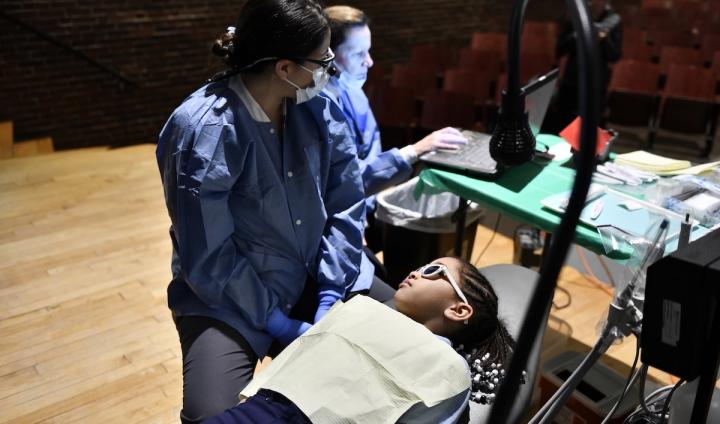
In a longitudinal study published earlier this month in the Journal of the American Dental Association, researchers analyzed untreated decay in a cohort of nearly 7,000 children enrolled in the ForsythKids preventive dentistry program. Over the course of six years, the percentage of children with untreated cavities in the program decreased from 39 to 19 percent, suggesting that school-based prevention programs are effective in combating childhood dental disease.

Tooth decay is the most common chronic early childhood disease in the United States. More than half of children aged 6-8 years old have had a cavity, and kids from low-income families are twice as likely to suffer from untreated tooth decay as their higher-income peers.

To address this critical unmet need, the ForsythKids mobile dental program has provided preventive oral health care to children and teens at schools, community centers, and other sites across Massachusetts since 2003.

Researchers from the Forsyth Institute analyzed data from students at 33 public elementary schools in Massachusetts, all of which are classified as Title I, with high numbers of children from low-income families. The ForsythKids dental team provided comprehensive preventative oral health care twice per year, which includes dental examinations, dental cleanings, sealants, fluoride varnish, toothbrushes, toothpaste, oral hygiene instruction, and referrals to community dentists as needed. ForsythKids provides care at no cost to the patients or participating sites.

School-based dental treatment helps families overcome common barriers to accessing care, says Dr. Helen Nguyen, the Public Health Dentist for the ForsythKids program.

“Parents are often working a day job, a night job, another job in between,” Dr. Nguyen says. “If they take time off work to bring their child to the dentist, they could lose money or lose their job.”

Many parents are also under the impression that a dental visit is cost-prohibitive, or that their child would need to miss a full day of school to visit a dental office, Dr. Nguyen says, even though many of the schools are within a few blocks of a community health center that offers pediatric dental care.

With schools temporarily closed due to the COVID-19 pandemic, the ForsythKids program has been unable to see most of the children in over a year. Dr. Nguyen worries this has exacerbated the problem of untreated dental decay.

“For about half of these kids, we’re their only source of preventive dental care. This could mean that no one has an eye on their dental needs.” Dr. Nguyen says. “We know these communities need us.”

###

Media Contact
Alexandra Nicodemo
[email protected]

Original Source

https://www.forsyth.org/news/new-study-supports-the-effectiveness-of-the-forsythkids-school-based-dental-program-for-reducing-untreated-tooth-decay/

Tags: Dentistry/Periodontal DiseaseMedicine/HealthPediatricsPublic Health
Share12Tweet8Share2ShareShareShare2

Related Posts

BALatrine Reduces Helminth Infections: Central Java Trial

June 24, 2026

Late Neanderthal Genetic Diversity in Northwest Europe

June 24, 2026

Gene Variant rs11030119 Impacts BDNF Platelet Function

June 24, 2026

Acute Psychedelic Effects on Brain Entropy Revealed

June 24, 2026
Please login to join discussion

POPULAR NEWS

  • Saying Goodbye to PGY-6: Pediatric Fellowship Realities

    103 shares
    Share 41 Tweet 26
  • Multi-Hospital Study Reveals Long Covid Burden Is Twice as High as Current Estimates

    92 shares
    Share 36 Tweet 23
  • Detection of EDCs in Breast Milk and Infant Urine Up to Six Months Highlights Early Exposure Risks

    77 shares
    Share 31 Tweet 19
  • New Drug Candidate Developed at McMaster Shows Potential for Treating Brain Cancer

    58 shares
    Share 23 Tweet 15

About

BIOENGINEER.ORG

We bring you the latest biotechnology news from best research centers and universities around the world. Check our website.

Follow us

Recent News

BALatrine Reduces Helminth Infections: Central Java Trial

Decoding the Secret Code of a Crucial Immune Sensor

Late Neanderthal Genetic Diversity in Northwest Europe

Subscribe to Blog via Email

Enter your email address to subscribe to this blog and receive notifications of new posts by email.

Join 82 other subscribers
  • Contact Us

Bioengineer.org © Copyright 2023 All Rights Reserved.

Welcome Back!

Login to your account below

Forgotten Password?

Retrieve your password

Please enter your username or email address to reset your password.

Log In
No Result
View All Result
  • Homepages
    • Home Page 1
    • Home Page 2
  • News
  • National
  • Business
  • Health
  • Lifestyle
  • Science

Bioengineer.org © Copyright 2023 All Rights Reserved.