


Findings from a large study show regular consumption of foods rich in omega-3s, including walnuts and fish, can reduce risk of death three years after ST-segment elevation myocardial infarction (STEMI)
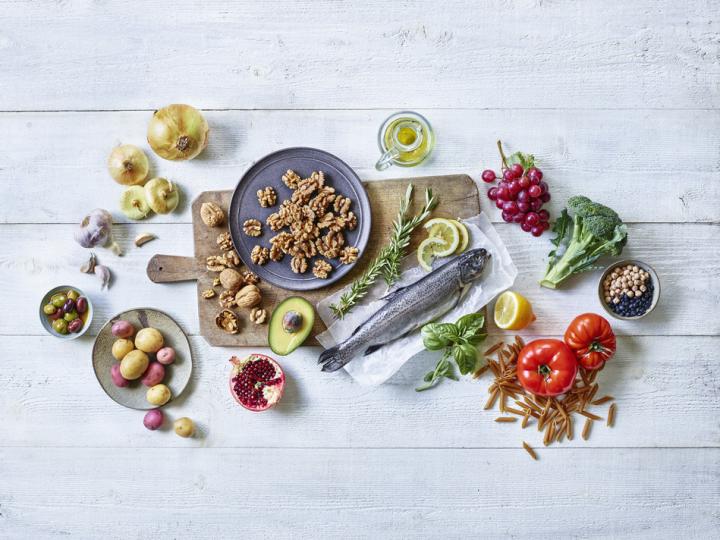
Credit: California Walnut Commission
FOLSOM, Calif., October 27, 2020 – A new study published in the Journal of the American College of Cardiology found that regular consumption of foods rich in omega-3 eicosapentaenoic acid (EPA), found in marine foods like fatty fish, and alpha-linolenic acid (ALA), found in plant foods like walnuts, was associated with improved outcomes in individuals who suffered a heart attack, including decreased risk of death. Additionally, the consumption of both ALA and EPA provided the greatest benefit, suggesting a synergistic effect and unique protective qualities when both types of omega-3 are consumed.
The observational study, supported by the California Walnut Commission and reinforced by an editorial in the same publication entitled “A Revolution in Omega-3 Fatty Acid Research,” included 944 participants who experienced a very serious heart attack in which one of the heart’s major arteries was blocked. Clinicians refer to this as a ST-segment elevation myocardial infarction (STEMI), but consumers may be more familiar with the term “widow-maker” heart attack.
Heart disease is the leading cause of death in America and every 40 seconds someone experiences a heart attack. Of those older than 45 years of age, 36% of men and 47% of women who have experienced a heart attack will die from their second heart attack if it occurs within five years of the first. A lead researcher in the study, Dr. Aleix Sala-Vila, Research Associate at IMIM (Hospital del Mar Medical Research Institute) and Barcelonaβeta Brain Research Center, explains, “Heart attacks are still very common, and aside from treatments to keep the patient alive, researchers have been exploring approaches to secure the quality of life of the patient after the heart attack. What is novel about this research is that it shows that ALA and EPA appear to be partners in improving the long-term outcomes of heart attack sufferers. Consuming both marine and plant-based omega-3s, from foods like salmon, walnuts, and flaxseed, seems to offer the greatest protection.”
The patients in this study, whose mean age was 61 and were made up of 78% men, had their blood taken during hospital admission. The researchers then determined the level of omega-3s in their blood, a reliable way to establish the intake of omega-3s during the weeks leading up to the heart attack. Next, they explored whether those with higher blood levels of omega-3s at the time of the heart attack were at decreased risk of suffering complications during a three-year follow-up period.
Specifically, the researchers found that that those who showed higher blood levels of ALA were at decreased risk of three-year all-cause mortality. Also, those with higher levels of EPA were at decreased risk of death or needing hospital readmission for cardiovascular reasons.
Walnuts have long been recognized as a heart-healthy food1, backed by more than 30 years of research showing positive outcomes related to cardiovascular health such as cholesterol, blood pressure, inflammation, endothelial function, and plaque formation. Walnuts are also the only nut with an excellent source of omega-3 ALA, providing 2.5 grams per one ounce.
While these results are encouraging, they do not prove cause and effect. Additional research is needed to determine whether EPA and ALA intake specifically contributed to the outcomes, or if other factors like socioeconomic status, education, and pharmacologic treatments also had an effect. Docosahexaenoic acid (DHA, another omega-3 supplied by fatty fish) was not part of this study.
###
The California Walnut Commission (CWC) supported this research. The CWC has supported health-related research on walnuts for more than 30 years with the intent to provide knowledge and understanding of the unique health benefits associated with consuming walnuts. While the CWC does provide funds and/or walnuts for various projects, all studies are conducted independently by researchers who design the experiments, interpret the results and present evidence-based conclusions. The CWC is committed to scientific integrity of industry-funded research.
The California walnut industry is made up of over 4,800 growers and more than 90 handlers (processors). The growers and handlers are represented by two entities, the California Walnut Board (CWB) and the California Walnut Commission (CWC).
California Walnut Commission
The California Walnut Commission, established in 1987, is funded by mandatory assessments of the growers. The CWC represents over 4,800 growers and approximately 90 handlers (processors) of California walnuts in export market development activities and conducts health research. The CWC is an agency of the State of California that works in concurrence with the Secretary of the California Department of Food and Agriculture (CDFA).
Non-Discrimination Statement
The CWC prohibits discrimination in all programs and activities on the basis of race, color, national origin, age, disability, sex, marital/familial/parental status, religion, sexual orientation, political beliefs, reprisal or retaliation for prior civil rights activity, or because all or part of an individual’s income is derived from any public assistance programs.
Persons with limited English proficiency or disabilities who require alternative means for communication of program information (translated materials, braille, large print, audiotape, etc.) should contact the CWC offices at (916) 932-7070.
To file a complaint of discrimination, complete the USDA Program Discrimination Complaint Form, AD-3027, found online at http://www.
1Supportive but not conclusive research shows that eating 1.5 ounces of walnuts per day, as part of a low saturated fat and low cholesterol diet and not resulting in increased caloric intake, may reduce the risk of coronary heart disease. (FDA) One ounce of walnuts offers 18g of total fat, 2.5g of monounsaturated fat, 13g of polyunsaturated fat including 2.5g of alpha-linolenic acid- the plant-based omega-3.
Reference:
Lázaro I, Rueda F, Cediel G, et al. Circulating Omega-3 Fatty Acids and Incident Adverse Events in Patients With Acute Myocardial Infarction. [published online ahead of print October 26, 2020]. J Am Coll Cardiol. 2020; 76 (18) 2089-2097. doi:10.1016/j.jacc.2020.08.073
Media Contact
Chelsea Kubasiak
[email protected]
Original Source
https:/
Related Journal Article
http://dx.



