Ann Arbor, September 8, 2022 – In the first year of its availability, 84.2% of US adults received at least one dose of COVID-19 vaccine. Progress in COVID-19 vaccination slowed after April 2021, and millions of Americans remain unvaccinated. New research in the American Journal of Preventive Medicine, published by Elsevier, finds wide geographic variance in vaccine uptake and identifies the underlying behavioral and social drivers that factor into the decision to remain unvaccinated. The findings suggest that improving COVID-19 vaccine confidence may not be solved by a “one-size-fits-all solution.”
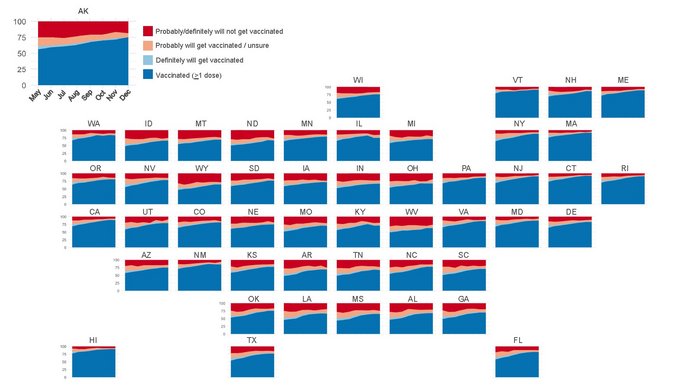
Credit: American Journal of Preventive Medicine
Ann Arbor, September 8, 2022 – In the first year of its availability, 84.2% of US adults received at least one dose of COVID-19 vaccine. Progress in COVID-19 vaccination slowed after April 2021, and millions of Americans remain unvaccinated. New research in the American Journal of Preventive Medicine, published by Elsevier, finds wide geographic variance in vaccine uptake and identifies the underlying behavioral and social drivers that factor into the decision to remain unvaccinated. The findings suggest that improving COVID-19 vaccine confidence may not be solved by a “one-size-fits-all solution.”
“Many studies have explored vaccine coverage and vaccine confidence at a national level, but these are likely to vary widely by geography and sociodemographics,” said lead investigator Nina B. Masters, PhD, Epidemic Intelligence Service, and Division of Viral Diseases, National Center for Immunization and Respiratory Diseases, Centers for Disease Control and Prevention (CDC), Atlanta, GA, USA. “We decided to explore state and regional trends in COVID-19 vaccine confidence and the underlying reasons for non-vaccination.”
The study used data from the National Immunization Survey-Adult COVID Module. This is a nationally representative household cellphone survey of US adults aged 18 or older. Of the 531,798 participants surveyed (April 22 to December 31, 2021), respondents who had not received a COVID-19 vaccine were then asked how likely they were (definitely, probably, probably not, definitely will not, not sure) to get vaccinated. Additional questions were asked about the individual’s concerns about COVID-19 and confidence in vaccine safety and importance.
To understand social norms, the participants were asked how many friends and family members had received a COVID-19 vaccination, and if a healthcare provider had recommended that they receive the vaccine. For practical factors, the survey asked whether one’s work or school required COVID-19 vaccination and whether they experienced any actual or perceived difficulty in accessing a vaccination. Demographic data were also collected. The analysis examined these variables nationally and for each state for each month in the survey period, to support trends over time.
In general, rural residents were less likely to be vaccinated than urban residents, but in the Southeast and Midwest, differences in vaccination coverage by urbanicity were smaller. In most states, Black and Hispanic adults were less likely to be vaccinated than White and non-Hispanic adults. However, in the South and the Southeast, where vaccination rates were low compared to the rest of the US, vaccination coverage was similar across race and ethnicity. The Southeast and Midwest had the largest proportion of unvaccinated people who indicated that they would probably get a COVID-19 vaccine or were unsure. These regions saw similar trends in concern about COVID-19 and confidence in the importance of getting vaccinated.
Overall, individuals with low confidence in the importance of the vaccine were five times more likely to remain unvaccinated. This suggests that focused messaging about the benefits of vaccination, compared to the risk of the disease, remains a priority. Adults in rural areas – as well as those with less than a college degree, without insurance, making less than $75,000/year and under 65 – had higher prevalence of non-vaccination across all regions, while associations between vaccination and race/ethnicity varied by region.
“Our analysis supports the idea that reasons for non-vaccination are personal and individual, and there are nuances and differences in this reasoning, for example, between an unvaccinated, young individual living in a rural community in the Southeast and an unvaccinated, older individual living in the Northeast who has mostly vaccinated friends and family. It’s important to meet people where they are to build confidence in vaccines,” said Dr. Masters. “The CDC has made national, regional, and state data available on the Behavioral and Social Drivers of COVID-19 vaccination through national surveys of adults and parents. State and local health departments may be able to strengthen their ongoing efforts locally by accessing these data at the CDC COVID Data Tracker: Vaccine Confidence.”
Journal
American Journal of Preventive Medicine
DOI
10.1016/j.amepre.2022.06.016
Method of Research
Data/statistical analysis
Subject of Research
People
Article Title
Geographic Heterogeneity in Behavioral and Social Drivers of COVID-19 Vaccination