• HOME
  • NEWS
  • EXPLORE
    • CAREER
      • Companies
      • Jobs
    • EVENTS
    • iGEM
      • News
      • Team
    • PHOTOS
    • VIDEO
    • WIKI
  • BLOG
  • COMMUNITY
    • FACEBOOK
    • INSTAGRAM
    • TWITTER
Friday, July 3, 2026
BIOENGINEER.ORG
No Result
View All Result
  • Login
  • HOME
  • NEWS
  • EXPLORE
    • CAREER
      • Companies
      • Jobs
        • Lecturer
        • PhD Studentship
        • Postdoc
        • Research Assistant
    • EVENTS
    • iGEM
      • News
      • Team
    • PHOTOS
    • VIDEO
    • WIKI
  • BLOG
  • COMMUNITY
    • FACEBOOK
    • INSTAGRAM
    • TWITTER
  • HOME
  • NEWS
  • EXPLORE
    • CAREER
      • Companies
      • Jobs
        • Lecturer
        • PhD Studentship
        • Postdoc
        • Research Assistant
    • EVENTS
    • iGEM
      • News
      • Team
    • PHOTOS
    • VIDEO
    • WIKI
  • BLOG
  • COMMUNITY
    • FACEBOOK
    • INSTAGRAM
    • TWITTER
No Result
View All Result
Bioengineer.org
No Result
View All Result
Home NEWS Science News Chemistry

New study confirms ‘rippled sheet’ protein structure predicted in 1953

Bioengineer by Bioengineer
September 2, 2022
in Chemistry
Reading Time: 3 mins read
0
Rippled beta sheet
Share on FacebookShare on TwitterShare on LinkedinShare on RedditShare on Telegram

An unusual protein structure known as a “rippled beta sheet,” first predicted in 1953, has now been created in the laboratory and characterized in detail using x-ray crystallography.
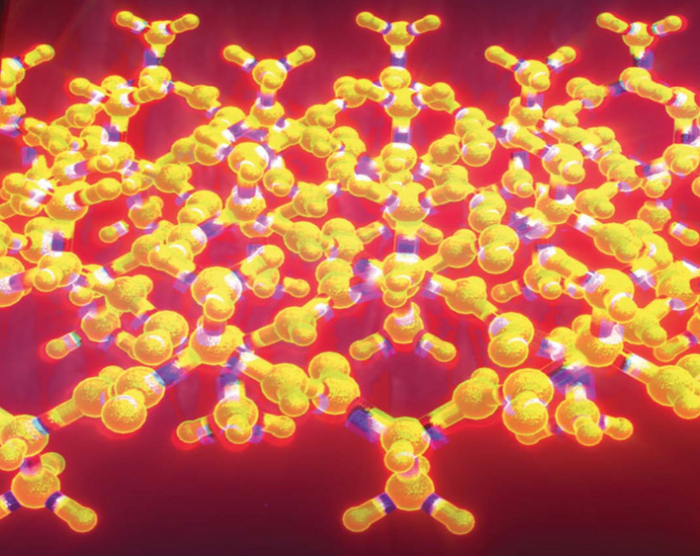
Rippled beta sheet

Credit: Image credit: J. Raskatov

An unusual protein structure known as a “rippled beta sheet,” first predicted in 1953, has now been created in the laboratory and characterized in detail using x-ray crystallography.

The new findings, published in July in Chemical Science, may enable the rational design of unique materials based on the rippled sheet architecture.

“Our study establishes the rippled beta sheet layer configuration as a motif with general features and opens the road to structure-based design of unique molecular architectures, with potential for materials development and biomedical applications,” said Jevgenij Raskatov, associate professor of chemistry and biochemistry at UC Santa Cruz and corresponding author of the paper.

Proteins come in an enormous range of shapes and sizes to carry out their myriad structural and functional roles in living cells. Certain common structural motifs, such as the alpha helix, are found in many protein structures.

The rippled sheet is a variation on the pleated beta sheet, a well-known structural motif found in thousands of proteins. Linus Pauling and Robert Corey described the rippled beta sheet in 1953, two years after introducing the concept of the pleated beta sheet. While the pleated beta sheet is well known and often called simply the beta sheet, the rippled sheet remained a largely theoretical structure for decades.

In a previous study published in 2021, Raskatov’s team reported obtaining a rippled beta sheet structure by mixing a small peptide with equal amounts of its mirror image. The researchers used mirror-image forms of triphenylalanine, a short peptide consisting of three phenylalanine amino acids. The mirror-image peptides joined in pairs to form “dimers” with the predicted structure, but they did not form the extended, periodic rippled beta-sheet layer topography hypothesized by Pauling and Corey.

“The dimers packed together into herringbone layer structures, which raised doubt as to whether the periodic rippled beta-sheet layer configuration was viable,” Raskatov said.

In the new study, the researchers substituted other amino acids for one of the triphenylalanines to create slightly different tripeptides and their mirror-images. Using these new tripeptides, they were able to create three different aggregating peptide systems that formed extended antiparallel rippled beta sheet layers, in which mirror-image peptide strands were arranged in alternating fashion. The results of x-ray crystallography showed that the crystal structures are in excellent overall agreement with the predictions made by Pauling and Corey.

The co-first authors of the paper are Amaruka Hazari, a staff scientist in Raskatov’s lab, and Michael Sawaya at UCLA. Other coauthors include Timothy Johnstone at UC Santa Cruz and Niko Vlahakis, David Boyer, Jose Rodriguez, and David Eisenberg at UCLA. This work was supported by the National Institutes of Health.


Journal

Chemical Science

DOI

10.1039/d2sc02531k

Article Title

The rippled b-sheet layer configuration—a novel supramolecular architecture based on predictions by Pauling and Corey

Article Publication Date

15-Jul-2022

COI Statement

There is no conict of interest to report.

Share12Tweet8Share2ShareShareShare2

Related Posts

Graz University of Technology Deciphers the Structural Secrets of MOF Thin Films — Chemistry

Graz University of Technology Deciphers the Structural Secrets of MOF Thin Films

July 2, 2026
Breaking Thermodynamic Limits: Wavelength-Driven Catalysis Advances Ammonia Synthesis — Chemistry

Breaking Thermodynamic Limits: Wavelength-Driven Catalysis Advances Ammonia Synthesis

July 2, 2026

From Quantum Mechanics to AI-Powered Materials Discovery: MARVEL Marks 12 Years of Transforming Computational Science

July 2, 2026

Djire Recognized with National Award for Outstanding Contributions in Research and Teaching

July 2, 2026

POPULAR NEWS

  • Detection of EDCs in Breast Milk and Infant Urine Up to Six Months Highlights Early Exposure Risks

    77 shares
    Share 31 Tweet 19
  • Saying Goodbye to PGY-6: Pediatric Fellowship Realities

    103 shares
    Share 41 Tweet 26
  • New Drug Candidate Developed at McMaster Shows Potential for Treating Brain Cancer

    58 shares
    Share 23 Tweet 15
  • KTU Researchers Explore Ultrasound’s Role in Enhancing Blood Flow Beyond Diagnostics

    53 shares
    Share 21 Tweet 13

About

BIOENGINEER.ORG

We bring you the latest biotechnology news from best research centers and universities around the world. Check our website.

Follow us

Recent News

Steatosis Drives Liver Metastasis Diversity in CRC

Unlocking the Mysteries of Alzheimer’s Disease

Pensoft Introduces New Peer-Reviewed Journal of Regeneration to Advance Restorative Biology Across Species

Subscribe to Blog via Email

Enter your email address to subscribe to this blog and receive notifications of new posts by email.

Join 83 other subscribers
  • Contact Us

Bioengineer.org © Copyright 2023 All Rights Reserved.

Welcome Back!

Login to your account below

Forgotten Password?

Retrieve your password

Please enter your username or email address to reset your password.

Log In
No Result
View All Result
  • Homepages
    • Home Page 1
    • Home Page 2
  • News
  • National
  • Business
  • Health
  • Lifestyle
  • Science

Bioengineer.org © Copyright 2023 All Rights Reserved.