• HOME
  • NEWS
  • EXPLORE
    • CAREER
      • Companies
      • Jobs
    • EVENTS
    • iGEM
      • News
      • Team
    • PHOTOS
    • VIDEO
    • WIKI
  • BLOG
  • COMMUNITY
    • FACEBOOK
    • INSTAGRAM
    • TWITTER
Saturday, June 27, 2026
BIOENGINEER.ORG
No Result
View All Result
  • Login
  • HOME
  • NEWS
  • EXPLORE
    • CAREER
      • Companies
      • Jobs
        • Lecturer
        • PhD Studentship
        • Postdoc
        • Research Assistant
    • EVENTS
    • iGEM
      • News
      • Team
    • PHOTOS
    • VIDEO
    • WIKI
  • BLOG
  • COMMUNITY
    • FACEBOOK
    • INSTAGRAM
    • TWITTER
  • HOME
  • NEWS
  • EXPLORE
    • CAREER
      • Companies
      • Jobs
        • Lecturer
        • PhD Studentship
        • Postdoc
        • Research Assistant
    • EVENTS
    • iGEM
      • News
      • Team
    • PHOTOS
    • VIDEO
    • WIKI
  • BLOG
  • COMMUNITY
    • FACEBOOK
    • INSTAGRAM
    • TWITTER
No Result
View All Result
Bioengineer.org
No Result
View All Result
Home NEWS Science News

New species of tree living crab found in Western Ghats

Bioengineer by Bioengineer
April 3, 2017
in Science News
Reading Time: 2 mins read
0
Share on FacebookShare on TwitterShare on LinkedinShare on RedditShare on Telegram
IMAGE

Credit: Authors

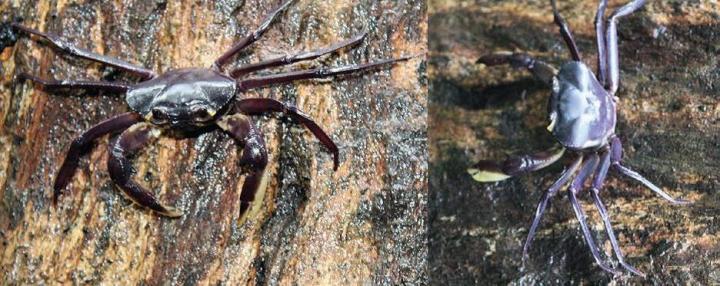
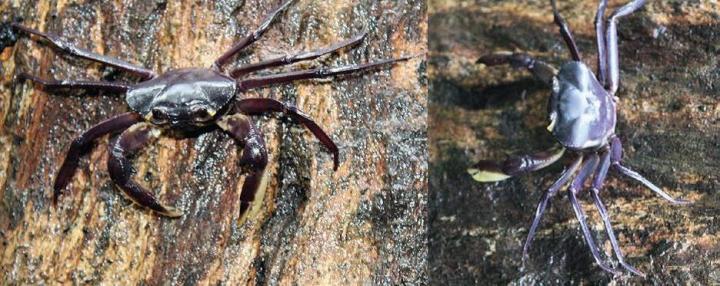
A recent research paper in The Journal of Crustacean Biology reveals a new genus and new species of tree crab in Kerala, southern India. Known scientifically as the "Kani maranjandu," it is substantially different from other congeners. Its distinguishing characters include: the structure of its hard upper shell, as well as its male abdominal structure and reproductive parts, and of course, its diagnostic elongated walking legs, which no other genus has. (see fig 1).

The Western Ghats in India is a biodiversity hot spot for plants and animals. However, its freshwater biodiversity, especially with regard to crabs, remains poorly documented. This is the first report of its kind to offer a record of an arboreal crab — a crab species that lives in trees.

During a two year survey of the freshwater crab fauna, which started in 2014 in Westerns Ghats in Kerala, India, the people of Kanikkaran (also known as Kani) reported sightings to the survey team of "long-legged" tree crabs in the area. Early attempts to capture them proved futile. On September, 5 2016, researchers with the help of the Kani tribe were finally able to capture a female specimen and later a large adult male. (see fig 2).

The specimens examined are deposited in the Zoological Survey of India and in the museum collection of the Department of Aquatic Biology and Fisheries, University of Kerala, India. The new species is named "Kani maranjandu" after the Kani tribe in Kerala, who helped discover the tree crab. Maranjandu is the local Malayanam name for tree crab.

According to Dr. Biju Kumar, one of the study's authors, the discovery of this crab is very important in the context of conservation of the Western Ghats Biodiversity Hotpot as they can serve as ecological indicators, reflecting the health of the ecosystem. "As water holding hollows in large trees are essential for the survival of this unique species, the discovery also stress the need for conservation of large trees in the degraded forest ecosystems of the Western Ghats," Kumar said. "It also highlights how little we know about the actual biodiversity that resides in these forests and the efforts that must still be made to find and study the many undoubted new species that still live there."

###

The paper "Description of a new genus and new species of a fully arboreal crab (Decapoda: Brachyura: Gecarcinucidae) from the Western Ghats, India, with notes on the ecologyof arboreal crabs" is available at:

DOI: doi:10.1093/jcbiol/rux012

Direct correspondence to:

Correspondence: Peter K. L. Ng; email: [email protected]

To request a copy of the study, please contact:

Daniel Luzer or 212-743-6113

Sharing on social media? Find Oxford Journals online at @OxfordJournals

Media Contact

Daniel Luzer
[email protected]
212-743-6113

http://global.oup.com/academic/;jsessionid=13378C4

############

Story Source: Materials provided by Scienmag
Share12Tweet8Share2ShareShareShare2

Related Posts

Tracking Lanthanide-Labeled Microplastics in Plants

June 25, 2026

POSTECH Researchers Slash Cost of Reconstituted Cell-Free Systems by 95%

June 25, 2026

AI and Physics Collaborate to Design Advanced Hydrogen Storage Materials

June 25, 2026

Natural Hallucinogens: Evolution’s Ecological Tools, Not Mere Chemical Byproducts

June 25, 2026
Please login to join discussion

POPULAR NEWS

  • Saying Goodbye to PGY-6: Pediatric Fellowship Realities

    103 shares
    Share 41 Tweet 26
  • Multi-Hospital Study Reveals Long Covid Burden Is Twice as High as Current Estimates

    92 shares
    Share 36 Tweet 23
  • Detection of EDCs in Breast Milk and Infant Urine Up to Six Months Highlights Early Exposure Risks

    77 shares
    Share 31 Tweet 19
  • New Drug Candidate Developed at McMaster Shows Potential for Treating Brain Cancer

    58 shares
    Share 23 Tweet 15

About

We bring you the latest biotechnology news from best research centers and universities around the world. Check our website.

Follow us

Recent News

Tracking Lanthanide-Labeled Microplastics in Plants

POSTECH Researchers Slash Cost of Reconstituted Cell-Free Systems by 95%

AI and Physics Collaborate to Design Advanced Hydrogen Storage Materials

Subscribe to Blog via Email

Success! An email was just sent to confirm your subscription. Please find the email now and click 'Confirm' to start subscribing.

Join 82 other subscribers
  • Contact Us

Bioengineer.org © Copyright 2023 All Rights Reserved.

Welcome Back!

Login to your account below

Forgotten Password?

Retrieve your password

Please enter your username or email address to reset your password.

Log In
No Result
View All Result
  • Homepages
    • Home Page 1
    • Home Page 2
  • News
  • National
  • Business
  • Health
  • Lifestyle
  • Science

Bioengineer.org © Copyright 2023 All Rights Reserved.