• HOME
  • NEWS
  • EXPLORE
    • CAREER
      • Companies
      • Jobs
    • EVENTS
    • iGEM
      • News
      • Team
    • PHOTOS
    • VIDEO
    • WIKI
  • BLOG
  • COMMUNITY
    • FACEBOOK
    • INSTAGRAM
    • TWITTER
Wednesday, July 8, 2026
BIOENGINEER.ORG
No Result
View All Result
  • Login
  • HOME
  • NEWS
  • EXPLORE
    • CAREER
      • Companies
      • Jobs
        • Lecturer
        • PhD Studentship
        • Postdoc
        • Research Assistant
    • EVENTS
    • iGEM
      • News
      • Team
    • PHOTOS
    • VIDEO
    • WIKI
  • BLOG
  • COMMUNITY
    • FACEBOOK
    • INSTAGRAM
    • TWITTER
  • HOME
  • NEWS
  • EXPLORE
    • CAREER
      • Companies
      • Jobs
        • Lecturer
        • PhD Studentship
        • Postdoc
        • Research Assistant
    • EVENTS
    • iGEM
      • News
      • Team
    • PHOTOS
    • VIDEO
    • WIKI
  • BLOG
  • COMMUNITY
    • FACEBOOK
    • INSTAGRAM
    • TWITTER
No Result
View All Result
Bioengineer.org
No Result
View All Result
Home NEWS Science News Biology

New species of tree discovered in Tanzania mountains

Bioengineer by Bioengineer
July 16, 2019
in Biology
Reading Time: 3 mins read
0
IMAGE
Share on FacebookShare on TwitterShare on LinkedinShare on RedditShare on Telegram

IMAGE

Credit: Dr Andy Marshall

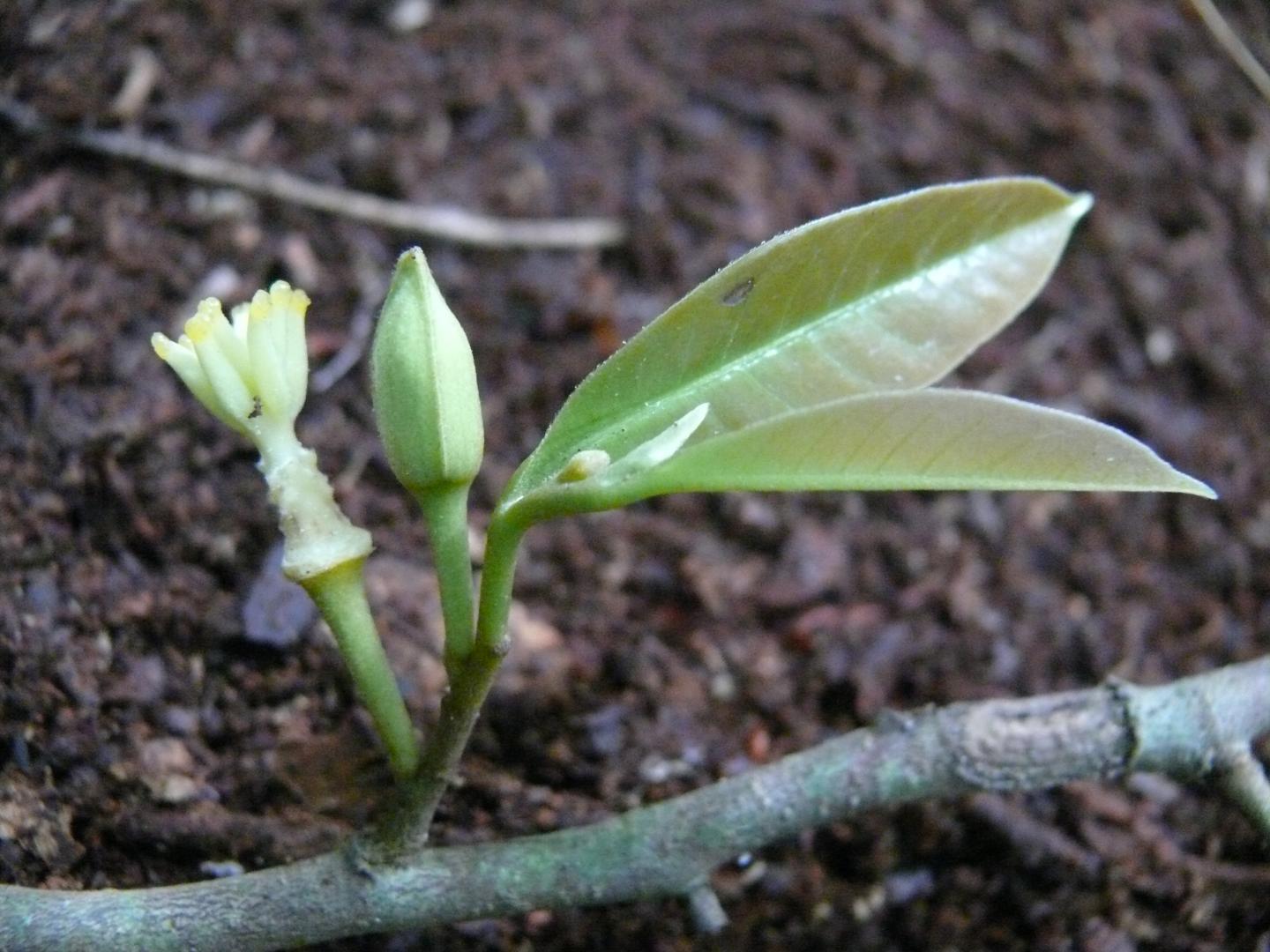
Researchers have discovered a new species of tree in the Usambara Mountains in Tanzania, part of the Eastern Arc Mountains, and a globally important region for species in need of conservation.

The tree, which grows up to 20m tall and has white flowers, has been categorised as endangered due to its restricted population range at only 8km-sq. It is as yet unknown what kind of wildlife might rely on the tree, but it is most likely pollinated by a species of beetle.

Researcher Dr Andy Marshall, from the University of York’s Department of Environment and Geography, discovered the tree when carrying out a survey of the forest to understand the environmental factors that influence the amount of carbon that forests can store.

Botanist George Gosline, from Kew Gardens, recognized that this is a new species related to a group previously thought to be restricted to western Africa. This in turn led to recognition of three new species in the group.

Dr Marshall said: “The tree is in a particularly beautiful part of the world – up high in the clouded mountains and surrounded by tea estates. Now that we know it exists, we have to look at ways to protect it.

“With such a small population, it is important that it does not become isolated from other forests in the region, due to increasing agriculture. Small forests need to be connected to others to ensure seed dispersal and species adaptation to climate change.”

The forests of these mountains have been reduced in size by thousands of square kilometres over the past hundred or so years and are now threatened by climate change. The researchers argue that it is essential to look at conservation methods in order to maintain or increase the tree population.

Research shows that forests that have been restored with the help of human intervention rarely achieve the same number of species that would have occurred naturally. This means that conservation efforts should begin before any further damage occurs.

A research project, led by Dr Marshall, in another part of Tanzania, the Magombera Forest, should provide researchers with further understanding of the best methods to employ for protecting these secluded rare species. The project includes working with local villagers to develop new methods for restoring forests and to find alternative sources for wood, and how local people can help to reduce wildfires and invasive vines that can kill trees.

With local support, thousands of small trees have grown back in areas once lost, suggesting that a similar approach could be used in other areas where species are at risk of becoming extinct through human activity and climate change.

George Gosline, botanist from Kew Gardens, said: “The discovery of this extremely rare species reaffirms the importance of the Eastern Arc Mountains as one of the most important reservoirs of biodiversity in Africa.

“The area is a refuge for ancient species from a time when a great forest covered all of tropical Africa. These forest remnants are precious and irreplaceable.”

The discovery is not the first to be made in the region by Dr Andy Marshall; other discoveries in the Eastern Arc Mountains include a new chameleon species and the Polyceratocarpus askhambryan-iringae tree, which was discovered by chance whilst Dr Marshall was researching one of the world’s rarest primates, the kipunji monkey.

###

The research, funded by the Leverhulme Trust; Royal Botanic Gardens at Kew; Australian Research Council; African Wildlife Foundation; Flamingo Land Ltd.; and the B. A. Krukoff Fund for the Study of African Botany, is published in Kew Bulletin.

Media Contact
Samantha Martin
[email protected]

Original Source

https://www.york.ac.uk/news-and-events/news/2019/research/new-species-of-tree-of-discovered-in-tanzania/

Related Journal Article

http://dx.doi.org/10.1007/s12225-019-9804-7

Tags: BiodiversityBiologyClimate ChangeForestryPlant Sciences
Share12Tweet8Share2ShareShareShare2

Related Posts

Here are a few rewritten headlines for a science magazine post, each with a slightly different tone: Intriguing & poetic: How do organs sculpt themselves? Sea stars hold the secret Direct & research-focused: Sea stars reveal the hidden rules of organ formation Metaphorical & inviting: Tiny architects beneath the waves: What sea stars teach us about building organs Short & punchy: Star-shaped clues to how our organs take shape Question-led: Could a sea star show us how organs form? Elegant & feature-style: The body’s blueprint, glimpsed in a sea star’s arm

July 6, 2026
Bacteria evolve faster with unconventional gene copies — Biology

Bacteria evolve faster with unconventional gene copies

July 6, 2026

Neighbours rewire soil feedback via root microbiome shifts

July 6, 2026

Evolution-Inspired Biosensors Revolutionize Lipid Tracking in Real Time

July 2, 2026
Please login to join discussion

POPULAR NEWS

  • Detection of EDCs in Breast Milk and Infant Urine Up to Six Months Highlights Early Exposure Risks

    77 shares
    Share 31 Tweet 19
  • New Drug Candidate Developed at McMaster Shows Potential for Treating Brain Cancer

    58 shares
    Share 23 Tweet 15
  • Saying Goodbye to PGY-6: Pediatric Fellowship Realities

    103 shares
    Share 41 Tweet 26
  • KTU Researchers Explore Ultrasound’s Role in Enhancing Blood Flow Beyond Diagnostics

    53 shares
    Share 21 Tweet 13

About

We bring you the latest biotechnology news from best research centers and universities around the world. Check our website.

Follow us

Recent News

Flame retardant BDE-209 targets molecularly linked to ulcerative colitis

Ultra-high frequency particle impacts mimic rockbursts to shatter hard rock

Kidney transplant outcomes in older adults studied by German researchers

Subscribe to Blog via Email

Success! An email was just sent to confirm your subscription. Please find the email now and click 'Confirm' to start subscribing.

Join 83 other subscribers
  • Contact Us

Bioengineer.org © Copyright 2023 All Rights Reserved.

Welcome Back!

Login to your account below

Forgotten Password?

Retrieve your password

Please enter your username or email address to reset your password.

Log In
No Result
View All Result
  • Homepages
    • Home Page 1
    • Home Page 2
  • News
  • National
  • Business
  • Health
  • Lifestyle
  • Science

Bioengineer.org © Copyright 2023 All Rights Reserved.