• HOME
  • NEWS
  • EXPLORE
    • CAREER
      • Companies
      • Jobs
    • EVENTS
    • iGEM
      • News
      • Team
    • PHOTOS
    • VIDEO
    • WIKI
  • BLOG
  • COMMUNITY
    • FACEBOOK
    • INSTAGRAM
    • TWITTER
Sunday, May 17, 2026
BIOENGINEER.ORG
No Result
View All Result
  • Login
  • HOME
  • NEWS
  • EXPLORE
    • CAREER
      • Companies
      • Jobs
        • Lecturer
        • PhD Studentship
        • Postdoc
        • Research Assistant
    • EVENTS
    • iGEM
      • News
      • Team
    • PHOTOS
    • VIDEO
    • WIKI
  • BLOG
  • COMMUNITY
    • FACEBOOK
    • INSTAGRAM
    • TWITTER
  • HOME
  • NEWS
  • EXPLORE
    • CAREER
      • Companies
      • Jobs
        • Lecturer
        • PhD Studentship
        • Postdoc
        • Research Assistant
    • EVENTS
    • iGEM
      • News
      • Team
    • PHOTOS
    • VIDEO
    • WIKI
  • BLOG
  • COMMUNITY
    • FACEBOOK
    • INSTAGRAM
    • TWITTER
No Result
View All Result
Bioengineer.org
No Result
View All Result
Home NEWS Science News Biology

New species of marine spider emerges at low tide to remind scientists…

Bioengineer by Bioengineer
February 12, 2018
in Biology
Reading Time: 2 mins read
1
Share on FacebookShare on TwitterShare on LinkedinShare on RedditShare on Telegram
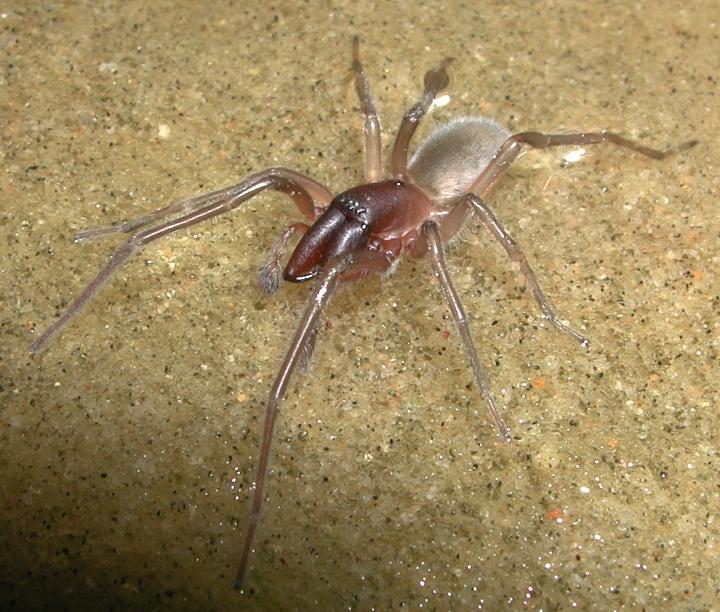
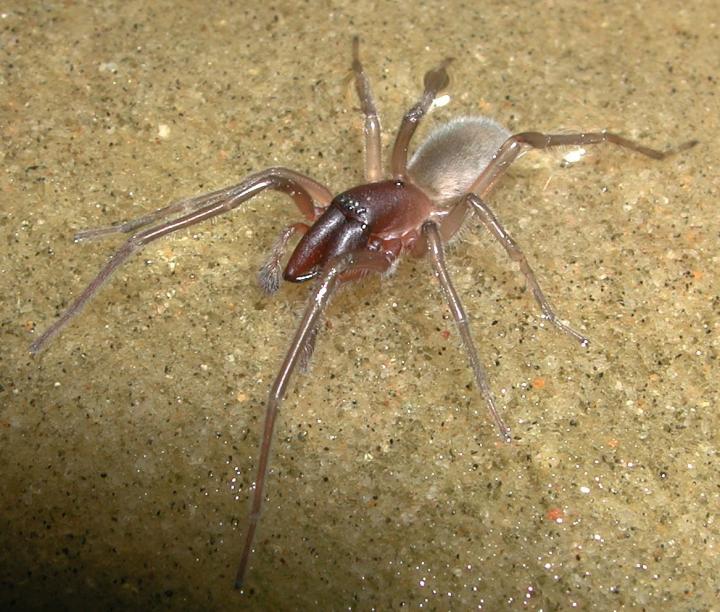
IMAGE

Credit: R. Raven

It was 02:00h on 11 January 2009 when the sea along the coastline of Australia's "Sunshine State" of Queensland receded to such an extent that it exposed a population of water-adapted spiders. The observant researchers who would later describe these spiders as a species new to science, were quick to associate their emergence with reggae legend Bob Marley and his song "High Tide or Low Tide".

In their paper, published in the open access journal Evolutionary Systematics, the team of Drs. Barbara Baehr, Robert Raven and Danilo Harms, affiliated with Queensland Museum and the University of Hamburg, describe the new Bob Marley's intertidal spider and also provide new information on two of its previously known, yet understudied, relatives from Samoa and Western Australia.

Unlike the spiders which people are familiar with, the intertidal species, whose representative is Bob Marley's namesake, are truly marine. They have adapted to the underwater life by hiding in barnacle shells, corals or kelp holdfast during high tide. To breathe, they build air chambers from silk. Once the sea water recedes, though, they are out and about hunting small invertebrates that roam the surfaces of the nearby rocks, corals and plants.

The new species, listed under the scientific name of Desis bobmarleyi, is described based on male and female specimens spotted and collected from brain coral on that night in January.

Both sexes are characterised by predominantly red-brown colours, while their legs are orange-brown and covered with a dense layer of long, thin and dark grey hair-like structures. The females appear to be larger in size with the studied specimen measuring nearly 9 mm, whereas the male was about 6 mm long.

While the exact distribution range of the newly described species remains unknown, it is currently recorded from the intertidal zones of the Great Barrier Reef on the north-eastern coast of Queensland.

"The song 'High Tide or Low Tide' promotes love and friendship through all struggles of life," explain the authors for their curious choice of a name. "It is his music that aided a field trip to Port Douglas in coastal Queensland, Australia, to collect spiders with a highly unique biology."

Apart from reporting their research, the scientists use their paper to pay tribute to a German naturalist from the late 19th century – Amalie Dietrich, as well as the famous Jamaican singer and songwriter. Both admirable figures, even if representative of very different fields, are seen by the authors as examples of "the adventurous and resilient at heart" human nature in pursuit of freedom and independence.

###

Original source:

Baehr BC, Raven R, Harms D (2017) "High Tide or Low Tide": Desis bobmarleyi sp. n., a new spider from coral reefs in Australia's Sunshine State and its relative from Sāmoa (Araneae, Desidae, Desis). Evolutionary Systematics 1: 111-120. https://doi.org/10.3897/evolsyst.1.15735

Media Contact

Barbara C. Baehr
[email protected]
@Pensoft

http://www.pensoft.net

Related Journal Article

http://dx.doi.org/10.3897/evolsyst.1.15735

Share12Tweet7Share2ShareShareShare1

Related Posts

Uncovering C. elegans Immunity via Genetic Screens — Biology

Uncovering C. elegans Immunity via Genetic Screens

May 16, 2026
Single mother must adapt swiftly — the survival of her colony depends on it — Biology

Single mother must adapt swiftly — the survival of her colony depends on it

May 15, 2026

Why Are Nearly Everyone Right-Handed? It Might Be Linked to How We Learned to Walk

May 15, 2026

Excessive Neuronal Activity Initiates Severe Autoimmune Brain Disorder

May 15, 2026
Please login to join discussion

POPULAR NEWS

  • Research Indicates Potential Connection Between Prenatal Medication Exposure and Elevated Autism Risk

    844 shares
    Share 338 Tweet 211
  • New Study Reveals Plants Can Detect the Sound of Rain

    730 shares
    Share 291 Tweet 182
  • Salmonella Haem Blocks Macrophages, Boosts Infection

    62 shares
    Share 25 Tweet 16
  • Breastmilk Balances E. coli and Beneficial Bacteria in Infant Gut Microbiomes

    58 shares
    Share 23 Tweet 15

About

We bring you the latest biotechnology news from best research centers and universities around the world. Check our website.

Follow us

Recent News

Tau T205 Phosphorylation Controls Memory and Engrams

Phocaeicola dorei Eases Liver Fibrosis via Efferocytosis

Boosting Aging Positivity and Activity in Older Couples

Subscribe to Blog via Email

Enter your email address to subscribe to this blog and receive notifications of new posts by email.

Join 82 other subscribers
  • Contact Us

Bioengineer.org © Copyright 2023 All Rights Reserved.

Welcome Back!

Login to your account below

Forgotten Password?

Retrieve your password

Please enter your username or email address to reset your password.

Log In
No Result
View All Result
  • Homepages
    • Home Page 1
    • Home Page 2
  • News
  • National
  • Business
  • Health
  • Lifestyle
  • Science

Bioengineer.org © Copyright 2023 All Rights Reserved.