


Researchers have built two DNA methylation clocks for human skin, one tuned to ageing caused by external factors such as sunlight and one tuned to ageing driven by internal biology, and shown that the two behave very differently when applied to skin samples from multiple independent datasets. The work, published in Clinical Epigenetics, addresses a long-standing gap: existing skin epigenetic clocks, including the widely used Horvath ‘Skin and Blood’ clock, were trained to predict chronological age from mixtures of sun-exposed and sun-protected tissues, which the authors argue biases them heavily towards internally driven, or endogenous, skin ageing.
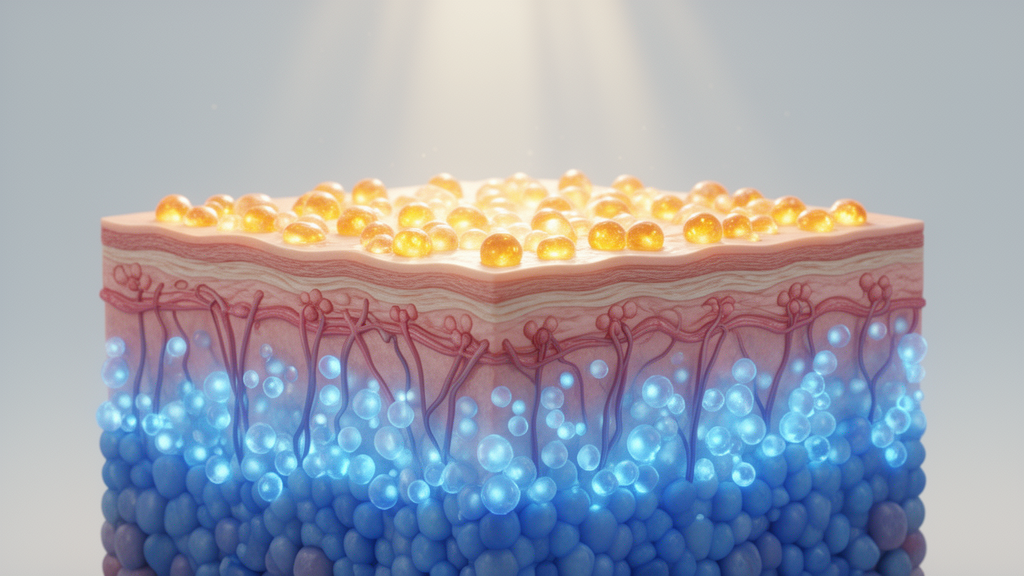
The distinction matters because skin, the organ most exposed to the external environment, ages through two conceptually separate routes. Endogenous skin ageing reflects factors originating inside the body, such as metabolic stress and blood nutrient supply, and is expected to influence all skin sites. Exogenous skin ageing is driven by harmful factors penetrating the outermost epidermal layer, the stratum corneum, and should predominantly affect environmentally exposed sites such as the face and outer forearms. The two processes interact in exposed skin, which also carries an increased risk of skin cancers including melanoma, particularly in lighter-skinned people with high sun exposure, making them difficult to disentangle in a single sample.
To build the Exogenous Skin clock, the team, led by Christopher J. Shore of King’s College London together with collaborators including Unilever and Erasmus MC, started from CpG sites on the Illumina 450k methylation array that changed significantly with age in sun-exposed arm skin but not in sun-protected skin, drawing on a previous arm-skin study of 96 profiles from Chinese and European female donors. After principal component filtering, ridge regression and repeated elastic net model training with cross-validation, the final original model used just 24 CpG sites. The Endogenous Skin clock was constructed in mirror image, from sites that changed with age in sun-protected whole skin but showed no significant differences between exposed and protected sites, and was trained mostly on sun-protected samples; it retained 25 CpG sites.
The clearest validation came from the Vandiver dataset, 78 publicly available methylation profiles of epidermal and dermal biopsies from sun-protected and sun-exposed sites in young and old donors. The Exogenous Skin clock produced significantly older age estimates for sun-exposed samples than for sun-protected samples in both age groups (p = 9.6×10⁻⁸), while the Endogenous and Skin and Blood clocks showed no significant difference between exposed and protected samples (ANOVA p = 0.66 and p = 1.00). The Exogenous clock was also far more accurate at chronological age prediction in exposed sites, with a median absolute error of 9.2 years there versus 31.0 years in protected sites, whereas the other two clocks tracked chronological age closely overall.
The clocks were then applied to 414 whole-skin methylation profiles from the TwinsUK MuTHER cohort, taken from a relatively sun-protected abdominal site. Here the Endogenous Skin clock predicted chronological age with a median absolute error of 4.21 years (rho = 0.76) and the Skin and Blood clock with 4.7 years (rho = 0.87), while the Exogenous clock was weaker (MAE 13.4 years, rho = 0.39). But the Exogenous clock showed something the others did not: for the 242 participants with questionnaire data on sun-seeking behaviour, operationalised as lifetime weeks spent in hot countries, Exogenous clock age acceleration correlated significantly with sun-seeking (rho = 0.184, p = 0.004). No such correlation appeared for the Endogenous or Skin and Blood clocks. The authors note the behaviour data was collected roughly a decade before the biopsies, and that the correlation, while statistically significant, is weak, so further validation with better sun-exposure measures is needed.
A third test used non-invasive facial skin swabs from 44 participants in the Rotterdam Study, profiled with targeted bisulphite amplicon sequencing rather than Illumina arrays. Exogenous clock age acceleration residuals correlated with clinically graded facial photodamage severity (rho = 0.33, p = 0.028), while the Endogenous clock (rho = 0.08, p = 0.59) and Skin and Blood clock (rho = −0.13, p = 0.42) showed no significant association. The authors caution that the photodamage grading used only four categories, the swabs capture methylation from desquamated keratinocytes rather than deeper skin layers, and the sequencing platform differed from the training data, all factors that may have constrained the observed correlation.
Because the Exogenous clock was trained on epidermal and whole-skin samples, the team also tested it on dermal tissue and on cultured dermal fibroblasts from sun-exposed and donor-matched sun-protected sites. The clock estimated older ages in fibroblasts from sun-exposed sites than sun-protected sites (ANOVA p = 0.0003), but age errors were large, at 13.5 years for young donors’ exposed fibroblasts, and it distinguished exposed from protected dermis less well than epidermis. Re-training the clock with seven additional sun-exposed fibroblast profiles produced a 42-CpG second version that cut the fibroblast error to 10.0 years, improved overall accuracy in the Vandiver dataset (MAE 13.6 versus 17.7 years), sharpened the dermal exposed-versus-protected contrast, and preserved performance in epidermal and whole-skin samples. All subsequent analyses used this re-trained version.
To probe the biology the clocks reflect, the researchers ran gene expression association studies in 364 whole-skin samples from TwinsUK that had both methylation and RNA-seq data. No genes reached significance for the Endogenous or Skin and Blood clock accelerations, but 202 genes (0.8% of 24,704 tested) were significantly associated with Exogenous clock acceleration at q < 0.05, 128 with increased and 74 with decreased expression. Notable hits included COL1A1, EDN3 and GDA. Pathway enrichment pointed to a predicted decrease in EIF2 signalling activity, which has previously been linked to protective epidermal responses to UV radiation, and to MTOR signalling and the tumour microenvironment pathway, consistent with sun exposure raising skin cancer risk. A sensitivity analysis adjusting for the dermis-to-epidermis proportion left the results essentially unchanged.
An independent RNA-seq dataset of sun-exposed and sun-protected arm biopsies from twelve older donors corroborated the signature: across 134 overlapping genes, the log fold-changes between exposed and protected skin correlated positively with the Exogenous clock acceleration effect estimates (rho = 0.46, p = 2.6×10⁻⁹), and seven genes, including COL1A1, SFRP2, CDH4, COL14A1, CDH5, SPARC and THY1, were individually significant with matching directions of effect. One counterintuitive result was that COL1A1 expression increased with Exogenous clock acceleration, even though Type I collagen protein decreases in photoaged skin; the authors reconcile this with recent transcript data suggesting UV exposure slows the age-related decline in COL1A1 mRNA, and stress that the protein-level picture still needs confirming.
The study has clear limitations. The clocks were not compared with the only other previously published skin ageing clock, because that clock’s training data overlapped with theirs. Validation did not extend to whole-genome bisulphite sequencing or long-read platforms, and the re-trained Exogenous clock could not be tested on the non-invasive swab samples because those profiles lacked most of its CpG sites. The correlations with sun-seeking behaviour and photodamage grading, though significant, are modest and explain only part of the variation. Intrinsic body-site differences, such as cell developmental origin, could also contribute to the exposed-versus-protected age gaps, and the authors say further work is needed to rule this out fully. Even so, they argue that pairing the Exogenous clock with the Endogenous or Skin and Blood clock offers researchers and, eventually, clinicians a way to separate the two strands of skin ageing, with potential uses ranging from testing whether anti-ageing treatments target photoageing specifically to building personalised skin health recommendations.
Subject of Research: Development and validation of epigenetic clocks that distinguish exogenous, sun-driven skin ageing from endogenous skin ageing
Article Title: Epigenetic clocks can differentiate between exogenous and endogenous skin ageing
Article References: Shore, C. J., Simons, R. B., del Caño, L. R., Xiong, Z., Pardo, L. M., Eecen, C. M. W., Nijsten, T., Small, K. S., Vidaki, A., Kayser, M., Bell, J. T., Shen, Y. J., & Gunn, D. A. (2026). Epigenetic clocks can differentiate between exogenous and endogenous skin ageing. Clinical Epigenetics, 18(1), Article 168. https://doi.org/10.1186/s13148-026-02230-w
Image Credits: AI Generated
DOI: 10.1186/s13148-026-02230-w
Keywords: epigenetic clocks, skin ageing, DNA methylation, photoageing, sun exposure, gene expression, fibroblasts, biomarkers, dermatology, TwinsUK, Rotterdam Study, COL1A1
News Source: Juliet Wilcox. (October 30, 2026). New Skin Epigenetic Clocks Separate Sun-Driven Ageing from Internal Ageing. Scienmag.



