Credit: Dmitry Kireev, University of Texas at Austin
The novel coronavirus has been compared to the flu almost from the moment it emerged in late 2019. They share a variety of symptoms, and in many cases, an influenza test is part of the process for diagnosing COVID-19.
Researchers at The University of Texas at Austin are now developing a new sensor that can tell the difference between the two illnesses and test for both simultaneously. The development comes as public health experts anticipate a spike in cases during the fall and winter. Knowing whether a patient is sick with the flu or coronavirus is essential because it informs treatment decisions and infection control measures, potentially saving tax dollars and reducing work for medical personnel.
“With a second wave of the coronavirus likely to appear right as we get into flu season, there’s an urgent need for diagnostics that can differentiate between COVID-19 and influenza,” said Deji Akinwande, a professor in the Cockrell School of Engineering’s Department of Electrical and Computer Engineering.
A dual test improves on current options in several ways, the researchers say. It’s more convenient for patients who wouldn’t have to get multiple tests done. It also saves time for medical personnel when resources are stretched thin. A dual test would also reduce the usage of nasal swabs – since one is needed for each COVID-19 or influenza test – amid a shortage of equipment.
Akinwande and his research team recently received a grant from the National Science Foundation for the work. They have developed a prototype device and are beginning the experimental process.
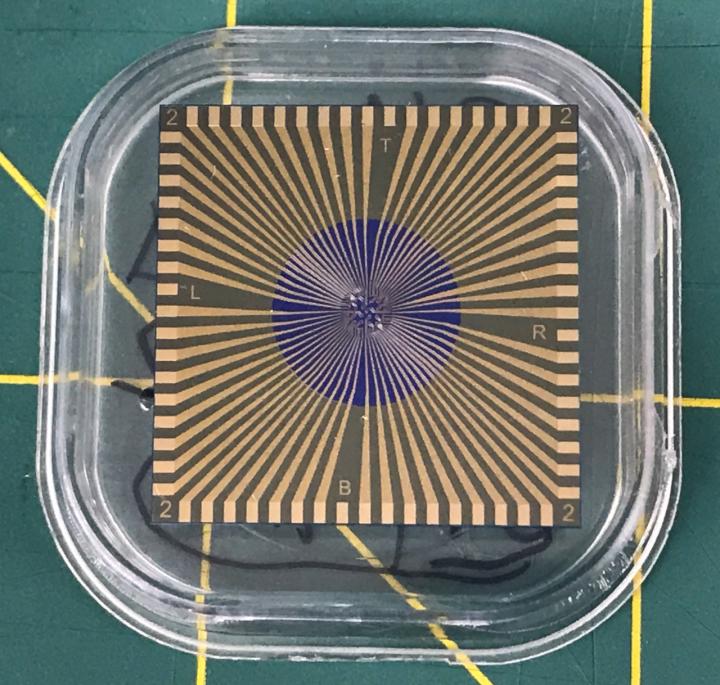
The sensor is the size of a micro USB drive and is infused with antibodies of both COVID-19 and influenza. One part of the device is sensitive only to the flu, while another part will react only to the coronavirus. The team has not determined yet how the test would be conducted, but it could be done via saliva samples.
“Building a simple sensor for detecting COVID-19 alone wouldn’t be a great advantage for us because there are already several different ways to do so,” said Dmitry Kireev, a postdoctoral fellow in electrical and computer engineering who is working on the project. “The distinction of our work is developing a dual sensor that can quickly differentiate between both diseases.”
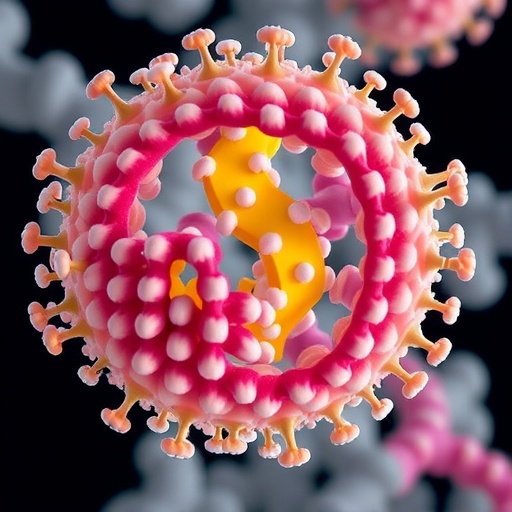
The researchers are planning to use inactive samples of COVID-19 and influenza for initial testing of the device, and they will measure how well the sensor connects with the coronavirus’s spike proteins, which help it enter human cells by binding with them.
To develop the sensor, the team is deploying the “wonder material” graphene, constructed into electrolyte gated field-effect transistors as the sensing elements. The atomic thickness of graphene creates extreme sensitivity to anything with a charge, including biomolecules such as viruses, making it ideal as a part of a sensor.
The work builds on a project the team began last year to create graphene-based biosensors. Along with researchers from Nigeria, the team recently submitted a paper for a biosensor to detect iron (ferritin) deficiency in children. In the work, the team combined graphene with anti-ferritin antibodies, making the biosensors reactive to that one biomolecule.
“It became clear that just by changing the antibody, we could pivot the platform to focus on the coronavirus,” Akinwande said.
The team is working with Andy Ellington, a professor in the Department of Molecular Biosciences in the College of Natural Sciences, to integrate the antibodies into the sensors, and Akinwande said he hopes to work with additional collaborators at UT and elsewhere.
If the prototype the team created proves effective in experiments, which will take a couple of months to determine, they will seek to partner with a company to scale up production.
###
Media Contact
Nat Levy
[email protected]