• HOME
  • NEWS
  • EXPLORE
    • CAREER
      • Companies
      • Jobs
    • EVENTS
    • iGEM
      • News
      • Team
    • PHOTOS
    • VIDEO
    • WIKI
  • BLOG
  • COMMUNITY
    • FACEBOOK
    • INSTAGRAM
    • TWITTER
Monday, May 11, 2026
BIOENGINEER.ORG
No Result
View All Result
  • Login
  • HOME
  • NEWS
  • EXPLORE
    • CAREER
      • Companies
      • Jobs
        • Lecturer
        • PhD Studentship
        • Postdoc
        • Research Assistant
    • EVENTS
    • iGEM
      • News
      • Team
    • PHOTOS
    • VIDEO
    • WIKI
  • BLOG
  • COMMUNITY
    • FACEBOOK
    • INSTAGRAM
    • TWITTER
  • HOME
  • NEWS
  • EXPLORE
    • CAREER
      • Companies
      • Jobs
        • Lecturer
        • PhD Studentship
        • Postdoc
        • Research Assistant
    • EVENTS
    • iGEM
      • News
      • Team
    • PHOTOS
    • VIDEO
    • WIKI
  • BLOG
  • COMMUNITY
    • FACEBOOK
    • INSTAGRAM
    • TWITTER
No Result
View All Result
Bioengineer.org
No Result
View All Result
Home NEWS Science News Chemistry

New research identifies microbes that may reduce allergy-like reactions in many people

Bioengineer by Bioengineer
April 16, 2019
in Chemistry
Reading Time: 2 mins read
0
IMAGE
Share on FacebookShare on TwitterShare on LinkedinShare on RedditShare on Telegram

IMAGE

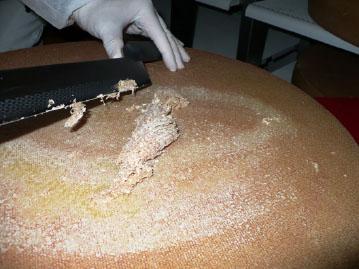
Credit: Monika Dzieciol

AMES, Iowa – Some aged cheeses cause allergy-like reactions in many people, but an Iowa State University scientist is working to identify bacteria that could reduce those unpleasant side effects.

The answer to alleviating the unpleasant reactions that result from eating ripened cheeses could lie in the bacteria that populate the cheese’s rind, said Stephan Schmitz-Esser, associate professor of animal science. Schmitz-Esser led a new study, published Tuesday in the peer-reviewed academic journal Scientific Reports, that looks closely at the microbial communities that develop in cheese rinds, and the research could pave the way to improved cheese production techniques that cut down on the compound that causes those reactions.

Many hard cheese varieties, such as Comte and Gruyere, require months to ripen to obtain the desired flavor and aroma. As the cheeses ripen, a biofilm of bacteria and fungi develops on the surface of the cheese. These microbial communities, which form naturally and are not inoculated by cheese producers, play an essential role in the ripening process and can protect the cheese from harmful pathogens, Schmitz-Esser said.

“We still know surprisingly little about these microbial communities that grow on the cheese rind,” he said. “We know that they work, but we don’t know a lot beyond that.”

These microbes produce histamine, a compound involved in local immune responses, as a byproduct of fermentation, he said. Foods that contain high levels of histamine can cause rashes and other symptoms associated with allergic reactions in roughly 1% of humans.

So Schmitz-Esser and his collaborators set out to answer some of the questions cheese producers have about those microbes. The researchers sampled cheese rinds originating in Austria and isolated the bacteria strains they contain. They identified a particular bacterial genus, called Brevibacterium, and sequenced the genomes of three different species. That data allowed them to identify pathways in the bacterial genomes that are likely to govern the degradation of histamine. Finally, the researchers grew the bacteria in an experimental medium and demonstrated their ability to break down histamine.

Schmitz-Esser said not all the Brevibacterium strains the team studied possess the genetic pathway that most likely reduces histamine content, but it may be possible to harness the strains that do express the pathway in the ripening process.

“Ultimately, this could allow us to intentionally use such strains that have the ability break down histamine,” he said. “These bacteria would support the ripening process and, at the same time, reduce histamine production.”

The research could allow diners who are susceptible to histamine reactions to enjoy ripened cheese, and it also could help cheese producers standardize the ripening process and improve efficiency, Schmitz-Esser said. The time it takes for the cheese to mature represents a major investment by producers. Optimizing the process ensures producers get the best return on that investment, he said.

###

Media Contact
Fred Love
[email protected]
Tags: Agricultural Production/EconomicsAgricultureBacteriologyBiochemistryBiologyBiotechnologyFood/Food Science
Share15Tweet8Share2ShareShareShare2

Related Posts

Miniature Sensor Uses Light to Detect Touch — Chemistry

Miniature Sensor Uses Light to Detect Touch

May 8, 2026
Iron Minerals Determine Whether Dissolved Organic Matter Fuels Microbes or Becomes Long-Term Carbon Storage — Chemistry

Iron Minerals Determine Whether Dissolved Organic Matter Fuels Microbes or Becomes Long-Term Carbon Storage

May 8, 2026

Kate Evans Appointed Associate Lab Director for Biological and Environmental Systems Science at ORNL

May 8, 2026

Advancing Multiscale Modeling and Overcoming Operational Challenges in Autothermal COâ‚‚-to-Methanol Reactors

May 8, 2026
Please login to join discussion

POPULAR NEWS

  • Research Indicates Potential Connection Between Prenatal Medication Exposure and Elevated Autism Risk

    840 shares
    Share 336 Tweet 210
  • New Study Reveals Plants Can Detect the Sound of Rain

    727 shares
    Share 290 Tweet 181
  • Salmonella Haem Blocks Macrophages, Boosts Infection

    61 shares
    Share 24 Tweet 15
  • Breastmilk Balances E. coli and Beneficial Bacteria in Infant Gut Microbiomes

    57 shares
    Share 23 Tweet 14

About

We bring you the latest biotechnology news from best research centers and universities around the world. Check our website.

Follow us

Recent News

New Post-Hoc Analysis Explores Daily Oral Orforglipron Use in Adults Over 65 with Obesity, Regardless of Diabetes Status

Evaluating Digoxin Use in Patients with Symptomatic Rheumatic Heart Disease

Evaluating the Effectiveness and Safety of Digitalis Glycosides in Treating Heart Failure

Subscribe to Blog via Email

Enter your email address to subscribe to this blog and receive notifications of new posts by email.

Join 82 other subscribers
  • Contact Us

Bioengineer.org © Copyright 2023 All Rights Reserved.

Welcome Back!

Login to your account below

Forgotten Password?

Retrieve your password

Please enter your username or email address to reset your password.

Log In
No Result
View All Result
  • Homepages
    • Home Page 1
    • Home Page 2
  • News
  • National
  • Business
  • Health
  • Lifestyle
  • Science

Bioengineer.org © Copyright 2023 All Rights Reserved.