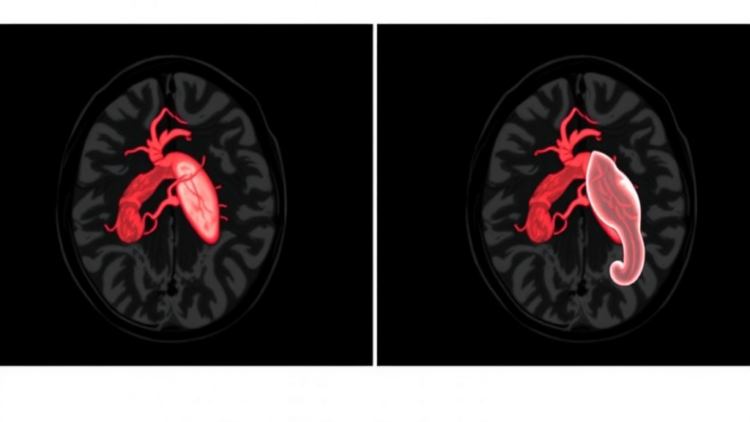
A newly developed alpha-synuclein positron emission tomography ligand, labeled with tritium as ³H-M503-1619, has shown a striking ability to bind alpha-synuclein aggregates in human postmortem brain tissue from patients with Lewy body diseases, while failing to capture the alpha-synuclein pathology characteristic of multiple system atrophy. The finding, published in npj Parkinson’s Disease, adds an important piece of evidence to one of the most stubborn problems in neurodegenerative disease research: the absence of a validated molecular imaging probe that can reliably visualize alpha-synuclein deposits in the living human brain.
Alpha-synuclein is a small, presynaptic protein that misfolds and aggregates into insoluble fibrils in a family of disorders collectively known as synucleinopathies. These include Parkinson’s disease, dementia with Lewy bodies, and multiple system atrophy, as well as rare conditions such as pure autonomic failure. Although each of these disorders features alpha-synuclein inclusions, the aggregates differ in their ultrastructure, cellular location, and molecular conformations. In Lewy body diseases, the protein accumulates inside neurons as Lewy bodies and Lewy neurites, whereas in multiple system atrophy the aggregates form predominantly within oligodendrocytes, the myelin-producing glial cells of the central nervous system, as glial cytoplasmic inclusions. These structural and cell-type differences have profound consequences for imaging, because a ligand that recognizes one conformational strain of aggregated alpha-synuclein may not recognize another.
Positron emission tomography offers a noninvasive window into the molecular pathology of the living brain. A radiolabeled tracer is injected intravenously, crosses the blood-brain barrier, and binds to its molecular target; the scanner then maps the distribution of the signal over time. For amyloid-beta and tau, the hallmark proteins of Alzheimer’s disease, this strategy has been translated into clinically approved tracers that transformed both research and patient care. Alpha-synuclein has proved far more difficult. The protein is predominantly intracellular, so any tracer must enter neurons in sufficient quantity, bind specifically to the aggregated form rather than the soluble form, and avoid off-target binding to the abundant non-neuronal proteins that populate brain tissue. Several candidate tracers have reached human studies in recent years, but none has achieved the sensitivity and specificity needed for reliable clinical or research use.
The development path for any PET tracer runs through postmortem validation. Before a compound is labeled with a positron-emitting isotope such as carbon-11 or fluorine-18 and administered to patients, it is typically labeled with tritium, a low-energy beta emitter ideal for high-resolution autoradiography on tissue sections. Tritium autoradiography allows researchers to test whether a candidate ligand binds to authentic human pathology, how densely it labels the characteristic lesions, and whether that signal can be displaced by excess unlabeled compound, which demonstrates binding specificity. It also reveals off-target binding to unrelated structures such as neuromelanin, iron deposits, or monoamine oxidase enzymes, pitfalls that have derailed previous alpha-synuclein tracer candidates.
Against this backdrop, ³H-M503-1619 delivers a meaningful result: in human postmortem tissue from Lewy body disease cases, the ligand captures alpha-synuclein aggregates, providing direct evidence that the compound recognizes the authentic pathological substrate in patient brain rather than merely fibrils grown in a test tube. Autoradiographic binding to postmortem tissue is widely regarded as one of the most demanding benchmarks for a tracer candidate, because human pathology is heterogeneous, densely interwoven with comorbid pathologies such as amyloid-beta and tau, and embedded in tissue chemistry that no cell culture model fully reproduces. A ligand that survives this test has cleared one of the essential hurdles on the road to human PET imaging.
The negative finding in multiple system atrophy tissue is equally consequential, and it cuts in two directions at once. On one hand, it means that ³H-M503-1619, and by extension any PET tracer built on the same scaffold, would not be suitable for imaging the glial cytoplasmic inclusions that define multiple system atrophy. Distinguishing multiple system atrophy from Parkinson’s disease during life remains a major clinical challenge, particularly in the early stages when symptoms overlap and an accurate diagnosis changes management, prognosis, and eligibility for disease-modifying trials. A tracer that binds one synucleinopathy but not another cannot serve as a universal synuclein imaging tool.
On the other hand, the differential binding is scientifically informative. It demonstrates that the ligand recognizes a conformational feature of aggregated alpha-synuclein that is shared across Lewy body diseases but absent, occluded, or structurally different in multiple system atrophy inclusions. This is consistent with a growing body of evidence from cryo-electron microscopy and seeding studies showing that alpha-synuclein fibrils adopt distinct strain conformations in different diseases. In this sense, a tracer with selective binding is not a failure but a probe: its signal can, in principle, help discriminate between molecular subtypes of synucleinopathy, informing differential diagnosis and enabling stratification of patients in clinical trials of therapies that target specific aggregate morphologies.
The distinction between Lewy body diseases and multiple system atrophy also matters for therapy development. The past few years have seen multiple phase-two trials of alpha-synuclein immunotherapies and aggregation inhibitors in Parkinson’s disease, with results that have been disappointing or ambiguous. A recurring critique of those trials is the absence of a target-engagement biomarker: researchers could not confirm that the experimental drug reached and affected brain alpha-synuclein, nor could they confirm that every enrolled participant actually had significant brain alpha-synuclein pathology. A validated PET tracer would address both gaps, allowing dose selection based on observed target engagement and enriching trial cohorts with patients whose disease biology matches the therapeutic mechanism. The present result advances that objective specifically for Lewy body disease, where the ligand shows binding.
Several caveats temper the enthusiasm. Autoradiography with a tritium ligand measures binding affinity and regional distribution in tissue, but it does not establish the pharmacokinetic properties a PET tracer requires, including rapid brain entry and clearance, metabolic stability, negligible binding to peripheral sources of signal, and a favorable radiation dosimetry profile. Nor does postmortem binding establish that the signal-to-noise ratio achievable in a living scanner will suffice to detect the sparse, early-stage Lewy pathology that clinicians would most want to see. Many compounds that performed well in autoradiography have faltered at the human PET stage for reasons of kinetics or nonspecific white matter signal. The translation of M503-1619 to a fluorine-18 or carbon-11 radiotracer, and its eventual evaluation in human volunteers and patients, remains the decisive test.
Even so, the study contributes a scarce commodity to the field: a chemically defined ligand with demonstrated, selective binding to the alpha-synuclein pathology of human Lewy body disease tissue and a documented lack of binding to multiple system atrophy inclusions. As candidate tracers accumulate and are compared head to head on the same tissue archives, the field moves closer to the goal that has eluded it for two decades — a routine molecular imaging test for synucleinopathy that can support earlier diagnosis, differential diagnosis, objective tracking of disease progression, and mechanistically informed clinical trials. Whether ³H-M503-1619 becomes that tracer or a stepping stone toward it, the work sharpens the growing recognition that alpha-synuclein imaging must ultimately account for the distinct molecular strains that give synucleinopathies their different clinical faces.
Subject of Research: Development and postmortem validation of the PET ligand ³H-M503-1619 for imaging alpha-synuclein aggregates in Lewy body disease and multiple system atrophy.
Article Title: New PET ligand 3H-M503-1619 captures α-synuclein in human postmortem LBDs but not in MSA tissue
Article References: Saturnino Guarino, D., Crosby, J.-G., Sessions, Z. L., Dhavale, D. D., Robinson, J. L., Schuck, T., Lee, E. B., Kotzbauer, P. T., Luk, K. C., Lee, V. M.-Y., & Mach, R. H. (2026). New PET ligand 3H-M503-1619 captures α-synuclein in human postmortem LBDs but not in MSA tissue. npj Parkinson’s Disease. https://doi.org/10.1038/s41531-026-01564-9
Image Credits: AI Generated
DOI: 10.1038/s41531-026-01564-9
Keywords: alpha-synuclein, PET imaging, Lewy body disease, multiple system atrophy, Parkinson’s disease, tritium autoradiography, radioligand, synucleinopathy, postmortem brain tissue, neurodegeneration, biomarkers, tracer development
Cite Scienmag News
APA MLA Chicago
Diana Fleming. (September 23, 2026). New PET Tracer Candidate Flags Alpha-Synuclein in Lewy Body Disease But Misses MSA. Scienmag. https://scienmag.com/new-pet-tracer-candidate-flags-alpha-synuclein-in-lewy-body-disease-but-misses-msa/
Diana Fleming. “New PET Tracer Candidate Flags Alpha-Synuclein in Lewy Body Disease But Misses MSA.” Scienmag, 23 September 2026, https://scienmag.com/new-pet-tracer-candidate-flags-alpha-synuclein-in-lewy-body-disease-but-misses-msa/. Accessed 23 September 2026.
Diana Fleming. “New PET Tracer Candidate Flags Alpha-Synuclein in Lewy Body Disease But Misses MSA.” Scienmag. September 23, 2026. https://scienmag.com/new-pet-tracer-candidate-flags-alpha-synuclein-in-lewy-body-disease-but-misses-msa/
Copy citation Download RIS
Tags: advances in Parkinson’s disease imagingalpha-synucleinalpha-synuclein aggregate visualizationalpha-synuclein PET imagingBiomarkerschallenges in imaging MSAdevelopment of PET tracers for alpha-synucleindifferences in alpha-synuclein pathologyLewy body diseaseLewy body disease diagnosismolecular imaging of synucleinopathiesmultiple system atrophymultiple system atrophy detectionneurodegenerationneurodegenerative disease biomarkersneuroimaging probe validationParkinson’s diseasePET imagingpostmortem brain tissuepostmortem brain tissue analysisradioligandsynucleinopathytracer developmenttritium autoradiography