Credit: National Institutes of Health
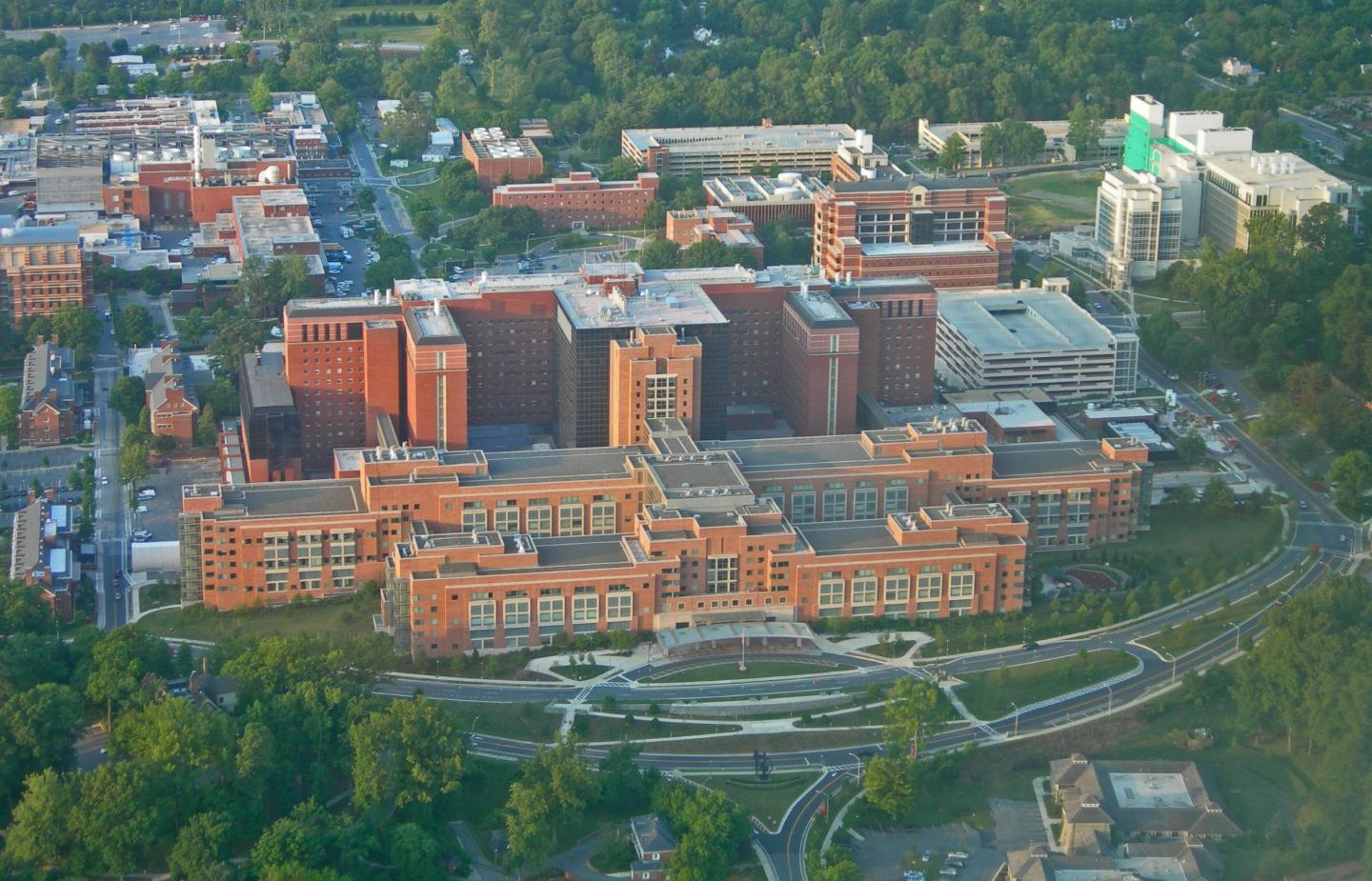
People with inherited diseases of the blood and immune system can now receive treatment at the National Institutes of Health Clinical Center through a new, streamlined program that integrates expertise from many medical specialties and related basic science disciplines.
Immunologists, transplant specialists, geneticists and hematologists from across NIH are collaborating in the Blood and Immune Deficiency-Cellular Therapy Program (BID-CTP). These physicians will deliver state-of-the-art and experimental care to people with rare blood and immune system diseases through a unified approach to assessing, treating and monitoring patients and the centralized tracking of treatment outcomes.
The initiative spans four NIH institutes: the National Cancer Institute (NCI), the National Institute of Allergy and Infectious Diseases (NIAID), the National Human Genome Research Institute and the National Heart, Lung and Blood Institute (NHLBI). Theresa Jerussi, PA-C, of the NIH Clinical Center is chief operating officer of the program.
“The BID-CTP has the potential to accelerate progress in the treatment of people with genetic diseases of the blood and immune system, which can be debilitating and even life-threatening,” said NIAID Director Anthony S. Fauci. “The close clinical and scientific collaboration within this program aims to foster advances that improve the lives of patients with these diseases.”
Inherited diseases of the immune system are known as primary immune deficiency diseases, or PIDDs. NIH physicians have a strong track record of successfully treating PIDDs. They have developed several therapies and have discovered previously unrecognized PIDDs.
Now, people with any one of hundreds of different PIDDs can enroll in the BID-CTP, and a single, multi-specialty team including both immunologists and transplant experts will oversee their treatment and care. In addition, basic scientists and clinicians are collaborating on detailed molecular and cellular assessments of the extent to which treatment restores each patient’s immune function. Multidisciplinary teams are studying issues that transcend individual PIDDs, such as the detection and management of infections, to improve patient safety and treatment outcomes. New diseases are continually being added to the program, which includes sickle cell disease, a group of inherited blood disorders for which NIH has a successful gene therapy program.
It is anticipated that the BID-CTP will become a strong component of the Primary Immune Deficiency Treatment Consortium, an NIH-supported network of 42 centers in North America with the goal of improving health outcomes of patients with rare, life-threatening, inherited disorders of the immune system.
Within the BID-CTP, the key experts in inherited immunodeficiencies are Luigi Notarangelo, M.D., chief of the NIAID Laboratory of Clinical Immunology and Microbiology; Harry Malech, M.D., chief of the Genetic Immunotherapy Section in the NIAID Laboratory of Clinical Immunology and Microbiology; and Dennis Hickstein, M.D., senior investigator in the Experimental Transplantation and Immunology Branch of the NCI Center for Cancer Research. The principal transplant experts are John Tisdale, M.D., director of the NHLBI Cellular and Molecular Therapeutics Laboratory, and Richard Childs, M.D., chief of the NHLBI Laboratory of Transplantation Immunotherapy.
###
NIAID conducts and supports research–at NIH, throughout the United States, and worldwide–to study the causes of infectious and immune-mediated diseases, and to develop better means of preventing, diagnosing and treating these illnesses. News releases, fact sheets and other NIAID-related materials are available on the NIAID website.
About the National Institutes of Health (NIH): The NIH, the nation’s medical research agency, includes 27 Institutes and Centers and is a component of the U.S. Department of Health and Human Services. NIH is the primary federal agency conducting and supporting basic, clinical, and translational medical research, and is investigating the causes, treatments, and cures for both common and rare diseases. For more information about NIH and its programs, visit http://www.
Media Contact
Laura S. Leifman
[email protected]
Original Source
https:/