• HOME
  • NEWS
  • EXPLORE
    • CAREER
      • Companies
      • Jobs
    • EVENTS
    • iGEM
      • News
      • Team
    • PHOTOS
    • VIDEO
    • WIKI
  • BLOG
  • COMMUNITY
    • FACEBOOK
    • INSTAGRAM
    • TWITTER
Friday, July 3, 2026
BIOENGINEER.ORG
No Result
View All Result
  • Login
  • HOME
  • NEWS
  • EXPLORE
    • CAREER
      • Companies
      • Jobs
        • Lecturer
        • PhD Studentship
        • Postdoc
        • Research Assistant
    • EVENTS
    • iGEM
      • News
      • Team
    • PHOTOS
    • VIDEO
    • WIKI
  • BLOG
  • COMMUNITY
    • FACEBOOK
    • INSTAGRAM
    • TWITTER
  • HOME
  • NEWS
  • EXPLORE
    • CAREER
      • Companies
      • Jobs
        • Lecturer
        • PhD Studentship
        • Postdoc
        • Research Assistant
    • EVENTS
    • iGEM
      • News
      • Team
    • PHOTOS
    • VIDEO
    • WIKI
  • BLOG
  • COMMUNITY
    • FACEBOOK
    • INSTAGRAM
    • TWITTER
No Result
View All Result
Bioengineer.org
No Result
View All Result
Home NEWS Science News Biology

New method to identify genes that can drive development of brain tumors

Bioengineer by Bioengineer
June 9, 2020
in Biology
Reading Time: 2 mins read
0
IMAGE
Share on FacebookShare on TwitterShare on LinkedinShare on RedditShare on Telegram

IMAGE

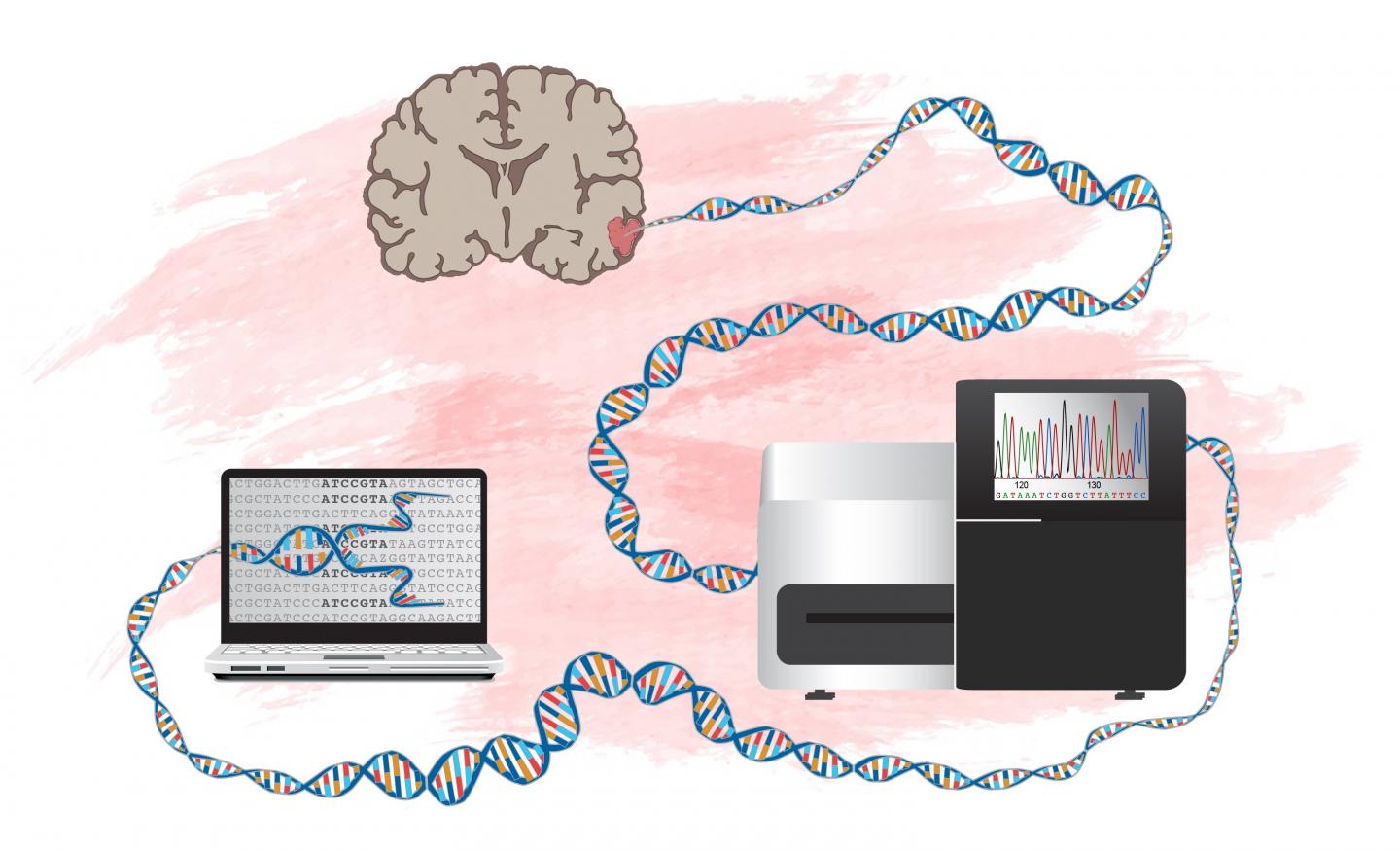
Credit: Graphics: L. Gaffney

Researchers at Uppsala University have developed a method for identifying functional mutations and their effect on genes relevant to the development of glioblastoma – a malignant brain tumour with a very poor prognosis. The study is published in Genome Biology.

The human genome consists of nearly 22,000 genes. Many studies have explored the nearly two per cent of our DNA that produces proteins. Considerably less is known about the 98 per cent that does not encode protein. However, these non-coding regions contain important information and regulate whether a gene is active in different tissues, in different stages of development and in diseases such as cancer.

Cancer is caused by mutations that lead to uncontrolled cell division. One of the most aggressive types of cancer is glioblastoma, a form of brain tumour with a very poor prognosis. Relatively little is known about how mutations in non-coding regions drive glioblastoma. To address this knowledge gap, researchers at Uppsala University have performed whole-genome sequencing of DNA in tumour tissues from patients with glioblastoma and analysed the identified mutations.

“One of our key tasks was to identify functional mutations associated with regulatory elements and potential relevance to the development of cancer cells, and to distinguish them from all random variations without presumed significance,” says Professor Karin Forsberg-Nilsson at the Department of Immunology, Genetics and Pathology, Uppsala University.

The researchers assumed that DNA sequences that have remained unchanged in mammals throughout evolution are likely to have important functions. Therefore, they intersected the thousands of mutations they had found with information about evolutionary conservation of the genetic regions where the mutations lie.

“We chose to focus on a subset of mutations in the best-preserved genetic regions that are likely to affect gene regulation,” says Professor Kerstin-Lindblad-Toh at the Department of Medical Biochemistry and Microbiology, Uppsala University as well as the Broad Institute (US).

The researchers validated their results using the gene SEMA3C, partly because they found a large number of mutations in non-coding regulatory regions near this gene and partly because previous findings, by others, suggest that SEMA3C is linked to a poor cancer prognosis.

“We studied how mutations in non-coding regions affect SEMA3C’s function and activity. Our results show that a specific, evolutionarily conserved, mutation in the vicinity of SEMA3C disrupts the binding of certain proteins whose task is to bind genes and regulate their activity,” says Forsberg-Nilsson.

The study also identifies more than 200 other genes enriched for non-coding mutations in the regions concerned. These likely have regulatory potential, thus further increasing the number of genes that are relevant to the development of brain tumours.

“Our results confirm the importance of the association between genetic alterations in non-coding regions, their biological function and disease pathology,” concludes Forsberg-Nilsson.

###

For further information: Karin Forsberg Nilsson, Professor at Department of Immunology, Genetics and Pathology, Uppsala University, [email protected], +46-70-1679579

Media Contact
Karin Forsberg Nilsson
[email protected]

Related Journal Article

http://dx.doi.org/10.1186/s13059-020-02035-x

Tags: cancerCell BiologyGeneticsImmunology/Allergies/AsthmaMedicine/Health
Share12Tweet8Share2ShareShareShare2

Related Posts

Evolution-Inspired Biosensors Revolutionize Lipid Tracking in Real Time — Biology

Evolution-Inspired Biosensors Revolutionize Lipid Tracking in Real Time

July 2, 2026
New Study Reveals How to Reduce Risk of Dangerous Wildlife Encounters This Summer — Biology

New Study Reveals How to Reduce Risk of Dangerous Wildlife Encounters This Summer

July 2, 2026

Hepatic IFRD1 Alleviates Metabolic Dysfunction-Linked Steatohepatitis Through the GLUD1/α-KG Pathway

July 2, 2026

Intricate Food Webs Support Ecosystem Health and Stability

July 2, 2026
Please login to join discussion

POPULAR NEWS

  • Detection of EDCs in Breast Milk and Infant Urine Up to Six Months Highlights Early Exposure Risks

    77 shares
    Share 31 Tweet 19
  • Saying Goodbye to PGY-6: Pediatric Fellowship Realities

    103 shares
    Share 41 Tweet 26
  • New Drug Candidate Developed at McMaster Shows Potential for Treating Brain Cancer

    58 shares
    Share 23 Tweet 15
  • KTU Researchers Explore Ultrasound’s Role in Enhancing Blood Flow Beyond Diagnostics

    53 shares
    Share 21 Tweet 13

About

BIOENGINEER.ORG

We bring you the latest biotechnology news from best research centers and universities around the world. Check our website.

Follow us

Recent News

Steatosis Drives Liver Metastasis Diversity in CRC

Unlocking the Mysteries of Alzheimer’s Disease

Pensoft Introduces New Peer-Reviewed Journal of Regeneration to Advance Restorative Biology Across Species

Subscribe to Blog via Email

Enter your email address to subscribe to this blog and receive notifications of new posts by email.

Join 83 other subscribers
  • Contact Us

Bioengineer.org © Copyright 2023 All Rights Reserved.

Welcome Back!

Login to your account below

Forgotten Password?

Retrieve your password

Please enter your username or email address to reset your password.

Log In
No Result
View All Result
  • Homepages
    • Home Page 1
    • Home Page 2
  • News
  • National
  • Business
  • Health
  • Lifestyle
  • Science

Bioengineer.org © Copyright 2023 All Rights Reserved.