• HOME
  • NEWS
  • EXPLORE
    • CAREER
      • Companies
      • Jobs
    • EVENTS
    • iGEM
      • News
      • Team
    • PHOTOS
    • VIDEO
    • WIKI
  • BLOG
  • COMMUNITY
    • FACEBOOK
    • INSTAGRAM
    • TWITTER
Tuesday, May 5, 2026
BIOENGINEER.ORG
No Result
View All Result
  • Login
  • HOME
  • NEWS
  • EXPLORE
    • CAREER
      • Companies
      • Jobs
        • Lecturer
        • PhD Studentship
        • Postdoc
        • Research Assistant
    • EVENTS
    • iGEM
      • News
      • Team
    • PHOTOS
    • VIDEO
    • WIKI
  • BLOG
  • COMMUNITY
    • FACEBOOK
    • INSTAGRAM
    • TWITTER
  • HOME
  • NEWS
  • EXPLORE
    • CAREER
      • Companies
      • Jobs
        • Lecturer
        • PhD Studentship
        • Postdoc
        • Research Assistant
    • EVENTS
    • iGEM
      • News
      • Team
    • PHOTOS
    • VIDEO
    • WIKI
  • BLOG
  • COMMUNITY
    • FACEBOOK
    • INSTAGRAM
    • TWITTER
No Result
View All Result
Bioengineer.org
No Result
View All Result
Home NEWS Science News Biology

New method of examining the brain’s electrical signals could hold the key to better treatment of epilepsy and schizophrenia

Bioengineer by Bioengineer
August 24, 2022
in Biology
Reading Time: 2 mins read
0
A cultured neuron viewed under a fluorescent microscope
Share on FacebookShare on TwitterShare on LinkedinShare on RedditShare on Telegram

A new method of examining the brain’s electrical signals could hold the key to better treatment and understanding of conditions like epilepsy and schizophrenia.
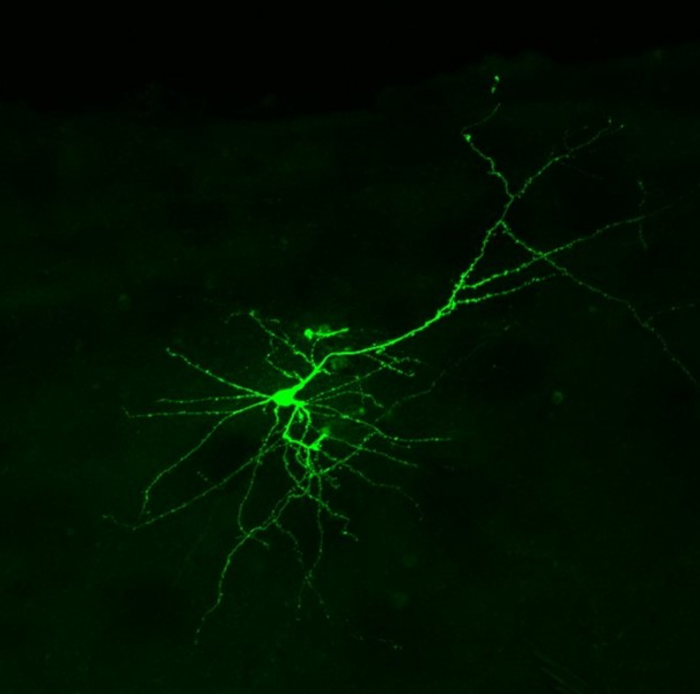
A cultured neuron viewed under a fluorescent microscope

Credit: Aston University

A new method of examining the brain’s electrical signals could hold the key to better treatment and understanding of conditions like epilepsy and schizophrenia.

Researchers at Aston University are exploring new ways to ‘listen’ to and record electrical signals emitted from brain cells, which could be used to help treat the conditions.

Dr Petro Lutsyk, lecturer in electronic engineering and systems in the College of Engineering and Physical Sciences and member of Aston Institute of Photonic Technologies (AIPT), together with Dr Stuart Greenhill, senior lecturer in neuroscience in the College of Health and Life Sciences and member of Aston Institute of Health and Neurodevelopment (IHN), have been awarded £100,000 by the Royal Society to conduct the project Nanomaterial Webs for Revolutionary Brain Recording.

Currently, epilepsy patients who can’t be helped by drugs may undergo brain surgery in order to prevent seizures, removing the part of the brain that is the ‘focus’ of the seizures.

Dr Greenhill said: “The research project will use newly developed nanomaterials to keep samples of brain healthy and active for far longer than current technology allows, whilst recording the activity of the tissue.

“This allows more understanding of what generates epileptic seizures and opens up new avenues for drug development, meaning fewer surgeries may be needed in the future.

“Eventually, the technology may lead to new and better ways of recording from patients’ brains before surgery.”

The two-year project will see materials and electronic engineering applied to translational neuroscience research.

The grant is from the Royal Society APEX Awards scheme (Academies Partnership in Supporting Excellence in Cross-disciplinary research award) which offers researchers with a strong track record in their area an opportunity to pursue interdisciplinary research to benefit wider society.

For more information about studying at Aston University please visit our website.



Share12Tweet8Share2ShareShareShare2

Related Posts

Life on Early Earth Depended on a Surprisingly Rare Metal — Biology

Life on Early Earth Depended on a Surprisingly Rare Metal

May 5, 2026
Qualcomm Co-Founder Andrew Viterbi Donates $5 Million to Propel AI-Driven Research at Sanford Burnham Prebys Medical Discovery Institute — Biology

Qualcomm Co-Founder Andrew Viterbi Donates $5 Million to Propel AI-Driven Research at Sanford Burnham Prebys Medical Discovery Institute

May 5, 2026

Scientists Identify Seven Distinct Pneumonia Subphenotypes Through Human Lung Analysis

May 5, 2026

Study Reveals Most Birds Have Yet to Evolve Optimal Wing Shapes for Flight

May 5, 2026

POPULAR NEWS

  • Research Indicates Potential Connection Between Prenatal Medication Exposure and Elevated Autism Risk

    835 shares
    Share 334 Tweet 209
  • New Study Reveals Plants Can Detect the Sound of Rain

    721 shares
    Share 288 Tweet 180
  • Scientists Investigate Possible Connection Between COVID-19 and Increased Lung Cancer Risk

    68 shares
    Share 27 Tweet 17
  • Salmonella Haem Blocks Macrophages, Boosts Infection

    61 shares
    Share 24 Tweet 15

About

We bring you the latest biotechnology news from best research centers and universities around the world. Check our website.

Follow us

Recent News

Medical-Grade Glues Inspired by Protein from Freshwater Mussels

Targeting OTU Family to Combat HCC Resistance

Scientists Identify Biomarker Linked to Chemotherapy Resistance in Relapsed Lung Cancer

Subscribe to Blog via Email

Enter your email address to subscribe to this blog and receive notifications of new posts by email.

Join 82 other subscribers
  • Contact Us

Bioengineer.org © Copyright 2023 All Rights Reserved.

Welcome Back!

Login to your account below

Forgotten Password?

Retrieve your password

Please enter your username or email address to reset your password.

Log In
No Result
View All Result
  • Homepages
    • Home Page 1
    • Home Page 2
  • News
  • National
  • Business
  • Health
  • Lifestyle
  • Science

Bioengineer.org © Copyright 2023 All Rights Reserved.