• HOME
  • NEWS
  • EXPLORE
    • CAREER
      • Companies
      • Jobs
    • EVENTS
    • iGEM
      • News
      • Team
    • PHOTOS
    • VIDEO
    • WIKI
  • BLOG
  • COMMUNITY
    • FACEBOOK
    • INSTAGRAM
    • TWITTER
Friday, June 26, 2026
BIOENGINEER.ORG
No Result
View All Result
  • Login
  • HOME
  • NEWS
  • EXPLORE
    • CAREER
      • Companies
      • Jobs
        • Lecturer
        • PhD Studentship
        • Postdoc
        • Research Assistant
    • EVENTS
    • iGEM
      • News
      • Team
    • PHOTOS
    • VIDEO
    • WIKI
  • BLOG
  • COMMUNITY
    • FACEBOOK
    • INSTAGRAM
    • TWITTER
  • HOME
  • NEWS
  • EXPLORE
    • CAREER
      • Companies
      • Jobs
        • Lecturer
        • PhD Studentship
        • Postdoc
        • Research Assistant
    • EVENTS
    • iGEM
      • News
      • Team
    • PHOTOS
    • VIDEO
    • WIKI
  • BLOG
  • COMMUNITY
    • FACEBOOK
    • INSTAGRAM
    • TWITTER
No Result
View All Result
Bioengineer.org
No Result
View All Result
Home NEWS Science News Health

New method gives glaucoma researchers control over eye pressure

Bioengineer by Bioengineer
February 24, 2020
in Health
Reading Time: 2 mins read
0
IMAGE
Share on FacebookShare on TwitterShare on LinkedinShare on RedditShare on Telegram

IMAGE

Credit: University of South Florida


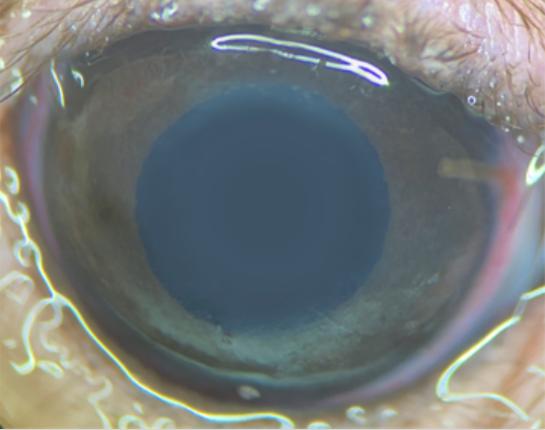
TAMPA, Fla. (February 24, 2020)- Neuroscientists at the University of South Florida have become the first to definitively prove pressure in the eye is sufficient to cause and explain glaucoma. They come to this conclusion following the development of a method that permits continuous regulation of pressure without damaging the eye.

Researchers were able to manipulate pressure by implanting a tiny tube in the eye of an animal model and connecting the tube to a pressure source and pressure sensor. The pressure source infused fluid into the eye via a saline reservoir or a portable micropump built by the researchers. The pressure sensor took measurements every few seconds around-the-clock for up to two months, during which time the tube remained fixed in place even though the eye blinked and rotated and the animal freely moved. The study, published in Scientific Reports, found that raising pressure of an otherwise healthy eye resulted in patterns of retina and optic nerve damage like that seen in human glaucoma.

“The technique offers a significant advancement in glaucoma research,” said Chris Passaglia, PhD, professor of medical engineering at USF. “All studies to date have elevated pressure by blocking fluid outflow from the eye, whereas ours adds fluid as necessary to produce a desired pressure without damaging outflow pathways. Now researchers can have direct knowledge and control of eye pressure.”

A longstanding challenge with existing methods of glaucoma induction is that eye pressure changes are unpredictable and generally irreversible. Pressure may rise to unrealistic levels or not change at all if induction procedures are unsuccessful. Pressure can also settle at a stable value, fluctuate irregularly over time, or return abruptly to normal. Passaglia says the new tools can help speed research progress by removing such experimental variability and by enabling systematic studies of unanswered questions like the role of eye pressure history in disease onset and progression. Putative glaucoma drugs can also be concurrently infused by the system into the eye of animal models and screened for therapeutic effectiveness.

###

This study was funded by the National Eye Institute, part of the National Institutes of Health.

Media Contact
Tina Meketa
[email protected]
813-955-2593

Related Journal Article

http://dx.doi.org/10.1038/s41598-019-57022-5

Tags: AgingBiomedical/Environmental/Chemical EngineeringMedicine/HealthOphthalmology
Share12Tweet8Share2ShareShareShare2

Related Posts

Tracking Lanthanide-Labeled Microplastics in Plants

June 25, 2026

Neural Design Enables Zero-Shot Drug-Binding Proteins

June 25, 2026

Genomic Insights into Human Skin Fungi Diversity

June 25, 2026

Chiral Laser Gyroscopes Surpass Lock-In Limit

June 25, 2026
Please login to join discussion

POPULAR NEWS

  • Saying Goodbye to PGY-6: Pediatric Fellowship Realities

    103 shares
    Share 41 Tweet 26
  • Multi-Hospital Study Reveals Long Covid Burden Is Twice as High as Current Estimates

    92 shares
    Share 36 Tweet 23
  • Detection of EDCs in Breast Milk and Infant Urine Up to Six Months Highlights Early Exposure Risks

    77 shares
    Share 31 Tweet 19
  • New Drug Candidate Developed at McMaster Shows Potential for Treating Brain Cancer

    58 shares
    Share 23 Tweet 15

About

We bring you the latest biotechnology news from best research centers and universities around the world. Check our website.

Follow us

Recent News

Tracking Lanthanide-Labeled Microplastics in Plants

POSTECH Researchers Slash Cost of Reconstituted Cell-Free Systems by 95%

AI and Physics Collaborate to Design Advanced Hydrogen Storage Materials

Subscribe to Blog via Email

Success! An email was just sent to confirm your subscription. Please find the email now and click 'Confirm' to start subscribing.

Join 82 other subscribers
  • Contact Us

Bioengineer.org © Copyright 2023 All Rights Reserved.

Welcome Back!

Login to your account below

Forgotten Password?

Retrieve your password

Please enter your username or email address to reset your password.

Log In
No Result
View All Result
  • Homepages
    • Home Page 1
    • Home Page 2
  • News
  • National
  • Business
  • Health
  • Lifestyle
  • Science

Bioengineer.org © Copyright 2023 All Rights Reserved.