• HOME
  • NEWS
  • EXPLORE
    • CAREER
      • Companies
      • Jobs
    • EVENTS
    • iGEM
      • News
      • Team
    • PHOTOS
    • VIDEO
    • WIKI
  • BLOG
  • COMMUNITY
    • FACEBOOK
    • INSTAGRAM
    • TWITTER
Tuesday, November 10, 2026
BIOENGINEER.ORG
No Result
View All Result
  • Login
  • HOME
  • NEWS
  • EXPLORE
    • CAREER
      • Companies
      • Jobs
        • Lecturer
        • PhD Studentship
        • Postdoc
        • Research Assistant
    • EVENTS
    • iGEM
      • News
      • Team
    • PHOTOS
    • VIDEO
    • WIKI
  • BLOG
  • COMMUNITY
    • FACEBOOK
    • INSTAGRAM
    • TWITTER
No Result
View All Result
Bioengineer.org
No Result
View All Result
Home NEWS Science News Health

New memory study first to use intracranial recordings

Bioengineer by Bioengineer
December 19, 2018
in Health
Reading Time: 2 mins read
0
IMAGE
Share on FacebookShare on TwitterShare on LinkedinShare on RedditShare on Telegram

IMAGE

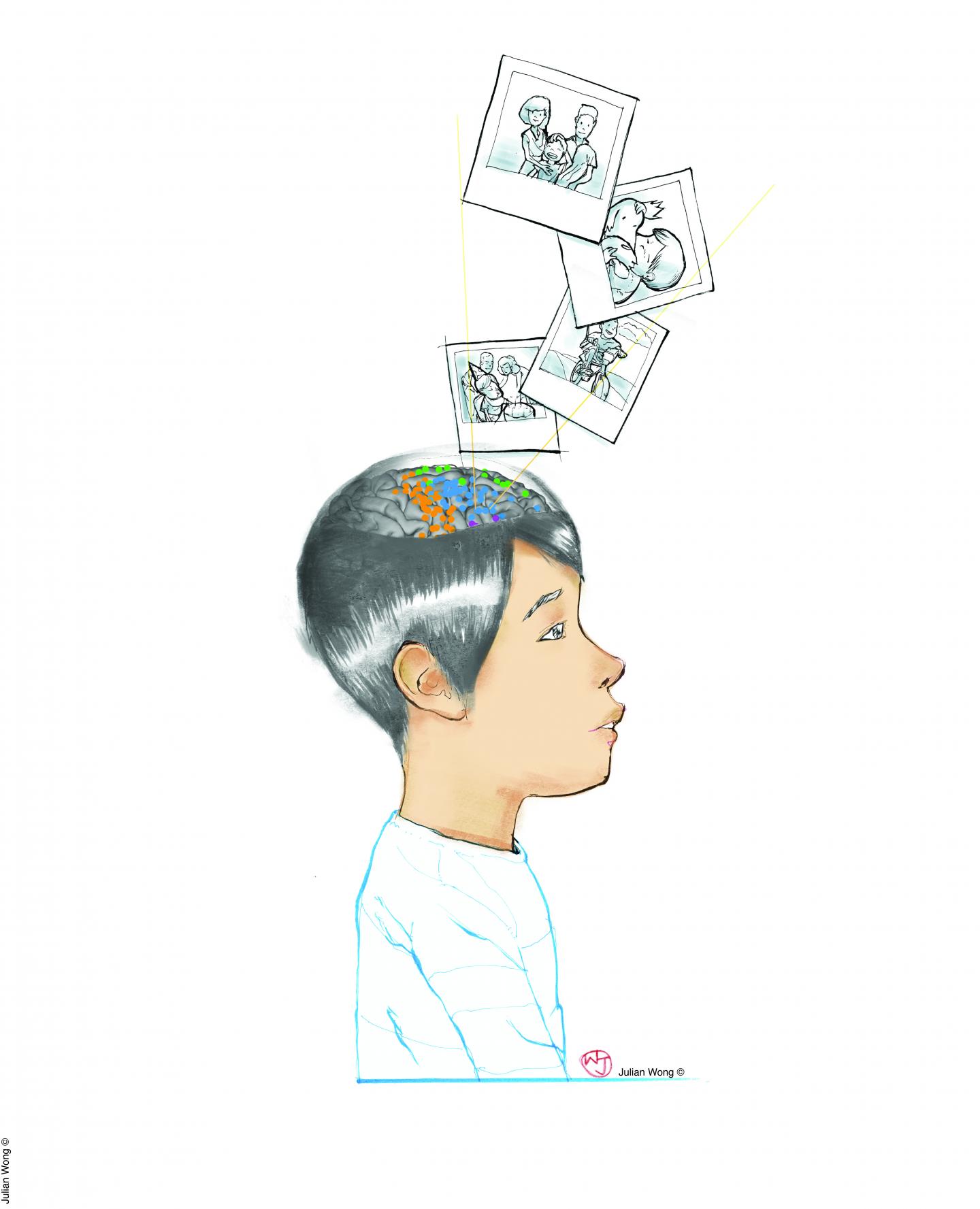
Credit: Artwork by Julian Wong.


DETROIT – Declarative memory — memories that can be consciously recalled — is critical to everyday life. Throughout childhood and adolescence, declarative memory improves remarkably. However, until most recently, there was a critical gap in our understanding of how maturation of the prefrontal cortex drives memory development.

A team of researchers led by Noa Ofen, Ph.D., associate professor of psychology in Wayne State University’s College of Liberal Arts and Sciences and Institute of Gerontology, and Lisa Johnson, Ph.D., postdoctoral research scientist at the Helen Wills Neuroscience Institute, University of California-Berkeley, are addressing this critical gap through the use of electrocorticographic (ECoG) data recorded directly from the prefrontal cortex in a cohort of 17 children and adolescents. These ECoG recordings were obtained from patients with surgically implanted subdural electrodes used for the clinical management of seizures.

“In our study, we used an established task employed in numerous studies aimed at investigating memory development in this age group,” said Ofen. “It provided our team with rare insight previously not obtainable.”

The team followed a two-tier, unbiased approach to ECoG data analysis by which data were first analyzed per trial on the individual level using non-parametric statistics, and then modeled on the group level.

“The high spatiotemporal precision of these recordings allowed us to provide a unique demonstration of how the developing prefrontal cortex drives the formation of memories of events in our own lives,” said Johnson. “Our research shows that earlier activity predicts greater memory accuracy, and sub-second deviations in activity flow between frontal subregions predict memory formation.”

This study is the first to demonstrate that the spatiotemporal propagation of frontal activity supports memory formation in children as young as 6 years of age, and show how adjacent frontal subregions follow dissociable developmental trajectories.

###

The full article, “Direct brain recordings reveal prefrontal cortex dynamics of memory development,” is available online in the Dec. 19, 2018 issue of Science Advances, advances.sciencemag.org/.

Support for this study was received from the National Institute of Mental Health of the National Institutes of Health (MH107512), the National Institute of Neurological Disorders and Stroke of the National Institutes of Health (NS64033) and the Benoziyo Endowment Fund for the Advancement of Science.

Wayne State University is one of the nation’s pre-eminent public research universities in an urban setting. Through its multidisciplinary approach to research and education, and its ongoing collaboration with government, industry and other institutions, the university seeks to enhance economic growth and improve the quality of life in the city of Detroit, state of Michigan and throughout the world. For more information about research at Wayne State University, visit http://www.research.wayne.edu.

Media Contact
Julie O’Connor
julie.oconnor@wayne.edu
313-577-8845

Original Source

http://research.wayne.edu/news/new-memory-study-first-to-use-intracranial-recordings-33764

Tags: Medicine/HealthMemory/Cognitive Processes
Share12Tweet8Share2ShareShareShare2

Related Posts

IPEC-J2 Cells Recapitulate Key Pathway Responses to PEDV Infection in Piglet Jejunum

IPEC-J2 Cells Recapitulate Key Pathway Responses to PEDV Infection in Piglet Jejunum

November 10, 2026
Higher Physical Activity Linked to Lower Care Costs in Nigerian Diabetes Study

Higher Physical Activity Linked to Lower Care Costs in Nigerian Diabetes Study

November 10, 2026

Hypertrophy Resistance Training Matches Conditioning Regimens After Breast Cancer

November 10, 2026

Deep Learning Enhances Low-Dose Breast PET/MRI Image Quality

November 10, 2026
Please login to join discussion

POPULAR NEWS

  • Intranasal Lidocaine Spray Eases Nasogastric Tube Placement in Adult Emergency Patients

    Intranasal Lidocaine Spray Eases Nasogastric Tube Placement in Adult Emergency Patients

    29 shares
    Share 12 Tweet 7
  • Hospital Outbreaks Disseminate Ceftazidime-Avibactam and Cefiderocol Co-Resistant Klebsiella Pneumoniae Clones

    29 shares
    Share 12 Tweet 7
  • PET Imaging Shows Aging Reduces Human Brain Ascorbic Acid Transport via Choroid Plexus

    29 shares
    Share 12 Tweet 7
  • Plant Hemoglobin Expression Impairs Aerobic Guaiacol Bioconversion in Pseudomonas putida

    29 shares
    Share 12 Tweet 7

About

We bring you the latest biotechnology news from best research centers and universities around the world. Check our website.

Follow us

Recent News

IPEC-J2 Cells Recapitulate Key Pathway Responses to PEDV Infection in Piglet Jejunum

Dual Inoculation Enhances Phosphorus Nutrition and Defenses in Salt-Stressed Alfalfa

Polyethylene Microplastics Worsen Cotton Verticillium Wilt and Disrupt Rhizosphere Microbes

Subscribe to Blog via Email

Enter your email address to subscribe to this blog and receive notifications of new posts by email.

Join 87 other subscribers
  • Contact Us

Bioengineer.org © Copyright 2023 All Rights Reserved.

Welcome Back!

Login to your account below

Forgotten Password?

Retrieve your password

Please enter your username or email address to reset your password.

Log In
No Result
View All Result
  • Homepages
    • Home Page 1
    • Home Page 2
  • News
  • National
  • Business
  • Health
  • Lifestyle
  • Science

Bioengineer.org © Copyright 2023 All Rights Reserved.