


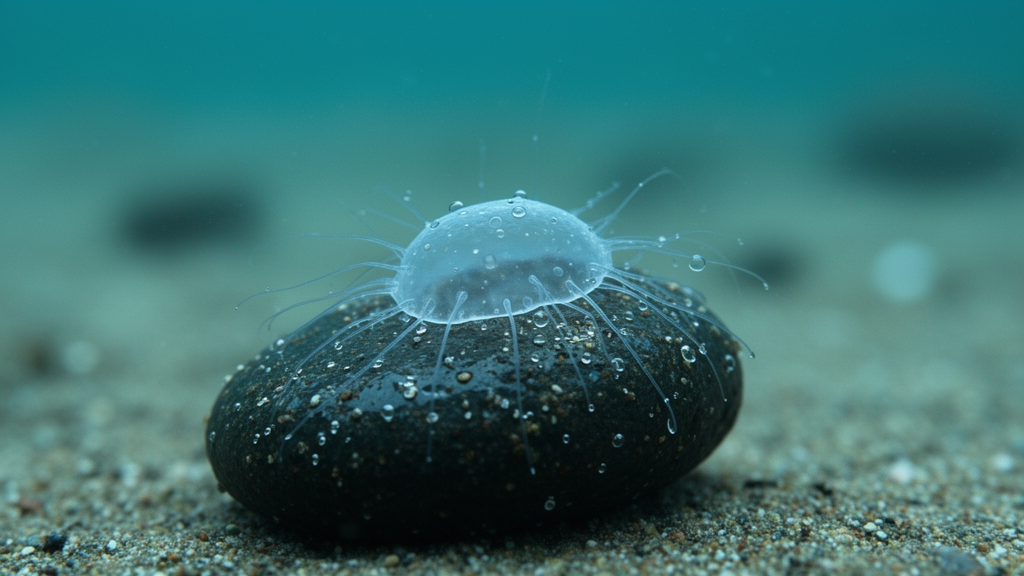
Researchers have assembled a chromosome-level genome for a previously undescribed marine amoeba, formally naming it Lemnamoeba sinaloensis gen. nov. et sp. nov., a new genus and species within the poorly sampled rhizarian lineage Apofilosa. The study, published open access in BMC Genomics, delivers one of the highest-quality genome assemblies for Rhizaria to date, a eukaryotic supergroup whose genomes remain largely unexplored despite its ecological importance and diversity.
The genome is remarkably small and compact: roughly 27 megabases containing 8,704 genes, with about 84% of the assembly annotated as genes, 10% as repeats and only 6% as intergenic regions. The assembly was captured almost entirely in six contigs, which cytological confirmation showed to be actual chromosomes. That level of contiguity stands out in a supergroup where only a handful of genome sequences exist, most of them fragmented and of low contiguity.
A striking feature is the abundance of simple-sequence repeats, or SSRs, particularly AC:GT dinucleotide repeats, which occur at a density of 206 loci per megabase and together cover almost 2% of the assembly. The authors present this as evidence of dynamic genome evolution and of the complexity hidden in underexplored branches of the eukaryotic tree of life.
The team also recovered the complete mitochondrial genome, which is reduced and lacks ribosomal protein genes, a pattern seen in some other rhizarians. Several of these missing mitochondrial-encoded genes were instead found in the nuclear genome, and predictions indicate their protein products are targeted back to the mitochondrion.
Phylogenetic analysis of 18S rDNA placed the amoeba loosely alongside environmental sequences and the amoeboflagellate Viscidocauda repens, but it is phylogenetically distant from any described species and displays a unique pseudopodial morphology, justifying the erection of the new genus and species. Environmental sequence data further indicate that L. sinaloensis has a wide marine distribution and is found mostly between the surface and 100 meters depth.
By adding a new genus to the taxonomically sparse Apofilosa and providing a compact, chromosome-resolved genome, the study expands what is known about genome architecture in Rhizaria and offers a reference point for future work on this underexplored supergroup.
Subject of Research: Chromosome-level genome assembly and description of the new marine rhizarian amoeba Lemnamoeba sinaloensis
Article Title: Chromosome-level assembly of Lemnamoeba sinaloensis gen. nov. et sp. nov. (Apofilosa) reveals dynamic genome evolution in Rhizaria
Article References: Hiltunen Thorén, M., Onuț-Brännström, I., Zlatogursky, V., Pardasani, Y., Pecková, H., Karlíková, A., Holzer, A. S., & Burki, F. (2026). Chromosome-level assembly of Lemnamoeba sinaloensis gen. nov. et sp. nov. (Apofilosa) reveals dynamic genome evolution in Rhizaria. BMC Genomics. https://doi.org/10.1186/s12864-026-13502-3
Image Credits: AI Generated
DOI: 10.1186/s12864-026-13502-3
Keywords: Rhizaria, Lemnamoeba sinaloensis, genome assembly, Apofilosa, marine amoeba, simple-sequence repeats, mitochondrial genome, 18S rDNA phylogeny, eukaryotic genomics, BMC Genomics, Chromosome-level, assembly
News Source: Drew Townsend. (October 28, 2026). New Marine Amoeba Yields One of the Best Rhizarian Genomes Yet. Scienmag.



