• HOME
  • NEWS
  • EXPLORE
    • CAREER
      • Companies
      • Jobs
    • EVENTS
    • iGEM
      • News
      • Team
    • PHOTOS
    • VIDEO
    • WIKI
  • BLOG
  • COMMUNITY
    • FACEBOOK
    • INSTAGRAM
    • TWITTER
Thursday, September 24, 2026
BIOENGINEER.ORG
No Result
View All Result
  • Login
  • HOME
  • NEWS
  • EXPLORE
    • CAREER
      • Companies
      • Jobs
        • Lecturer
        • PhD Studentship
        • Postdoc
        • Research Assistant
    • EVENTS
    • iGEM
      • News
      • Team
    • PHOTOS
    • VIDEO
    • WIKI
  • BLOG
  • COMMUNITY
    • FACEBOOK
    • INSTAGRAM
    • TWITTER
  • HOME
  • NEWS
  • EXPLORE
    • CAREER
      • Companies
      • Jobs
        • Lecturer
        • PhD Studentship
        • Postdoc
        • Research Assistant
    • EVENTS
    • iGEM
      • News
      • Team
    • PHOTOS
    • VIDEO
    • WIKI
  • BLOG
  • COMMUNITY
    • FACEBOOK
    • INSTAGRAM
    • TWITTER
No Result
View All Result
Bioengineer.org
No Result
View All Result
Home NEWS Science News Biology

New large-sized insect species discovered in tropical forest

Bioengineer by Bioengineer
October 8, 2019
in Biology
Reading Time: 2 mins read
0
IMAGE
Share on FacebookShare on TwitterShare on LinkedinShare on RedditShare on Telegram

IMAGE

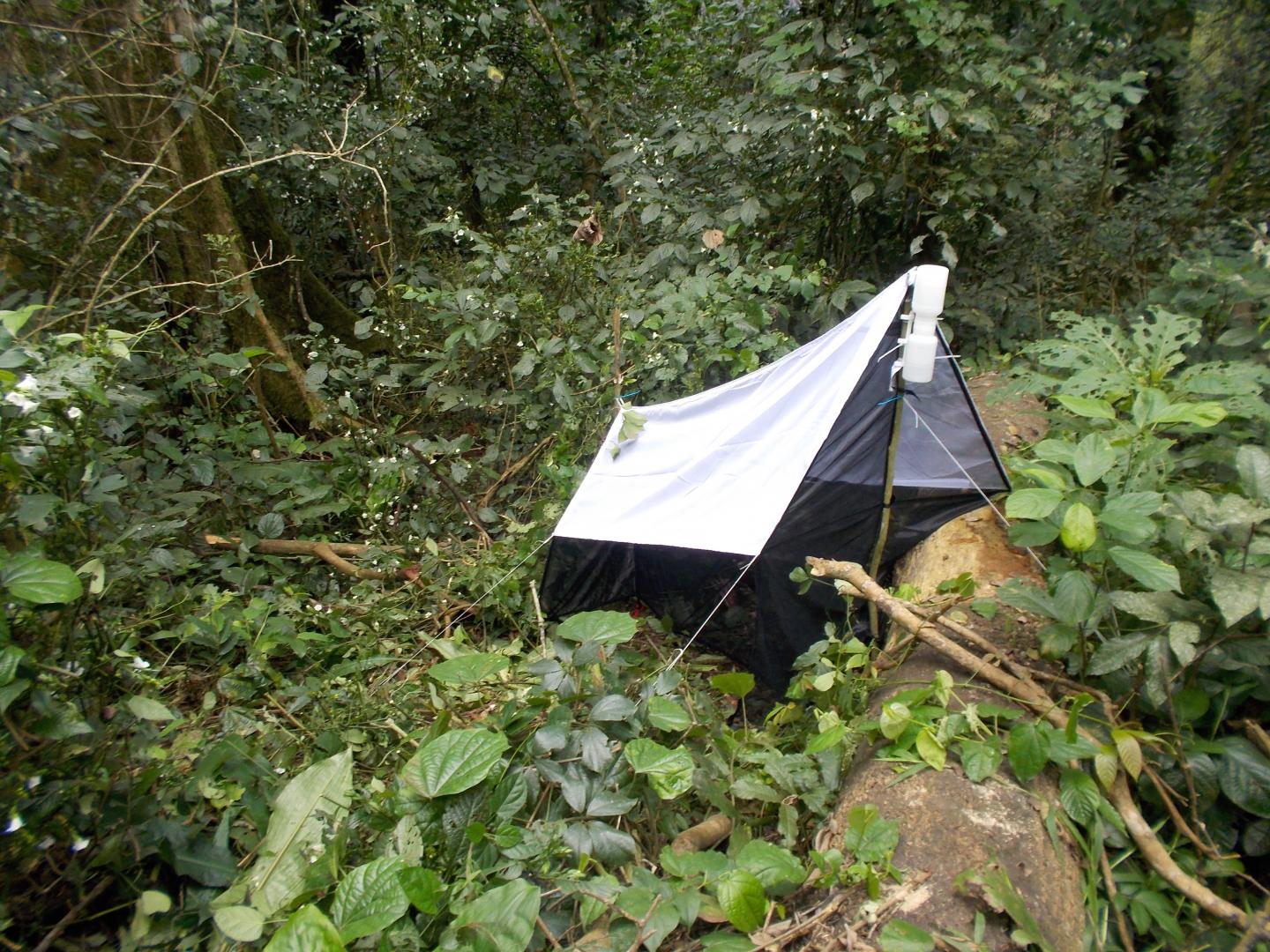
Credit: Photo: Tapani Hopkins


Scientists at the Biodiversity Unit of the University of Turku in Finland have studied the diversity of tropical parasitoid wasps for years. Parasitoid wasps are among the most species rich animal taxa on Earth, but their tropical diversity is still poorly known. Recently, the research group sampled Afrotropical rhyssine wasps, which are among the largest wasps. Scientists from three countries and research institutes participated in the research led by the University of Turku research group.

Rhyssines are sizeable wasps that parasitise the beetle or wasp larvae of decaying wood. The largest species can grow over ten centimetres in length. Females carry an extremely long ovipositor, which is used to drill through wood, stab and paralyse the host, and lay eggs.

Large-sized insect species are usually known better than small species, but tropical rhyssines are an exception.

“A good example of how poorly tropical rhyssines are known is the species Epirhyssa overlaeti, which is the largest African rhyssine. Only two females were known before, one collected in the 1930s in the Congo and the other one in Cameroon in the 1980s. Now, at one single Ugandan site, we found large numbers of both females and males. This completely changed what is known of the distribution of the species,” says Doctoral Candidate Tapani Hopkins from the Biodiversity Unit of the University of Turku, who led the project.

Scientists at the Biodiversity Unit of the University of Turku have previously studied the diversity of rhyssine wasps especially in the Amazonian lowland rainforest.

“In our Amazonian research, we have described ten large-sized South-American species new to science and our understanding of the diversity of South American tropical rainforest parasitoid wasps has changed. Extending the research to the African continent is important, because our goal is to understand the global diversity of the parasitoid insects which are extremely species rich,” says Professor in Biodiversity Research Ilari Sääksjärvi from the Biodiversity Unit of the University of Turku.

In the newest study, two new African tropical parasitoid wasp species were described.

“We named one of the new species Epirhyssa quagga, because its colouration resembles that of a zebra. The other species became Epirhyssa johanna. The name Johanna refers to my wife,” Hopkins says delightedly.

###

The research results were published on Monday, 7 October 2019 in the open access journal ZooKeys.

More information

Tapani Hopkins, Doctoral Candidate, Biodiversity Unit of the University of Turku, [email protected]

Ilari E. Sääksjärvi, Professor in Biodiversity Research, Biodiversity Unit of the University of Turku, t. +358 40 546 0976, [email protected]

Media Contact
Tapani Hopkins
[email protected]

Original Source

https://www.utu.fi/en/news/press-release/new-large-sized-insect-species-discovered-in-tropical-forest

Related Journal Article

http://dx.doi.org/10.3897/zookeys.878.37845

Tags: BiodiversityBiologyClimate ChangeEcology/EnvironmentEntomologyParasitology
Share13Tweet8Share2ShareShareShare2

Related Posts

How Plant Polyphenols May Rewrite the Epigenetic Damage That Drives Cancer

How Plant Polyphenols May Rewrite the Epigenetic Damage That Drives Cancer

September 24, 2026
Nearly All Childhood Shigella Infections in Tehran Now Resist Multiple Antibiotics

Nearly All Childhood Shigella Infections in Tehran Now Resist Multiple Antibiotics

September 24, 2026

How Plants Rewind Their Cells: The Molecular Secrets of De Novo Organogenesis

September 24, 2026

Larval Insecticide Exposure and Warmer Temperatures Reshape West Nile Virus Risk from Culex Mosquitoes

September 24, 2026
Please login to join discussion

POPULAR NEWS

  • Sleep Experts Urge Routine Classification of Central Hypopneas to Unlock Precision Therapy

    29 shares
    Share 12 Tweet 7
  • Bismuth Tungstate Wrapped in Conductive Polymer Yields Supercapacitor Electrode That Barely Fades Over 1,000 Cycles

    29 shares
    Share 12 Tweet 7
  • How Plant Polyphenols May Rewrite the Epigenetic Damage That Drives Cancer

    29 shares
    Share 12 Tweet 7
  • High Entropy Alloys Emerge as Powerful New Materials for Absorbing Electromagnetic Radiation

    29 shares
    Share 12 Tweet 7

About

We bring you the latest biotechnology news from best research centers and universities around the world. Check our website.

Follow us

Recent News

Sleep Experts Urge Routine Classification of Central Hypopneas to Unlock Precision Therapy

Bismuth Tungstate Wrapped in Conductive Polymer Yields Supercapacitor Electrode That Barely Fades Over 1,000 Cycles

How Plant Polyphenols May Rewrite the Epigenetic Damage That Drives Cancer

Subscribe to Blog via Email

Enter your email address to subscribe to this blog and receive notifications of new posts by email.

Join 85 other subscribers
  • Contact Us

Bioengineer.org © Copyright 2023 All Rights Reserved.

Welcome Back!

Login to your account below

Forgotten Password?

Retrieve your password

Please enter your username or email address to reset your password.

Log In
No Result
View All Result
  • Homepages
    • Home Page 1
    • Home Page 2
  • News
  • National
  • Business
  • Health
  • Lifestyle
  • Science

Bioengineer.org © Copyright 2023 All Rights Reserved.