• HOME
  • NEWS
  • EXPLORE
    • CAREER
      • Companies
      • Jobs
    • EVENTS
    • iGEM
      • News
      • Team
    • PHOTOS
    • VIDEO
    • WIKI
  • BLOG
  • COMMUNITY
    • FACEBOOK
    • INSTAGRAM
    • TWITTER
Wednesday, October 7, 2026
BIOENGINEER.ORG
No Result
View All Result
  • Login
  • HOME
  • NEWS
  • EXPLORE
    • CAREER
      • Companies
      • Jobs
        • Lecturer
        • PhD Studentship
        • Postdoc
        • Research Assistant
    • EVENTS
    • iGEM
      • News
      • Team
    • PHOTOS
    • VIDEO
    • WIKI
  • BLOG
  • COMMUNITY
    • FACEBOOK
    • INSTAGRAM
    • TWITTER
  • HOME
  • NEWS
  • EXPLORE
    • CAREER
      • Companies
      • Jobs
        • Lecturer
        • PhD Studentship
        • Postdoc
        • Research Assistant
    • EVENTS
    • iGEM
      • News
      • Team
    • PHOTOS
    • VIDEO
    • WIKI
  • BLOG
  • COMMUNITY
    • FACEBOOK
    • INSTAGRAM
    • TWITTER
No Result
View All Result
Bioengineer.org
No Result
View All Result
Home NEWS Science News Biology

New ‘jumping’ superbug gene discovered, resistant to last-resort antibiotic

Bioengineer by Bioengineer
May 7, 2019
in Biology
Reading Time: 2 mins read
0
IMAGE
Share on FacebookShare on TwitterShare on LinkedinShare on RedditShare on Telegram

IMAGE

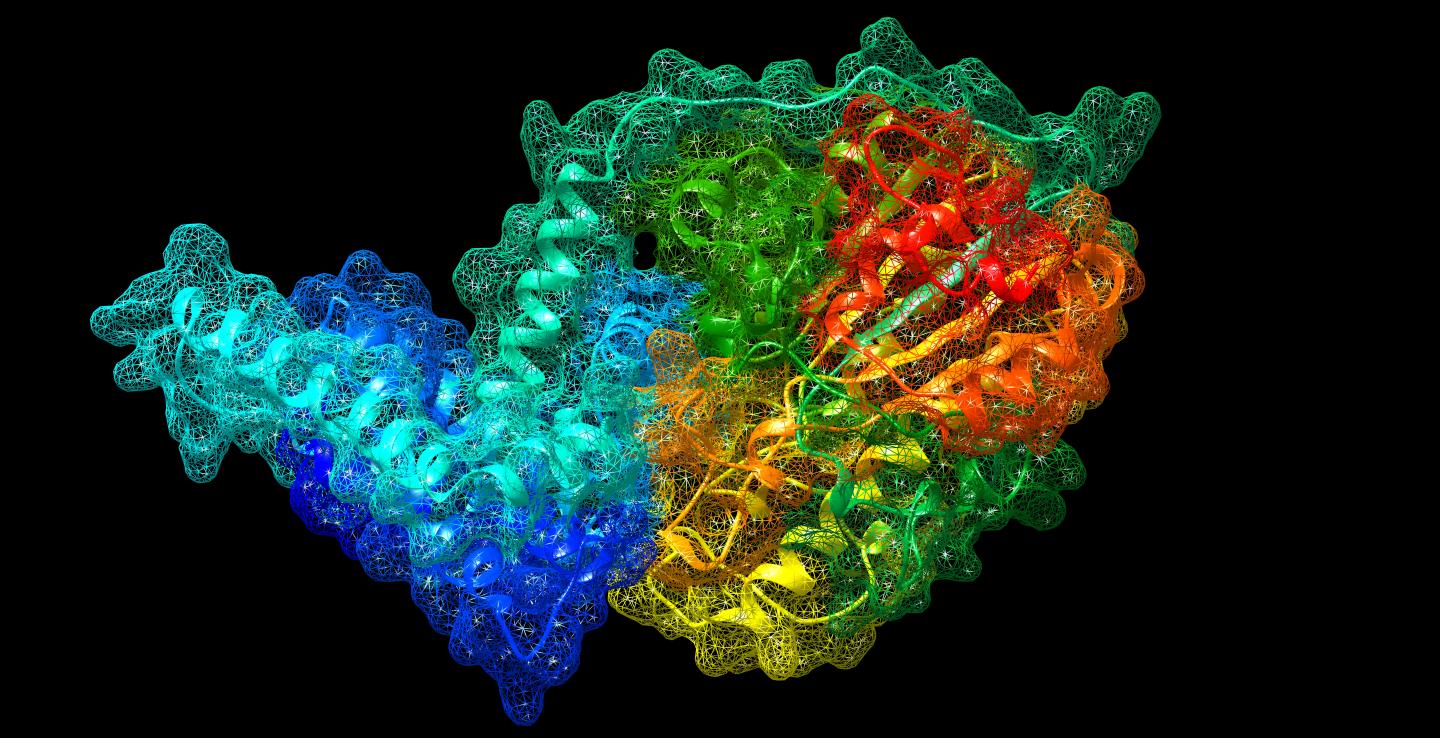
Credit: Ahmed Gaballa, Cornell University

ITHACA, N.Y. – While sifting through the bacterial genome of salmonella, Cornell University food scientists discovered mcr-9, a new stealthy, jumping gene so diabolical and robust that it resists one of the world’s few last-resort antibiotics.

Doctors deploy the antibiotic colistin when all other infection-fighting options are exhausted. But resistance to colistin has emerged around the globe, threatening its efficacy.

“This last-resort antibiotic has been designated a highest-priority antibiotic by the United Nations’ World Health Organization, and the mcr-9 gene causes bacteria to resist it,” said Martin Wiedmann, food safety professor and senior author on the study, published May 7 in the journal mBio. “In treatments, if colistin does not work, it literally could mean death for patients. If colistin resistance spreads, a lot of people will die.”

Co-lead author Laura Carroll, a computational biologist and Cornell doctoral candidate, found mcr-9 in the genome of a strain of foodborne pathogen salmonella.

Mcr-9 is the latest in this new series of “mobilized colistin-resistance” genes – originally discovered in 2015. The National Center for Biotechnology Information, part of the National Institutes of Health, has added details about this new gene to its database. Medical professionals and others can now use this information to identify mcr-9 in bacteria isolated from food products and people.

Details about mcr-9 in national and international databases enable scientists to develop better prevention and treatment, explained Wiedmann. “This improves our ability to get an early warning,” he said.

Bacteria isolated from food products can now be tested for mcr-9, and patients can be screened for colistin-resistant bacteria, which possess mcr-9.

“If you go to a hospital and this gene is floating around, that can be trouble. The gene is moveable. It jumps,” Wiedmann said. “In a hospital setting, being able to screen a patient for resistance allows doctors and nurses to isolate the patient and maintain biosecurity.”

###

In addition to Carroll and Wiedmann, co-authors were microbiologist Ahmed Gaballa, postdoctoral researcher Claudia Guldimann and graduate students Lory Henderson and Genevieve Sullivan.

This work was funded by the National Science Foundation’s Graduate Research Fellowship Program, with additional funding by the NSF Graduate Research Opportunities Worldwide, through a partnership with the Swiss National Science Foundation.

Cornell University has dedicated television and audio studios available for media interviews supporting full HD, ISDN and web-based platforms.

Media Contact
Lindsey Hadlock
[email protected]

Original Source

http://news.cornell.edu/stories/2019/05/cornell-scientists-discover-new-antibiotic-resistance-gene

Related Journal Article

http://dx.doi.org/10.1128/mBio.00853-19

Tags: BacteriologyBiologyFood/Food ScienceMedicine/HealthMicrobiologyMolecular Biology
Share12Tweet8Share2ShareShareShare2

Related Posts

AI Meets Nature: Massive Study Maps Biomimetic Research and Exposes a Surprising Energy Gap

AI Meets Nature: Massive Study Maps Biomimetic Research and Exposes a Surprising Energy Gap

October 6, 2026
Human Density, Not Climate, Drives Rodent-Borne Hemorrhagic Fever Risk in Southwest China

Human Density, Not Climate, Drives Rodent-Borne Hemorrhagic Fever Risk in Southwest China

October 6, 2026

Hidden Protein Networks Emerge as Central Players in Huntington’s Disease

October 6, 2026

Hibernating Squirrels Hold Clues to Diabetes and Muscle Loss in New NIH-Funded Study

October 6, 2026
Please login to join discussion

POPULAR NEWS

  • Alloys That Shrink Their Own Grains: New PIX Mechanism Refines Metals With Heat Alone

    Alloys That Shrink Their Own Grains: New PIX Mechanism Refines Metals With Heat Alone

    29 shares
    Share 12 Tweet 7
  • Endurance Exercise Reshapes the Liver in Males and Females Through Distinct Molecular Routes

    29 shares
    Share 12 Tweet 7
  • Single Transcription Factor PU.1 Rapidly Converts Fibroblasts into Macrophage-Lineage Cells

    29 shares
    Share 12 Tweet 7
  • New Scale Measures How Ready Nurse Educators Really Are for the AI Era

    29 shares
    Share 12 Tweet 7

About

We bring you the latest biotechnology news from best research centers and universities around the world. Check our website.

Follow us

Recent News

Alloys That Shrink Their Own Grains: New PIX Mechanism Refines Metals With Heat Alone

Endurance Exercise Reshapes the Liver in Males and Females Through Distinct Molecular Routes

Single Transcription Factor PU.1 Rapidly Converts Fibroblasts into Macrophage-Lineage Cells

Subscribe to Blog via Email

Success! An email was just sent to confirm your subscription. Please find the email now and click 'Confirm' to start subscribing.

Join 85 other subscribers
  • Contact Us

Bioengineer.org © Copyright 2023 All Rights Reserved.

Welcome Back!

Login to your account below

Forgotten Password?

Retrieve your password

Please enter your username or email address to reset your password.

Log In
No Result
View All Result
  • Homepages
    • Home Page 1
    • Home Page 2
  • News
  • National
  • Business
  • Health
  • Lifestyle
  • Science

Bioengineer.org © Copyright 2023 All Rights Reserved.