• HOME
  • NEWS
  • EXPLORE
    • CAREER
      • Companies
      • Jobs
    • EVENTS
    • iGEM
      • News
      • Team
    • PHOTOS
    • VIDEO
    • WIKI
  • BLOG
  • COMMUNITY
    • FACEBOOK
    • INSTAGRAM
    • TWITTER
Tuesday, April 14, 2026
BIOENGINEER.ORG
No Result
View All Result
  • Login
  • HOME
  • NEWS
  • EXPLORE
    • CAREER
      • Companies
      • Jobs
        • Lecturer
        • PhD Studentship
        • Postdoc
        • Research Assistant
    • EVENTS
    • iGEM
      • News
      • Team
    • PHOTOS
    • VIDEO
    • WIKI
  • BLOG
  • COMMUNITY
    • FACEBOOK
    • INSTAGRAM
    • TWITTER
  • HOME
  • NEWS
  • EXPLORE
    • CAREER
      • Companies
      • Jobs
        • Lecturer
        • PhD Studentship
        • Postdoc
        • Research Assistant
    • EVENTS
    • iGEM
      • News
      • Team
    • PHOTOS
    • VIDEO
    • WIKI
  • BLOG
  • COMMUNITY
    • FACEBOOK
    • INSTAGRAM
    • TWITTER
No Result
View All Result
Bioengineer.org
No Result
View All Result
Home NEWS Science News

New interactive tool will help farmers contain the spread of clubroot

Bioengineer by Bioengineer
September 28, 2020
in Science News
Reading Time: 2 mins read
0
IMAGE
Share on FacebookShare on TwitterShare on LinkedinShare on RedditShare on Telegram

IMAGE

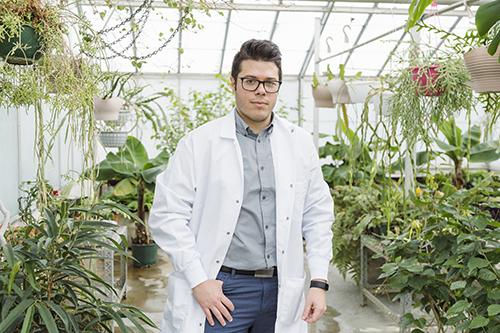
Credit: Edel Pérez-López

First described in the 13th century in Russia, clubroot has been affecting worldwide brassica production, including canola, broccoli, and black mustard, since. Clubroot is so tenacious because the casual pathogen produces resting spores that can survive in infected soil for decades, surviving harsh environments like cold winters and hot summers. It is also easily transferable from field to field when farmers share equipment.

In Canada, clubroot is a very serious threat to the $27 billion dollar canola industry. In the last ten years, clubroot has led to $500 million in losses. And while some Canadian provinces do a great job trying to trace the pathogen in canola fields, other fields, growing mainly Brassicas vegetables, have been overlooked, resulting in a growing clubroot infection.

“As a plant pathologist, my philosophy has always been to listen to the farmers. They know the problems that the scientists should try to tackle,” Edel Pérez-López, author of a paper recently published in Plant Health Progress, said. This attitude inspired him and his colleagues at the University of Calgary and the University of Saskatchewan to develop a new tool that will curtail the devastating effects of clubroot.

“ClubrootTracker is an interactive tool that will help farmers locate clubroot-infected areas and can be used by farmers, researchers, and industry and government representatives to share the clubroot status of their land,” explained Edel Pérez-López, one of the plant pathologists involved in the development of this tool. “We believe that the ClubrootTracker will be a gamechanger on the management of clubroot disease both in Canada and worldwide.”

The ClubrootTracker is the first tool that groups in one place the distribution of clubroot disease and while the team had the support of Saskatchewan Agriculture Development Fund and the Saskatchewan Canola Development Commission, Pérez-López pointed out that his team really didn’t need more than a computer and ideas to develop this new technology.

“There has been a widely positive response to the ClubrootTracker and many farmers and industry partners have showed interest in using it.”

###

This technology also has the potential to host the distribution of other plant pathogens affecting canola or any other crop. The authors have made the coding freely available to anyone who wants to use it or modify it for another pathogen or disease. To learn more, read “ClubrootTracker: A Resource to Plan a Clubroot-Free Farm” in the August issue of Plant Health Progress.

Media Contact
Ashley Bergman Carlin
[email protected]

Related Journal Article

http://dx.doi.org/10.1094/PHP-01-20-0003-RS

Tags: Agricultural Production/EconomicsAgricultureBioinformaticsBiologyBiotechnologyEcology/EnvironmentFood/Food SciencePlant Sciences
Share13Tweet8Share2ShareShareShare2

Related Posts

BIRC3/CAV1 Co-Expression Marks Aggressive GBM Target

April 14, 2026

Haloperidol Boosts Neuroprotection, Muscle Function in SMA

April 14, 2026

Water-Based Resistance Training Boosts Aging Brain Health

April 14, 2026

Preop T1 Slope Minus Lordosis Predicts Surgery Outcomes

April 14, 2026
Please login to join discussion

POPULAR NEWS

  • Scientists Investigate Possible Connection Between COVID-19 and Increased Lung Cancer Risk

    60 shares
    Share 24 Tweet 15
  • Boosting Breast Cancer Risk Prediction with Genetics

    47 shares
    Share 19 Tweet 12
  • Popular Anti-Aging Compound Linked to Damage in Corpus Callosum, Study Finds

    45 shares
    Share 18 Tweet 11
  • Revolutionary Theory Transforms Quantum Perspective on the Big Bang

    41 shares
    Share 16 Tweet 10

About

We bring you the latest biotechnology news from best research centers and universities around the world. Check our website.

Follow us

Recent News

BIRC3/CAV1 Co-Expression Marks Aggressive GBM Target

Haloperidol Boosts Neuroprotection, Muscle Function in SMA

Water-Based Resistance Training Boosts Aging Brain Health

Subscribe to Blog via Email

Success! An email was just sent to confirm your subscription. Please find the email now and click 'Confirm' to start subscribing.

Join 79 other subscribers
  • Contact Us

Bioengineer.org © Copyright 2023 All Rights Reserved.

Welcome Back!

Login to your account below

Forgotten Password?

Retrieve your password

Please enter your username or email address to reset your password.

Log In
No Result
View All Result
  • Homepages
    • Home Page 1
    • Home Page 2
  • News
  • National
  • Business
  • Health
  • Lifestyle
  • Science

Bioengineer.org © Copyright 2023 All Rights Reserved.