• HOME
  • NEWS
  • EXPLORE
    • CAREER
      • Companies
      • Jobs
    • EVENTS
    • iGEM
      • News
      • Team
    • PHOTOS
    • VIDEO
    • WIKI
  • BLOG
  • COMMUNITY
    • FACEBOOK
    • INSTAGRAM
    • TWITTER
Thursday, June 25, 2026
BIOENGINEER.ORG
No Result
View All Result
  • Login
  • HOME
  • NEWS
  • EXPLORE
    • CAREER
      • Companies
      • Jobs
        • Lecturer
        • PhD Studentship
        • Postdoc
        • Research Assistant
    • EVENTS
    • iGEM
      • News
      • Team
    • PHOTOS
    • VIDEO
    • WIKI
  • BLOG
  • COMMUNITY
    • FACEBOOK
    • INSTAGRAM
    • TWITTER
  • HOME
  • NEWS
  • EXPLORE
    • CAREER
      • Companies
      • Jobs
        • Lecturer
        • PhD Studentship
        • Postdoc
        • Research Assistant
    • EVENTS
    • iGEM
      • News
      • Team
    • PHOTOS
    • VIDEO
    • WIKI
  • BLOG
  • COMMUNITY
    • FACEBOOK
    • INSTAGRAM
    • TWITTER
No Result
View All Result
Bioengineer.org
No Result
View All Result
Home NEWS Science News Health

New in Ethics & Human Research, March-April 2019

Bioengineer by Bioengineer
March 25, 2019
in Health
Reading Time: 2 mins read
0
IMAGE
Share on FacebookShare on TwitterShare on LinkedinShare on RedditShare on Telegram

IMAGE

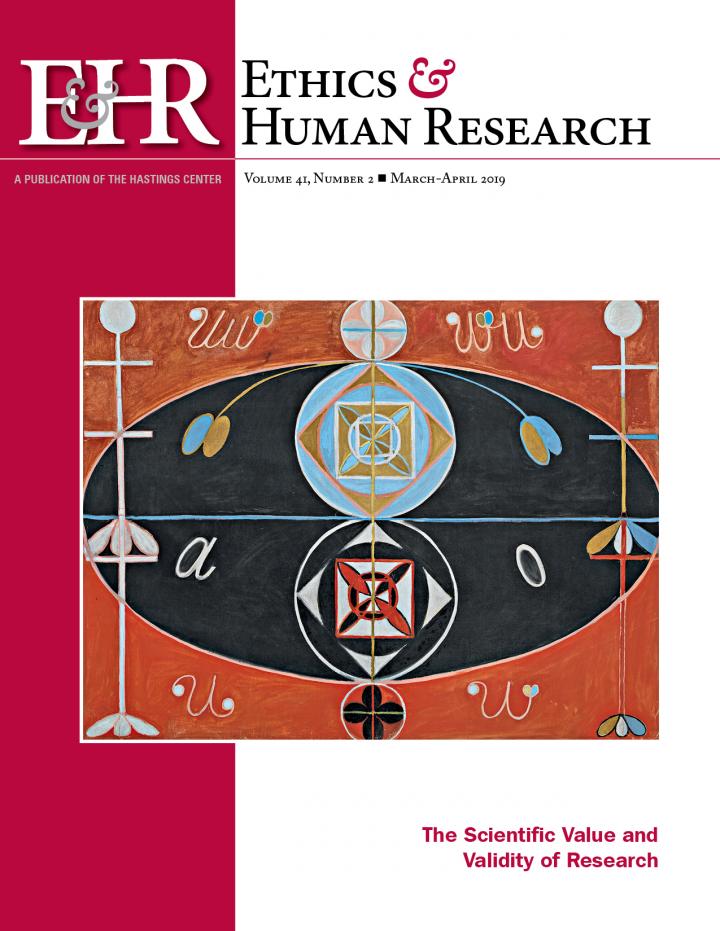
Evolution, No. 16, Group VI, The WUS/Seven-Pointed Star series (cat. 82), 1908

Anticipatory Waivers of Consent for Pediatric Biobanking

Jane A. Hartsock, Peter H. Schwartz, Amy C. Waltz, and Mary A. Ott

Almost half of the approximately 900 biobanks operating in the United States contain biospecimens, like blood or DNA, collected from minors with the permission of their parents or legal guardians. But federal regulations provide insufficient guidance on how researchers can use samples from pediatric donors once they turn 18, and tracking them down to ask for consent can be impracticable, time-consuming, and prohibitively expensive. The authors propose that, for studies that don’t involve greater risks than those found in daily life and meet other conditions, researchers could request a waiver that exempts them from having to obtain consent from participants at 18 if several conditions are met, including if those donors were over age 12 when they donated their biospecimen. These anticipatory waivers would be in line with evidence that many adolescents are developmentally capable of providing meaningful consent well before they reach legal adulthood. Hartsock, Schwartz, and Ott are at the Indiana University Center for Bioethics at the Indiana University School of Medicine; Waltz is at the Indiana University Human Subjects Office.

Case Study: U.S. Public Health Service STD Experiments in Guatemala (1946-1948) and Their Aftermath

Katye Spector-Bagdady and Paul A. Lombardo

More than 70 years after U.S. Public Health Service researchers conducted unethical experiments in Guatemala–intentionally exposing thousands of people to sexually transmitted diseases without informed consent and often with active deceit–no reparations have been given to still-living subjects or their relatives. This piece presents a case study of the experiments and the inadequate response to them by the entities that were directly involved. “While major regulatory systems were already in place by the time the experiments became publicly known, this case study demonstrates how far we still have to go to ensure that research subjects are protected through¬out the lifecycle of research and in its aftermath,” the authors write. Spector-Bagdady is the chief of the Research Ethics Service in the Center for Bioethics and Social Sciences in Medicine at the University of Michigan Medical School; Lombardo is a Regent’s professor and the Bobby Lee Cook professor of law in the Center for Law, Health and Society at Georgia State University College of Law.

Also in this issue:

  • A Framework for Assessing Scientific Merit in Ethical Review of Clinical Research
  • Human Biospecimens Come from People
  • Commentary: Humans as Model Organisms
  • Commentary: Cleaning Up the Lab Cages: Healthy Human Phase I Trials and Animal Welfare Requirements

###

For more information, contact:

Susan Gilbert

Director of Communications

The Hastings Center

[email protected]

845-424-4040 x 244

Media Contact
Susan Gilbert
[email protected]
Tags: Clinical TrialsHealth ProfessionalsMedicine/HealthPediatricsPolicy/EthicsPublic HealthScience/Health and the Law
Share13Tweet8Share2ShareShareShare2

Related Posts

Tracking Lanthanide-Labeled Microplastics in Plants

June 25, 2026

Neural Design Enables Zero-Shot Drug-Binding Proteins

June 25, 2026

Genomic Insights into Human Skin Fungi Diversity

June 25, 2026

Chiral Laser Gyroscopes Surpass Lock-In Limit

June 25, 2026
Please login to join discussion

POPULAR NEWS

  • Saying Goodbye to PGY-6: Pediatric Fellowship Realities

    103 shares
    Share 41 Tweet 26
  • Multi-Hospital Study Reveals Long Covid Burden Is Twice as High as Current Estimates

    92 shares
    Share 36 Tweet 23
  • Detection of EDCs in Breast Milk and Infant Urine Up to Six Months Highlights Early Exposure Risks

    77 shares
    Share 31 Tweet 19
  • New Drug Candidate Developed at McMaster Shows Potential for Treating Brain Cancer

    58 shares
    Share 23 Tweet 15

About

We bring you the latest biotechnology news from best research centers and universities around the world. Check our website.

Follow us

Recent News

Tracking Lanthanide-Labeled Microplastics in Plants

POSTECH Researchers Slash Cost of Reconstituted Cell-Free Systems by 95%

AI and Physics Collaborate to Design Advanced Hydrogen Storage Materials

Subscribe to Blog via Email

Success! An email was just sent to confirm your subscription. Please find the email now and click 'Confirm' to start subscribing.

Join 82 other subscribers
  • Contact Us

Bioengineer.org © Copyright 2023 All Rights Reserved.

Welcome Back!

Login to your account below

Forgotten Password?

Retrieve your password

Please enter your username or email address to reset your password.

Log In
No Result
View All Result
  • Homepages
    • Home Page 1
    • Home Page 2
  • News
  • National
  • Business
  • Health
  • Lifestyle
  • Science

Bioengineer.org © Copyright 2023 All Rights Reserved.