In a newly published theoretical reflection in Biological Theory, researchers Daniel O. Larson, Isabella Sarto-Jackson, and Barbara Fischer introduce integrative neurobiology and cultural context theory, an evolutionary framework designed to resolve how lived experience becomes biologically instantiated and transmitted across human generations. For decades, standard evolutionary models such as the Modern Synthesis treated genetic inheritance as the primary vector of heritable variation, often viewing the human brain as an instructional blueprint or a black box. Meanwhile, foundational frameworks within the extended evolutionary synthesis, including gene–culture coevolution, dual inheritance theory, and niche construction theory, demonstrated that organisms actively reshape selective environments and transmit complex behaviors across time. However, none of these earlier models identified the precise neurobiological machinery through which culturally scaffolded behaviors and emotional states become stabilized within functional brain architecture and inherited transgenerationally. Larson and colleagues propose cultural neurobiological inheritance systems, or CNIS, as the foundational mechanism that bridges cultural evolution and biological inheritance.
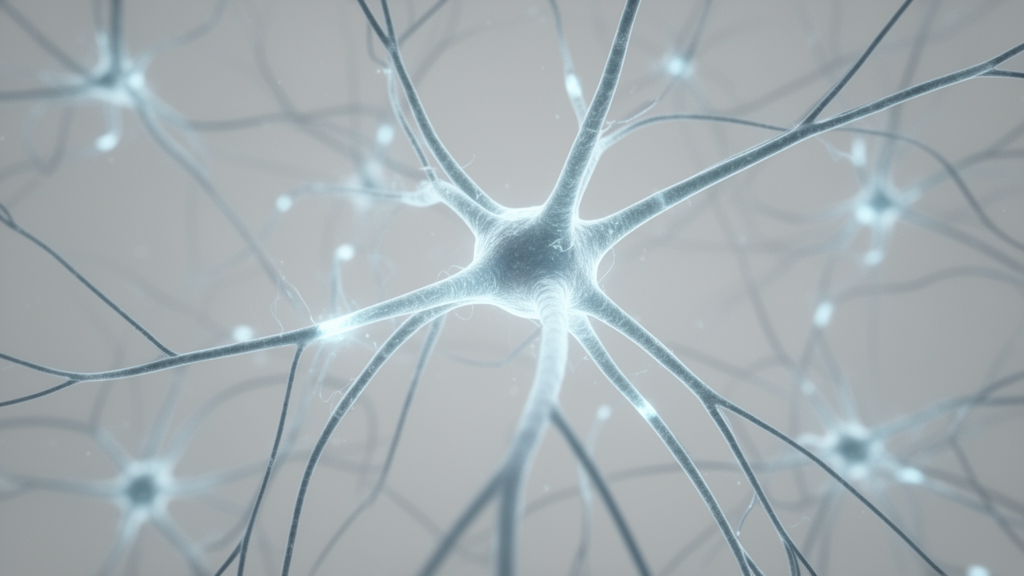
Integrative neurobiology and cultural context theory specifically challenges linear and gene-deterministic assumptions that map complex behavioral propensities directly onto genomic sequences or static, modular brain structures. Instead, the authors characterize the human brain as a selectional, dynamic organ whose microanatomy is continuously sculpted across ontogeny by environmental, social, and cultural inputs. Drawing on Gerald Edelman’s concept of neural Darwinism and Joseph LeDoux’s neurodevelopmental models, the authors emphasize that while gross neuroanatomy develops under genetic guidance, experiential activity selects and stabilizes specific synaptic patterns from variable preexisting connectivity. Across developmental windows, two primary plastic processes guide neural organization: experience-expectant plasticity, in which the brain is biologically prepared for anticipated social and sensory inputs through rapid synaptogenesis and subsequent synaptic pruning, and experience-dependent plasticity, which continues across the lifespan. Through these mechanisms, culturally structured environments directly reorganize neural networks, strengthening or weakening synaptic connections in response to experiential frequency and social reinforcement.
Central to this framework is the resolution of a core theoretical dilemma: while neuroplasticity implies malleability and continuous variation, any valid system of inheritance requires structural and informational stability across generational transfers. Larson and colleagues argue that cultural neurobiological inheritance systems achieve this required stability through the emergence of stable attractor states within recurrently activated neural networks. When individuals share a common cultural context, repeated social practices, rituals, and collective interactions provide reliable scaffolding that coordinates neural firing thresholds, dendritic spine consolidation, and neuromodulatory balance. Over developmental time, these coordinated interactions consolidate into durable engram ensembles, distributed across substrates including the hippocampus, neocortex, and prefrontal cortex. These stabilized functional architectures act as predictive priors that bias appraisal, social cognition, and emotional regulation, ensuring that individuals reared within similar cultural environments display converging neurobiological and behavioral phenotypes.
The authors identify three distinct components that constitute the physical and physiological substrate of cultural neurobiological inheritance systems. The first component consists of engrams and engram cell ensembles, which represent physical memory traces consolidated across hippocampal and cortical networks that can be reliably reactivated by environmental cues. The second component comprises baseline neuromodulatory and hypothalamic-pituitary-adrenal, or HPA, axis set points, which calibrate emotional reactivity, stress responses, and learning through circulating neurochemicals such as oxytocin, serotonin, dopamine, and cortisol. The third component involves network-level dispositions, characterized by stable coupling patterns and synaptic weights across distributed circuits, such as pathways linking the amygdala and prefrontal cortex or the default mode network. Together, these three elements form functional neural architectures that do not transmit fixed, static physical anatomy, but rather transfer dynamic, coordinated patterns of physiological functioning and behavioral propensity across generations.
Transmission within cultural neurobiological inheritance systems operates through both vertical and horizontal pathways via reliable developmental re-instantiation rather than the physical replication of neural tissue. Vertical transmission proceeds from parent to offspring through early attachment, maternal caregiving, and shared domestic contexts during sensitive developmental phases, which directly sculpts the offspring’s stress physiology, affect regulation, and corticolimbic circuitry. Horizontal transmission occurs among peers, institutions, and broader social groups through shared linguistic narratives, community rituals, and social alignment that synchronize neural activity patterns across contemporaries. Rather than operating in isolation from standard biology, cultural neurobiological inheritance systems participate in continuous reciprocal coevolution with genetic and epigenetic inheritance systems. In this reciprocal dynamic, culturally driven behaviors alter environmental niches, dietary exposures, and social stressors, which subsequently exert novel selective pressures on epigenetic markers and genomic variation over extended evolutionary timescales.
To establish empirical proof of concept for their theoretical framework, the researchers synthesize findings from rodent neurobiology, optogenetic engram manipulation, and clinical human studies.
In human populations, compelling evidence for cultural neurobiological inheritance systems emerges from transgenerational research on Holocaust survivors and their descendants, synthesized in comprehensive reviews by Dashorst and colleagues. The historical evidentiary record demonstrates that trauma exposure leads to persistent neuroendocrine and psychopathological alterations that appear in subsequent generations. Children of trauma survivors frequently exhibit dysregulated HPA-axis functioning, marked by atypical cortisol feedback loops, altered mineralocorticoid and glucocorticoid receptor dynamics, and altered epigenetic methylation patterns in genes such as FKBP5 and Olfr151. These physiological changes manifest as heightened risks for post-traumatic stress disorder, chronic anxiety, and altered corticolimbic development involving the prefrontal cortex, hippocampus, and amygdala. Larson and colleagues explain that these outcomes reflect the combined operation of vertical cultural neurobiological inheritance: parental stress profiles, behavioral narratives, and communicative practices interact with epigenetic states to re-instantiate altered stress architectures within offspring developing under domestic trauma scaffolding.
The framework further integrates cognitive neuroscience by linking cultural neurobiological inheritance systems to Theory of Mind and predictive processing models of human brain function. Research in cultural psychology and social neuroscience reveals that Theory of Mind—the cognitive capacity to infer and interpret the internal mental states of conspecifics—relies on coordinated neural activity across the posteromedial cortices, including the precuneus, posterior cingulate cortex, and retrosplenial regions. Functional neuroimaging demonstrates that emotional responses such as compassion and admiration are modulated by cultural relations and contextual framing rather than isolated emotional categories. Furthermore, studies of group evaluation indicate that preconscious amygdala activation to out-group faces is not an innate genetic reflex, but a learned cultural response that emerges during adolescence and remains modifiable through perceptual familiarity. Cultural learning thus systematically sculpts the neural circuits that govern empathy, in-group cooperation, and social prejudice.
By incorporating Bayesian brain theory and predictive processing, the authors conceptualize cultural neurobiological inheritance systems as the physiological substrate of internal predictive models. According to predictive processing principles formalized by Karl Friston and colleagues, the human brain functions as an inferential engine that continuously updates probabilistic internal models to minimize sensory prediction errors. Within integrative neurobiology and cultural context theory, experiential histories and cultural scaffolding directly construct neurobiological priors—the baseline expectations that guide how incoming sensory data are interpreted and acted upon. Because full Bayesian updating across all variables is computationally prohibitive, humans frequently rely on Bayesian sampling or evolved heuristics, as outlined by cognitive scientists such as Gerd Gigerenzer. These shared heuristics and cultural priors are transmitted horizontally and vertically, allowing groups to share behavioral coordination strategies, normative value systems, and adaptive survival practices without requiring each individual to rediscover them independently.
In concluding their assessment, Larson, Sarto-Jackson, and Fischer argue that human evolution must be understood as an inclusive continuum comprising three distinct yet interacting inheritance systems: genetic inheritance transmitting molecular templates, epigenetic inheritance transmitting regulatory gene expression states, and cultural neurobiological inheritance systems transmitting functional, experience-sculpted neural architectures. The authors caution against deterministic misinterpretations or biological reductionism, noting that individual resilience, varying levels of exposure, and changing sociocultural environments continually introduce adaptive diversity. They emphasize that establishing measurable cause-and-effect relationships among cultural contexts, developmental timing, and neurobiological structures is essential for designing effective humanitarian interventions for marginalized populations, victims of systemic discrimination, and communities affected by generational trauma. Ultimately, integrative neurobiology and cultural context theory provides an empirical roadmap that bridges anthropology and neuroscience, replacing persistent nature-versus-nurture dichotomies with a mechanistic science of reciprocal coevolution.
Subject of Research: Integrative neurobiology and cultural neurobiological inheritance systems in human evolution
Article Title: Integrative Neurobiology and Cultural Context Theory: The Role of Cultural Neurobiological Inheritance Systems
Article References: Larson, D. O., Sarto-Jackson, I., & Fischer, B. (2026). Integrative Neurobiology and Cultural Context Theory: The Role of Cultural Neurobiological Inheritance Systems. Biological Theory. https://doi.org/10.1007/s13752-026-00536-9
Image Credits: AI Generated
DOI: 10.1007/s13752-026-00536-9
Keywords: cultural neurobiological inheritance systems, integrative neurobiology, neuroplasticity, epigenetic inheritance, engram ensembles, HPA axis, predictive processing, Bayesian brain, Theory of Mind, transgenerational trauma, sociocultural scaffolding, experience-dependent plasticity, corticolimbic circuits, neural Darwinism, reciprocal coevolution, inclusive inheritance, prefrontal cortex, synaptic consolidation
News Source: Cassandra Pierce. (November 23, 2026). New Framework Explains How Culturally Sculpted Neural Circuits Pass Across Generations. Scienmag.