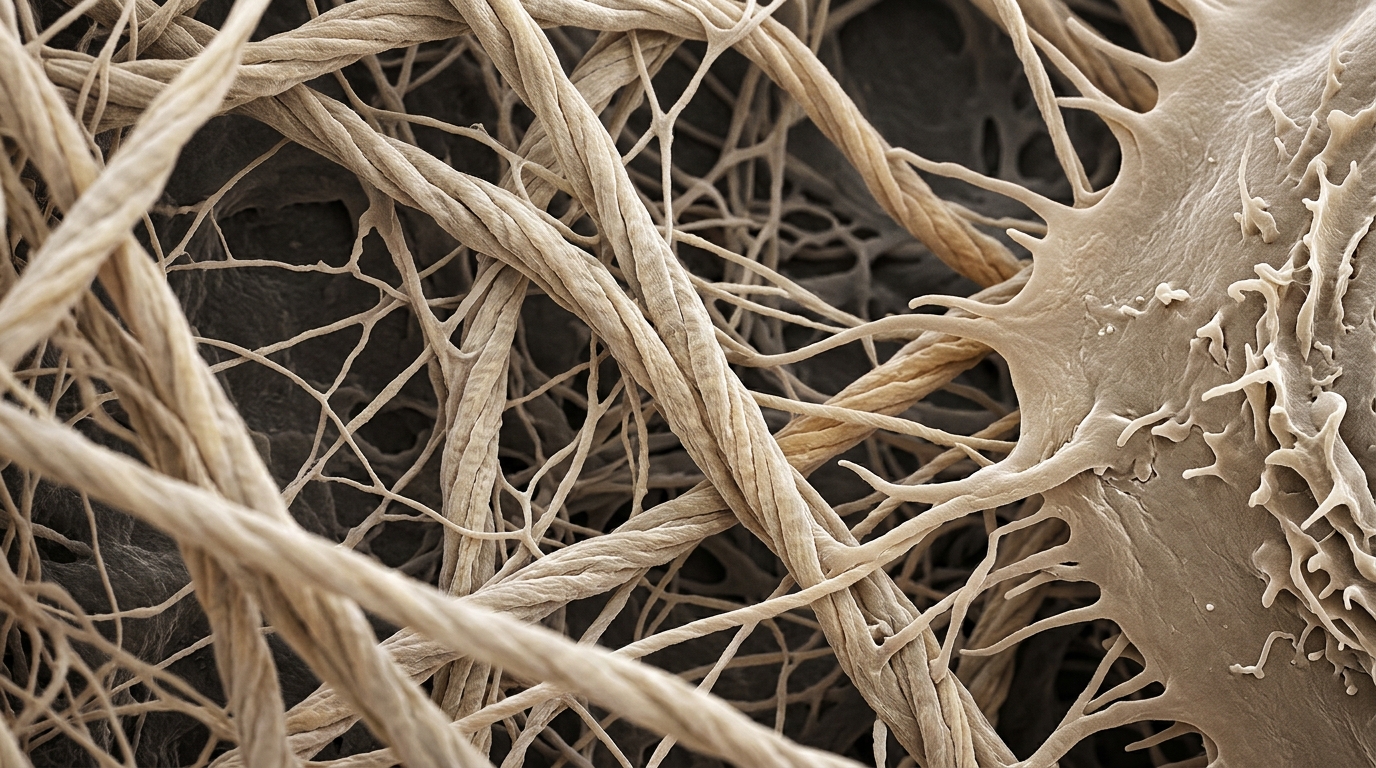
A theoretical and mathematical framework proposes that extracellular matrix components, lipid assemblies, and extracellular vesicles act as physical scaffolds to organize molecular chaperones into dynamic mesoscale networks. Developed by Maxim Shevtsov at the Technical University of Munich and published in Frontiers in Cell and Developmental Biology under the section Molecular and Cellular Pathology, the Extracellular Epichaperome Scaffold Theory challenges the traditional model that treats extracellular chaperones solely as individual soluble molecules or discrete protein complexes. Instead, the model establishes a formal physical basis for understanding the higher-order spatial organization of chaperones outside the cell.
Extracellular molecular chaperones, including heat shock proteins such as Hsp70 and Hsp90, are increasingly recognized as active regulators of cell signaling, intercellular communication, and tumor biology. Despite these recognized roles, the specific biophysical mechanisms that govern their higher-order assembly in the extracellular space have remained poorly defined. The new theory addresses this gap by describing how extracellular matrix polymers, self-assembled lipid structures, and extracellular vesicles provide physical templates that direct chaperone recruitment, connectivity, retention, exchange, and transport across extracellular microenvironments.
Within this theoretical model, chaperone recruitment and network connectivity are governed by a combination of multivalent protein-protein, electrostatic, hydrophobic, and scaffold-mediated interactions. These varied physical forces determine how individual chaperone molecules associate with structural elements in their environment.
The theory predicts that structural changes in supporting scaffolds alter the organization and electrostatic characteristics of the epichaperome matrix. Specifically, variations in scaffold geometry, packing density, mechanical deformation, and surface charge distribution are predicted to modify epichaperome structure, providing a theoretical foundation for a process termed Mechanochemical Electrostatic Gating.
A central tenet of the framework is the conceptual distinction between chaperone abundance and higher-order molecular organization. The mathematical and conceptual modeling predicts that identical concentrations of heat shock proteins can produce entirely different functional states depending on local scaffold composition and network topology.
The framework also describes how extracellular matrix polymers and lipid assemblies can cooperate to drive transitions from dispersed chaperones into integrated mesoscale networks. According to the model, changes in molecular valency, local concentration, and structural connectivity work together to promote this higher-order clustering.
By unifying these biophysical principles, the Extracellular Epichaperome Scaffold Theory establishes a potential physical connection linking extracellular matrix remodeling, supramolecular lipid organization, chaperone biology, and tumor-associated extracellular signaling. Ultimately, the work provides a mathematical and physical foundation for treating extracellular chaperones as integrated molecular networks rather than isolated soluble mediators in tissue microenvironments.
Subject of Research: Theoretical modeling of extracellular chaperone networks and matrix scaffolding
Article Title: The extracellular epichaperome scaffold theory: polymerized matrix, self-assembled lipids, and mesoscale organization of chaperone networks
Article References: Shevtsov, M. (2026). The extracellular epichaperome scaffold theory: polymerized matrix, self-assembled lipids, and mesoscale organization of chaperone networks. Frontiers in Cell and Developmental Biology, 14, Article 2014464. https://doi.org/10.3389/fcell.2026.2014464
Image Credits: AI Generated
DOI: 10.3389/fcell.2026.2014464
Keywords: extracellular epichaperome, molecular chaperones, heat shock proteins, extracellular matrix, scaffold theory, lipid assemblies, extracellular vesicles, mechanochemical electrostatic gating, Hsp70, Hsp90, mesoscale organization, tumor biology, cell signaling, intercellular communication, network topology, electrostatic regulation, matrix remodeling
News Source: Drew Townsend. (November 25, 2026). Theoretical Framework Links Extracellular Matrix Scaffolds to Chaperone Network Organization. Scienmag.