• HOME
  • NEWS
  • EXPLORE
    • CAREER
      • Companies
      • Jobs
    • EVENTS
    • iGEM
      • News
      • Team
    • PHOTOS
    • VIDEO
    • WIKI
  • BLOG
  • COMMUNITY
    • FACEBOOK
    • INSTAGRAM
    • TWITTER
Wednesday, May 13, 2026
BIOENGINEER.ORG
No Result
View All Result
  • Login
  • HOME
  • NEWS
  • EXPLORE
    • CAREER
      • Companies
      • Jobs
        • Lecturer
        • PhD Studentship
        • Postdoc
        • Research Assistant
    • EVENTS
    • iGEM
      • News
      • Team
    • PHOTOS
    • VIDEO
    • WIKI
  • BLOG
  • COMMUNITY
    • FACEBOOK
    • INSTAGRAM
    • TWITTER
  • HOME
  • NEWS
  • EXPLORE
    • CAREER
      • Companies
      • Jobs
        • Lecturer
        • PhD Studentship
        • Postdoc
        • Research Assistant
    • EVENTS
    • iGEM
      • News
      • Team
    • PHOTOS
    • VIDEO
    • WIKI
  • BLOG
  • COMMUNITY
    • FACEBOOK
    • INSTAGRAM
    • TWITTER
No Result
View All Result
Bioengineer.org
No Result
View All Result
Home NEWS Science News Biology

New E. coli-infecting bacteriophage introduced in PHAGE

Bioengineer by Bioengineer
January 14, 2020
in Biology
Reading Time: 3 mins read
0
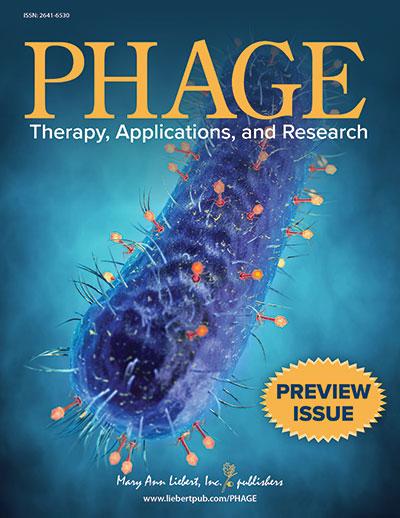
IMAGE
Share on FacebookShare on TwitterShare on LinkedinShare on RedditShare on Telegram

IMAGE

Credit: Mary Ann Liebert, Inc., publishers


New Rochelle, NY, January 14, 2020–A new coliphage – a bacteriophage that infects and can destroy Escherichia coli — is presented and characterized in PHAGE: Therapy, Applications, and Research, a new peer-reviewed journal from Mary Ann Liebert, Inc., publishers launching in early 2020. Click here to read the full-text article free on the PHAGE website through February 14, 2020.

The article entitled “Genome Sequence and Characterization of Coliphage vB_Eco_SLUR29.” was coauthored by Andrew Millard, University of Leicester, and colleagues from the University of Leicester, University of Warwick (Coventry), and University of Nottingham (Sutton Bonington), U.K. Coliphage have potential therapeutic applications, and more than 600 unique coliphage have been isolated and their genomes sequenced to date. The researchers isolated vB_Eco_SLUR29 from cattle slurry collected from a farm in rural England. They analyzed the ability of this novel coliphage to lyse E. coli and they sequenced its genome. They used transmission electron microscopy to identify the phase as a member of the Siphoviridae family, and they used physogenetic analysis and comparative genomics to identify it as part of a new genus within the subfamily Tunavirinae.

“In an increasing era of finding new phages that infect bacterial pathogens, it will be to our advantage as much as possible to systematically catalogue genomic and biological data collected on new phages,” said Martha Clokie, PhD, Editor-in-Chief of PHAGE and Professor of Microbiology, University of Leicester (U.K.). “To present newly isolated and characterized phages, we suggest they are written up as ‘phage introductions.’ I am very pleased that Andy Millard — who coined this concept — has written a key exemplar paper to showcase our first ‘introduction.’ Please meet coliphage vB_Eco_SLUR29!”

###

About the Journal

PHAGE: Therapy, Applications, and Research is the only peer-reviewed journal dedicated to fundamental bacteriophage research and its applications in medicine, agriculture, aquaculture, veterinary applications, animal production, food safety, and food production. Led by Editor-in-Chief, Martha Clokie, PhD, University of Leicester, United Kingdom, the Journal showcases groundbreaking research, reviews, commentaries, opinion pieces, profiles and perspectives dedicated to defining the roles of phages in all facets of microbiology and microbial ecology and exploring their potential to manipulate bacterial communities and treat infection. More information is available on the PHAGE website.

About the Publisher

Mary Ann Liebert, Inc., publishers is a privately held, fully integrated media company known for establishing authoritative peer-reviewed journals in many promising areas of science and biomedical research, including The CRISPR Journal, Human Gene Therapy, Microbial Drug Resistance, and Viral Immunology. Its biotechnology trade magazine, GEN (Genetic Engineering & Biotechnology News), was the first in its field and is today the industry’s most widely read publication worldwide. A complete list of the firm’s 90 journals, books, and newsmagazines is available on the Mary Ann Liebert, Inc., publishers website.

Media Contact
Kathryn Ryan
[email protected]
914-740-2250

Original Source

https://home.liebertpub.com/news/new-e-coli-infecting-bacteriophage-introduced-in-phage/3646

Related Journal Article

http://dx.doi.org/10.1089/phage.2019.0009

Tags: BacteriologyBiologyGenesMicrobiology
Share12Tweet8Share2ShareShareShare2

Related Posts

Cellular ‘All-Clear’ Signal Triggers Resumption of Protein Synthesis — Biology

Cellular ‘All-Clear’ Signal Triggers Resumption of Protein Synthesis

May 13, 2026
Hidden Giant Viruses Infect and Inherit in Algae — Biology

Hidden Giant Viruses Infect and Inherit in Algae

May 13, 2026

NAD(P)H Dehydrogenase Diversity Drives Clofazimine Resistance

May 13, 2026

Rhein Alleviates Intestinal Damage in Severe Acute Pancreatitis by Modulating Macrophage Activation via PPARγ

May 13, 2026
Please login to join discussion

POPULAR NEWS

  • Research Indicates Potential Connection Between Prenatal Medication Exposure and Elevated Autism Risk

    842 shares
    Share 337 Tweet 211
  • New Study Reveals Plants Can Detect the Sound of Rain

    729 shares
    Share 291 Tweet 182
  • Salmonella Haem Blocks Macrophages, Boosts Infection

    62 shares
    Share 25 Tweet 16
  • Breastmilk Balances E. coli and Beneficial Bacteria in Infant Gut Microbiomes

    57 shares
    Share 23 Tweet 14

About

We bring you the latest biotechnology news from best research centers and universities around the world. Check our website.

Follow us

Recent News

Prehistoric Danes Kept Fishing and Hunting Long After Agriculture Began

Engineered Electrical Synapse Enables Long-Term Brain Editing

Deep Learning Detects and Locates Heart Attacks

Subscribe to Blog via Email

Enter your email address to subscribe to this blog and receive notifications of new posts by email.

Join 82 other subscribers
  • Contact Us

Bioengineer.org © Copyright 2023 All Rights Reserved.

Welcome Back!

Login to your account below

Forgotten Password?

Retrieve your password

Please enter your username or email address to reset your password.

Log In
No Result
View All Result
  • Homepages
    • Home Page 1
    • Home Page 2
  • News
  • National
  • Business
  • Health
  • Lifestyle
  • Science

Bioengineer.org © Copyright 2023 All Rights Reserved.