• HOME
  • NEWS
  • EXPLORE
    • CAREER
      • Companies
      • Jobs
    • EVENTS
    • iGEM
      • News
      • Team
    • PHOTOS
    • VIDEO
    • WIKI
  • BLOG
  • COMMUNITY
    • FACEBOOK
    • INSTAGRAM
    • TWITTER
Saturday, June 6, 2026
BIOENGINEER.ORG
No Result
View All Result
  • Login
  • HOME
  • NEWS
  • EXPLORE
    • CAREER
      • Companies
      • Jobs
        • Lecturer
        • PhD Studentship
        • Postdoc
        • Research Assistant
    • EVENTS
    • iGEM
      • News
      • Team
    • PHOTOS
    • VIDEO
    • WIKI
  • BLOG
  • COMMUNITY
    • FACEBOOK
    • INSTAGRAM
    • TWITTER
  • HOME
  • NEWS
  • EXPLORE
    • CAREER
      • Companies
      • Jobs
        • Lecturer
        • PhD Studentship
        • Postdoc
        • Research Assistant
    • EVENTS
    • iGEM
      • News
      • Team
    • PHOTOS
    • VIDEO
    • WIKI
  • BLOG
  • COMMUNITY
    • FACEBOOK
    • INSTAGRAM
    • TWITTER
No Result
View All Result
Bioengineer.org
No Result
View All Result
Home NEWS Science News Health

New book explores novel techniques in minimally invasive sports medicine procedures

Bioengineer by Bioengineer
September 6, 2025
in Health
Reading Time: 2 mins read
0
IMAGE
Share on FacebookShare on TwitterShare on LinkedinShare on RedditShare on Telegram

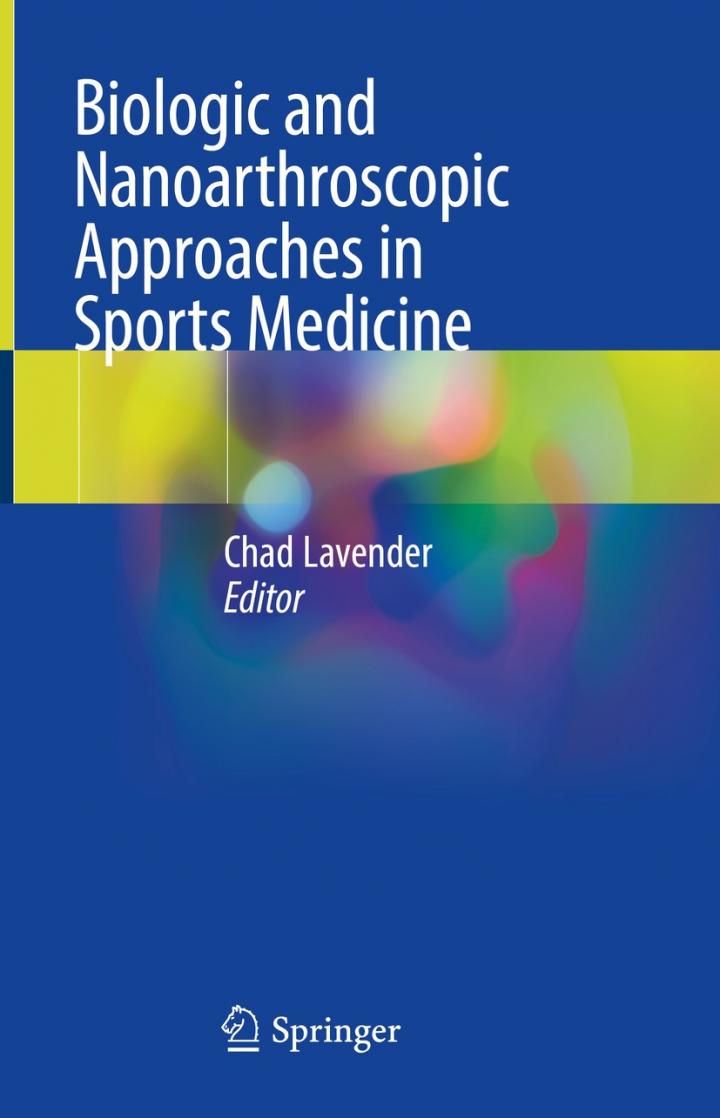
HUNTINGTON, W.Va. – A new book edited by Chad D. Lavender, M.D., an assistant professor of orthopaedic surgery at the Marshall University Joan C. Edwards School of Medicine, explores novel minimally invasive techniques and technology for treating sports medicine and orthopaedic injuries. Biologic and Nanoarthroscopic Approaches in Sports Medicine is a comprehensive compilation of experiences and lessons learned by the 20 contributing authors.

The book’s 19 chapters are divided into two main sections. The first section presents the history of the use of biologics in sports medicine and several chapters describing novel techniques using platelet-rich plasma (PRP) and bone marrow concentrate (BMC), all-inside allograft ACL reconstruction, minimally invasive quad tendon harvest with endoscopic closure and cartilage transfer (ACT) using an autologous tissue collector, among others. The second section describes the history of arthroscopy and the most recent use of nanoarthroscopy, including several novel techniques utilizing the nanoscope, such as incisionless partial medial meniscectomy, synovectomy of the knee and single incision approaches for the anterior labrum and rotator cuff.

“This book brings together many of the new, innovative techniques developed during the past two years into a single reference guide for surgeons,” Lavender said. “Our goal is the continuous improvement of patient outcomes, while inspiring surgeons to build on the techniques we present in this volume.”

Biologic and Nanoarthroscopic Approaches in Sports Medicine also provides the most recent management approaches for both sports medicine and orthopedic surgeons.

The edited volume includes contributors from Marshall University in Huntington, West Virginia, Allegheny Health Network in Pittsburgh, Pennsylvania, and Orthopaedic Research of Virginia in Richmond, Virginia.

###

About the editor:
Dr. Chad Lavender is an assistant professor at Marshall University Joan C. Edwards School of Medicine. He is board-certified in orthopaedic surgery and fellowship-trained in sports medicine. During the past three years, Dr. Lavender has published 13 articles in peer-reviewed journals, most notably his Fertilized ACL technique that is showing promising results at a clinical trial being performed at Marshall University. He has spoken on the techniques in this book to American and global audiences and continues to push the envelope with new technologies to improve his patients’ outcomes.

Chad Lavender (Ed.)

Biologic and Nanoarthroscopic Approaches in Sports Medicine

https://www.springer.com/us/book/9783030713225

2021, 174 p., 9 illus., 128 illus. in color

$89.00 | $199.99

ISBN: 978-3-030-71322-5

eBook ISBN: 978-3-030-71323-2

Media Contact
Michele McKnight
[email protected]

Original Source

https://jcesom.marshall.edu/news/musom-news/new-book-explores-novel-techniques-in-minimally-invasive-sports-medicine-procedures/

Tags: biologic treatmentsMedicine/Healthminimally invasive sports medicinenanoarthroscopyOrthopedic Medicineorthopedic surgery innovationssports injury managementSports MedicineSurgery
Share13Tweet8Share2ShareShareShare2

Related Posts

Mobile Team Reduces Medication Risks in Alzheimer’s Patients

June 6, 2026

Diazepam Response in Pediatric Status Epilepticus Study

June 6, 2026

KCNMA1 Balances Calcium–Potassium to Impact Ovarian Cancer

June 6, 2026

Optimizing Glutamatergic Neurons for Disease Research

June 6, 2026
Please login to join discussion

POPULAR NEWS

  • ESMO 2025: mRNA COVID Vaccines Enhance Efficacy of Cancer Immunotherapy

    322 shares
    Share 129 Tweet 81
  • Multi-Hospital Study Reveals Long Covid Burden Is Twice as High as Current Estimates

    89 shares
    Share 35 Tweet 22
  • Saying Goodbye to PGY-6: Pediatric Fellowship Realities

    78 shares
    Share 31 Tweet 20
  • Common Food Preservatives Associated with Elevated Blood Pressure and Increased Heart Disease Risk

    57 shares
    Share 23 Tweet 14

About

We bring you the latest biotechnology news from best research centers and universities around the world. Check our website.

Follow us

Recent News

Mobile Team Reduces Medication Risks in Alzheimer’s Patients

Diazepam Response in Pediatric Status Epilepticus Study

Extreme Rainfall and Tropical Waves on India’s Coast

Subscribe to Blog via Email

Enter your email address to subscribe to this blog and receive notifications of new posts by email.

Join 82 other subscribers
  • Contact Us

Bioengineer.org © Copyright 2023 All Rights Reserved.

Welcome Back!

Login to your account below

Forgotten Password?

Retrieve your password

Please enter your username or email address to reset your password.

Log In
No Result
View All Result
  • Homepages
    • Home Page 1
    • Home Page 2
  • News
  • National
  • Business
  • Health
  • Lifestyle
  • Science

Bioengineer.org © Copyright 2023 All Rights Reserved.