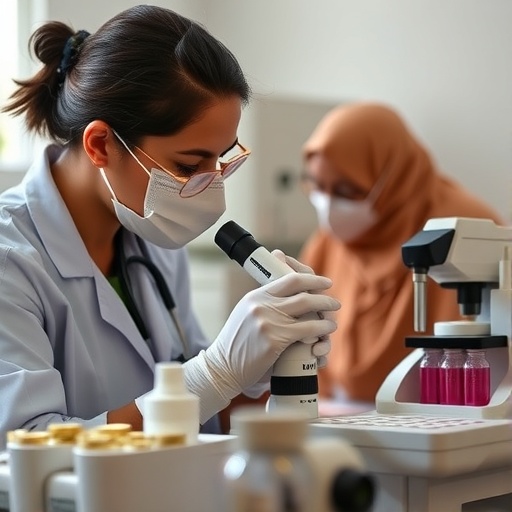
For people with lymphoma, the path from a suspicious symptom to a confirmed diagnosis can become a race against time. Swollen lymph nodes, fever, unexplained weight loss and persistent fatigue may signal cancer, but they can also arise from infections such as tuberculosis, immune disorders or other diseases. Distinguishing among these possibilities usually requires a surgical biopsy, followed by review from pathologists with specialized expertise in lymphoma. In many regions, that process can take weeks or even months, allowing aggressive disease to advance before treatment begins.
Researchers at MUSC Hollings Cancer Center and international collaborators have developed a blood-based screening platform that could help shorten this diagnostic bottleneck. Known as Access to Diagnosis using Liquid Biopsy, or ADLiB, the system combines several genetic and biological signals from a blood sample with machine learning. Its purpose is not to replace tissue biopsy, which remains essential for confirming lymphoma, but to identify patients who should be prioritized for urgent biopsy and specialist evaluation.
The study, published in HemaSphere, focuses on one of the most difficult settings for lymphoma diagnosis: regions where tuberculosis is common. Tuberculosis can cause enlarged lymph nodes, fever, fatigue and weight loss, closely resembling lymphoma. Katherine Antel, M.D., Ph.D., a Hollings physician-scientist and the study’s lead author, previously practiced and conducted research in South Africa. She said that the delays she observed there were surprisingly similar to challenges faced by patients in South Carolina, particularly those living far from major medical centers or specialized pathology services.
“Lymphoma is a global problem,” Antel said. “When I came to South Carolina, I was surprised to see many of the same challenges here that I see in other parts of the world: late diagnosis and limited access to specialized pathology expertise.” The problem can begin when patients undergo fine-needle aspiration, a minimally invasive procedure that removes individual cells rather than a larger piece of tissue. Although useful for many conditions, this approach may not provide enough architectural information to distinguish lymphoma from benign disease or to classify its subtype accurately.
A false-negative result can be particularly dangerous. Patients may be told that no cancer was found, only to return later with more advanced illness. “To diagnose lymphoma, you really need tissue,” Antel said. “A fine-needle aspiration can come back falsely negative. Patients are reassured, and then the diagnosis is missed until they become much sicker.” Surgical biopsy remains the standard because lymphoma diagnosis depends not only on identifying abnormal cells, but also on understanding how those cells are organized and which molecular features they carry.
ADLiB takes a different approach by searching the bloodstream for fragments of cell-free DNA. These tiny pieces of genetic material are released when cells die, and most originate from normal tissues. A small fraction may come from tumor cells, creating what Antel described as “a needle in a haystack.” The platform measures the amount of circulating tumor DNA and looks for lymphoma-associated mutations and chromosome alterations. It also examines immune-cell receptor patterns, which can reflect abnormal immune-cell populations, while screening for infectious pathogens that may mimic lymphoma, including tuberculosis.
Machine learning enables the test to interpret these signals together rather than relying on a single genetic marker. That distinction is important because lymphoma is not one disease but a broad group of cancers with diverse biological features. A mutation that appears in one lymphoma subtype may be absent in another, while the quantity of tumor DNA in blood can vary depending on tumor location and burden. By combining multiple weak or incomplete clues, the algorithm generates an overall estimate of how likely a patient is to have lymphoma.
The researchers first tested whether the platform could detect lymphoma-related genetic changes in laboratory materials and patient samples with known diagnoses. They then evaluated ADLiB in 124 adults in Cape Town who had enlarged lymph nodes. Approximately three-quarters were ultimately diagnosed with lymphoma, while the remaining participants had tuberculosis, benign conditions or metastatic solid tumors. About one-third were living with HIV, a group with a substantially elevated risk of lymphoma. Patients with lymphoma generally had higher concentrations of circulating tumor DNA and more cancer-associated mutations than participants whose lymph-node enlargement had other causes.
When the machine-learning system combined the available genetic and biological information, it correctly identified patients with lymphoma 95% of the time and distinguished them from those with noncancerous causes of enlarged lymph nodes with 92% accuracy. The findings suggest that a relatively simple blood draw could help clinicians decide which patients need to move rapidly through the diagnostic pathway. This could be especially valuable when lymph nodes are located deep in the chest or abdomen, where obtaining tissue is more complicated, or when a patient lives in an area without immediate access to a lymphoma specialist.
Antel emphasized that ADLiB is currently a triage tool, not a stand-alone cancer diagnosis. A positive result would signal the need for expedited tissue biopsy and further testing, while a negative result would not automatically rule out lymphoma. Future studies will refine the algorithm, assess its ability to distinguish lymphoma subtypes and test it in larger and more diverse populations. If those investigations confirm its performance, ADLiB could help connect high-risk patients with the right specialists sooner, reducing diagnostic delays in both resource-limited regions and wealthier health systems where rural access and pathology capacity remain uneven.
Subject of Research: People
Article Title: Access to diagnosis using liquid biopsy (ADLiB): Identifying lymphoma in a tuberculosis-endemic setting
News Publication Date: 29-May-2026
Web References: https://hollingscancercenter.musc.edu/ ; https://onlinelibrary.wiley.com/doi/10.1002/hem3.70394
References: HemaSphere. DOI: 10.1002/hem3.70394
Image Credits: Medical University of South Carolina; photo by Clif Rhodes
Keywords: Lymphoma, liquid biopsy, machine learning, circulating tumor DNA, cancer diagnosis, tuberculosis, cancer genetics, oncology, HIV, precision medicine
Tags: biopsy prioritization methodsblood-based cancer screeningchallenges in lymphoma diagnosis in tuberculosis-endemic areasearly detection of lymphomagenetic and biological markers for lymphomaimproving cancer diagnostics accessibilityliquid biopsy in resource-limited regionsLymphoma diagnosislymphoma differentiation from infectionsmachine learning in cancer diagnosticsnon-invasive lymphoma testingrapid cancer diagnosis technologies