Researchers specializing in post-stroke language disorders have demonstrated that classical neurological lesion frameworks can be applied directly to artificial neural networks to analyze how large language models process human speech and text. By systematically inducing artificial damage into model layers and subsequently administering standard clinical diagnostic batteries typically reserved for individuals with brain injuries, the investigators observed behavioral breakdowns that closely mirrored language deficits seen in human stroke survivors. The findings, published in the journal Patterns, establish a novel experimental framework for evaluating the internal failure modes of complex artificial intelligence systems using established neurological principles.
For more than a century and a half, clinicians and neuroscientists have mapped human brain functions by examining individuals with focal neurological damage and observing corresponding behavioral deficits. The research team, based at the University of South Carolina, recognized that large language models are trained extensively on human language datasets and might exhibit analogous impairment profiles when systematically damaged. Because these computational systems are increasingly deployed in real-world scenarios where operational failures carry significant consequences, understanding why specific systems fail remains an urgent interpretive priority for artificial intelligence research.
To explore this correspondence, the researchers developed an experimental framework designated as lesion-based interpretability. Within this paradigm, specific layers across the language models were intentionally perturbed to introduce synthetic lesions. The models were then evaluated using the exact diagnostic instruments administered to human patients recovering from stroke-induced language impairments. The researchers reported that these artificial interventions generated systematic disruptions in language and comprehension that closely aligned with the clinical presentations of human aphasia.
Study co-author Roger Newman-Norlund noted that large language models make errors in language, cognition, and comprehension that closely resemble human error patterns. Conducting this cross-domain comparison was facilitated by extensive empirical datasets collected by the laboratory, which specializes in stroke recovery and language difficulties. Corresponding author Julius Fridriksson explained that while prior comparisons between artificial systems and human linguistic processing have relied primarily on correlational observations, perturbing model layers and tracking subsequent deficits establishes a direct cause-and-effect relationship between specific layer disruptions and output errors.
The authors explicitly emphasized a critical limitation of the findings: the experimental approach identifies functional correspondence between patterns of failure rather than biological correspondence between anatomical brain structures and artificial network components. While the observed behavioral deficits mirror human clinical presentations, the physical and computational architectures remain fundamentally distinct. This distinction underscores that lesion-based interpretability serves as an operational diagnostic tool rather than proof of structural identity between brains and artificial networks.
Beyond basic interpretability, the investigators highlighted potential practical engineering applications for the technique. Probing artificial neural networks with lesion mapping could help demystify the inner mechanics of language models by revealing redundant or unnecessary processing components. Pinpointing nonessential network segments could inform the development of smaller, more energy-efficient computational architectures without compromising linguistic performance.
In clinical research, the authors proposed that lesion-modeled language systems could potentially be configured as digital twins for patients experiencing aphasia. Such computational analogs could eventually simulate preliminary stages of clinical trials and accelerate the translation of therapeutic interventions. Fridriksson noted that the underlying lesion-based paradigm could also extend to other neurological conditions beyond speech and language impairments, offering an empirical bridge between clinical neurology and computational modeling.
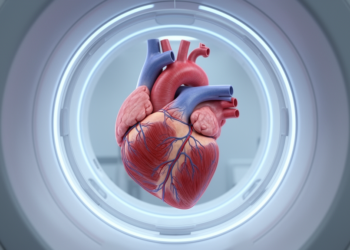
The foundation of this experimental strategy stems from the laboratory’s long-term clinical focus on aphasia, a disorder characterized by severe difficulties with speech and language resulting from strokes. In their clinical investigations, the research team applies multiple brain imaging modalities to evaluate how focal vascular injuries disrupt the specific human neural networks responsible for communicative control. The primary objective of these ongoing clinical initiatives remains patient recovery, but the extensive imaging records and diagnostic profiles gathered from stroke survivors provided the detailed comparative baseline necessary to evaluate artificial network outputs against real clinical symptoms.
By drawing upon this extensive repository of patient evaluations, the investigators were able to design tests that directly evaluated whether synthetic disruption across computational layers produced behavioral outputs matching genuine clinical aphasia. The authors emphasized that because large language models acquire their capabilities entirely through training on human linguistic corpora, subjecting these systems to the same behavioral batteries administered in neurological clinics offers an empirical method to determine why complex computational architectures fail under operational stress. Such systematic disruption provides insight into the internal functional organization of artificial intelligence tools that are increasingly deployed across high-stakes domains.
Looking beyond diagnostic interpretability, the investigators noted that this neurology-inspired framework may ultimately aid individuals coping with communication challenges. Future extensions of the methodology could support the development of computational digital twins designed to represent specific speech impairments, allowing scientists to model therapeutic scenarios and evaluate rehabilitative strategies more rapidly. Julius Fridriksson expressed optimism that researchers across computational and medical disciplines will embrace this lesion-based framework to advance discoveries across neurological conditions beyond stroke-induced language impairments, bridging clinical neurology and machine learning to improve patient outcomes.
Subject of Research: Lesion-based interpretability using stroke neurology methods to evaluate language model failure patterns
Article Title: Brain researchers afflict LLMs with "injuries" similar to those of stroke victims to unpack AI language mechanisms
Article References: Brain researchers afflict LLMs with "injuries" similar to those of stroke victims to unpack AI language mechanisms. Original publication (Bibliographic details unavailable.)
Image Credits: AI Generated
DOI: Not provided
Keywords: large language models, lesion-based interpretability, aphasia, stroke research, clinical neurology, computational simulation, Patterns journal, Cell Press, artificial intelligence, language processing, neural network perturbation, digital twins, cognitive testing, model interpretability, Julius Fridriksson, Roger Newman-Norlund, University of South Carolina
News Source: Cassandra Pierce. (November 20, 2026). Neurological Lesion Methods Applied to Language Models Reveal Shared Error Patterns. Scienmag.