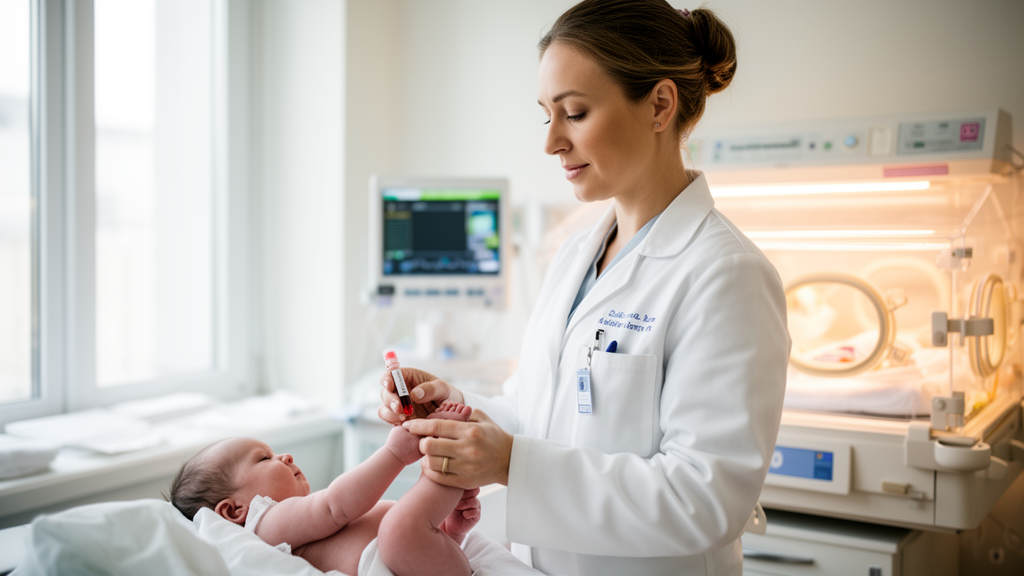
Kata Kovacs, a postdoctoral clinical researcher and neonatology fellow at the Department of Neonatology, Pediatric Center, Semmelweis University in Budapest, has been profiled in an Early Career Investigator biocommentary published in Pediatric Research. The commentary traces a career that bridges bedside neonatal care and clinical research, with a focus on neonatal encephalopathy and perinatal asphyxia, conditions in which early, precise biomarkers can dramatically alter a child’s health trajectory.
Kovacs was born and raised in Győr, Hungary, a historic city along the Danube, where an early fascination with human biology and physiology led her to Semmelweis University in Budapest. She earned her medical degree summa cum laude and completed a PhD in Clinical Medicine while undergoing specialty training in Pediatrics. In 2022, she participated in the Harvard Medical School Foundations of Clinical Research program to broaden her methodological skills.
Her research journey began during medical school, when she joined preclinical laboratories to explore cellular energy metabolism. Moving into clinical practice, she shifted toward tailoring personalized care for critically ill neonates and identifying clinical indicators that predict severe outcomes. Under the mentorship of Dr. Ágnes Jermendy and Prof. Miklós Szabó at Semmelweis University, she focused her postdoctoral work on optimizing the treatment of hemodynamic instability, including evaluating hydrocortisone supplementation during therapeutic hypothermia, and on discovering biochemical predictors of hypoxic-ischemic injury.
Alongside hemodynamic optimization, her latest study investigated early phosphate dynamics in infants with neonatal encephalopathy. The researchers identified that an elevated serum phosphate level as early as six hours of postnatal age is associated with significantly higher odds of in-hospital mortality, suggesting its potential as a prognostic biomarker. This is an observational association reported in the study; it identifies a marker linked to outcome rather than a demonstrated causal mechanism or a tested intervention.
The finding matters clinically because neonatal encephalopathy is a severe condition in which the first hours of life are when the smallest decisions carry the most weight, as Kovacs describes her motivation for committing to neonatology. A biomarker measurable within six hours of birth could, if validated in further research, help clinicians risk-stratify affected infants earlier in the course of care.
In her advice to emerging researchers, Kovacs recommends letting bedside clinical questions directly guide research hypotheses. She acknowledges that balancing clinical duties with academic inquiry is demanding, but says that identifying meaningful associations that help clinicians risk-stratify neonates makes every effort worthwhile.
Outside of medicine and research, Hungarian folk dancing has been a lifelong passion for Kovacs since childhood, and she notes that she finds balance as a mother of two young children. Her profile appears as an open access Comment article in Pediatric Research, published on 27 October 2026.
Subject of Research: Early career neonatology researcher Kata Kovacs and her study of serum phosphate as a prognostic biomarker in neonatal encephalopathy
Article Title: Kata Kovacs: ECI biocommentary
Article References: Kovacs, K. (2026). Kata Kovacs: ECI biocommentary. Pediatric Research. https://doi.org/10.1038/s41390-026-05592-2
Image Credits: AI Generated
DOI: 10.1038/s41390-026-05592-2
Keywords: Kata Kovacs, neonatology, neonatal encephalopathy, perinatal asphyxia, serum phosphate, prognostic biomarker, therapeutic hypothermia, hemodynamic instability, targeted neonatal echocardiography, Semmelweis University, Pediatric Research, early career investigator
News Source: Harold Sullivan. (October 27, 2026). Neonatal researcher Kata Kovacs links early phosphate levels to mortality risk in newborn encephalopathy. Scienmag.