• HOME
  • NEWS
  • EXPLORE
    • CAREER
      • Companies
      • Jobs
    • EVENTS
    • iGEM
      • News
      • Team
    • PHOTOS
    • VIDEO
    • WIKI
  • BLOG
  • COMMUNITY
    • FACEBOOK
    • INSTAGRAM
    • TWITTER
Tuesday, July 14, 2026
BIOENGINEER.ORG
No Result
View All Result
  • Login
  • HOME
  • NEWS
  • EXPLORE
    • CAREER
      • Companies
      • Jobs
        • Lecturer
        • PhD Studentship
        • Postdoc
        • Research Assistant
    • EVENTS
    • iGEM
      • News
      • Team
    • PHOTOS
    • VIDEO
    • WIKI
  • BLOG
  • COMMUNITY
    • FACEBOOK
    • INSTAGRAM
    • TWITTER
  • HOME
  • NEWS
  • EXPLORE
    • CAREER
      • Companies
      • Jobs
        • Lecturer
        • PhD Studentship
        • Postdoc
        • Research Assistant
    • EVENTS
    • iGEM
      • News
      • Team
    • PHOTOS
    • VIDEO
    • WIKI
  • BLOG
  • COMMUNITY
    • FACEBOOK
    • INSTAGRAM
    • TWITTER
No Result
View All Result
Bioengineer.org
No Result
View All Result
Home NEWS Science News Biology

Neonatal meningitis: the immaturity of microbiota and epithelial barriers implicated

Bioengineer by Bioengineer
July 9, 2021
in Biology
Reading Time: 3 mins read
0
IMAGE
Share on FacebookShare on TwitterShare on LinkedinShare on RedditShare on Telegram

IMAGE

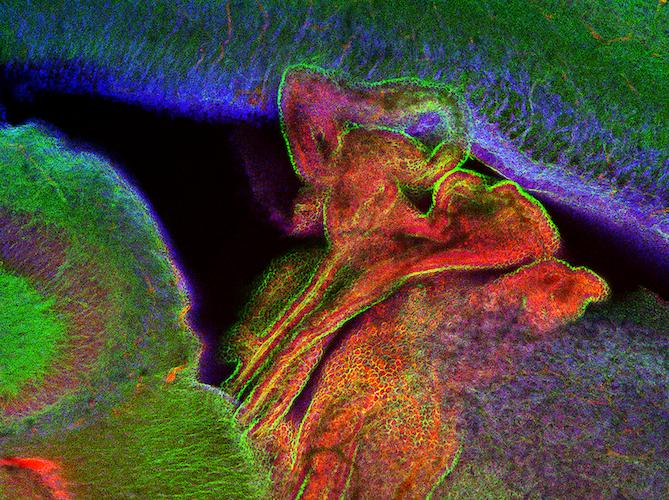
Credit: Biology of Infection Unit, Institut Pasteur

Meningitis is associated with high mortality and frequently causes severe sequelae. Newborn infants are particularly susceptible to this type of infection; they develop meningitis 30 times more often than the general population. Group B streptococcus (GBS) bacteria are the most common cause of neonatal meningitis, but they are rarely responsible for disease in adults. Scientists from the Institut Pasteur, in collaboration with Inserm, Université de Paris and Necker-Enfants Malades Hospital (AP-HP), set out to explain neonatal susceptibility to GBS meningitis. In a mouse model, they demonstrated that the immaturity of both the gut microbiota and epithelial barriers such as the gut and choroid plexus play a role in the susceptibility of newborn infants to bacterial meningitis caused by GBS. The findings were published in the journal Cell Reports on June 29, 2021.

Newborn infants are more likely to develop bacterial meningitis than children and adults. Group B streptococcus (GBS) is the pathogen responsible for a significant proportion of cases of neonatal meningitis. In most instances, infection is preceded by bacterial colonization of the gut. The commensal bacterial gut flora (known as the microbiota) plays a key physiological role, as it is involved in digestion, offers protection from gut pathogens and contributes to tissue differentiation and immune development. Newborns have no gut microbiota; it gradually develops in the first few weeks after birth.

In a new study, scientists from the Institut Pasteur, in collaboration with Inserm, Université de Paris and Necker-Enfants malades Hospital (AP-HP), demonstrated in a mouse model that the immaturity of the gut microbiota in neonates is involved in neonatal susceptibility to meningitis caused by GBS. In the absence of a mature microbiota, the bacteria can extensively colonize the gut. In the absence of a mature microbiota, the barrier function of blood vessels in the gut that the bacteria must cross to reach the brain through the bloodstream is also less effective, and the immune system is unable to control infection.

Unexpectedly, the scientists also demonstrated that, independently of the microbiota, the epithelial barriers formed by the gut and the choroid plexus (the interface between the blood and the cerebrospinal fluid that irrigates the brain) are not entirely mature in newborns, which facilitates bacterial access to the brain. The signaling pathway known as the Wnt pathway, which is involved in tissue growth and differentiation, is more active in newborns, resulting in a less effective barrier function at the gut and choroid plexus levels in neonates.

“In this study, we show how two factors associated with infancy – the immaturity of the gut microbiota and the growth of gut and choroidal epithelial tissues – play a role in the susceptibility of newborn infants to meningitis caused by GBS, at all stages of infection from gut colonization to dissemination in the brain,” explains Marc Lecuit (university professor/hospital practitioner, Université de Paris and Necker-Enfants Malades Hospital), head of the Biology of Infection Unit at the Institut Pasteur and Inserm and last author of the study.

The results of this research illustrate the importance of the microbiota and its critical role in protecting against infection.

###

Media Contact
Héloïse RAKOVSKY
[email protected]

Original Source

https://www.pasteur.fr/en/home/press-area/press-documents/neonatal-meningitis-immaturity-microbiota-and-epithelial-barriers-implicated

Related Journal Article

http://dx.doi.org/10.1016/j.celrep.2021.109319

Tags: BacteriologyBiologyCell BiologyInfectious/Emerging DiseasesMolecular BiologyParasitologyVirology
Share14Tweet9Share2ShareShareShare2

Related Posts

Enhancing bacteria to accelerate environmental cleanup processes

Enhancing bacteria to accelerate environmental cleanup processes

July 14, 2026
New Insights into Immune Checkpoints’ Role in Controlling Inflammation

New Insights into Immune Checkpoints’ Role in Controlling Inflammation

July 14, 2026

UMA Scientists Enhance Morphine’s Pain-Relief Effectiveness

July 14, 2026

Adolescent Brain Responses to Faces Could Forecast Social Development

July 13, 2026
Please login to join discussion

POPULAR NEWS

  • New Drug Candidate Developed at McMaster Shows Potential for Treating Brain Cancer

    58 shares
    Share 23 Tweet 15
  • Detection of EDCs in Breast Milk and Infant Urine Up to Six Months Highlights Early Exposure Risks

    77 shares
    Share 31 Tweet 19
  • Experimental Therapy Simultaneously Destroys Prostate Tumor Cells and Reactivates Antitumor Immunity

    46 shares
    Share 18 Tweet 12
  • 高齢者の骨粗鬆症治療の持続性比較

    51 shares
    Share 20 Tweet 13

About

We bring you the latest biotechnology news from best research centers and universities around the world. Check our website.

Follow us

Recent News

Multicenter Study Reveals New Strategies for ICU Rehabilitation and Nutrition

Advances and Challenges of Triboelectric Nanogenerators in Military Applications

Reducing Muscle Stiffness Could Help Myotonic Dystrophy Patients

Subscribe to Blog via Email

Enter your email address to subscribe to this blog and receive notifications of new posts by email.

Join 85 other subscribers
  • Contact Us

Bioengineer.org © Copyright 2023 All Rights Reserved.

Welcome Back!

Login to your account below

Forgotten Password?

Retrieve your password

Please enter your username or email address to reset your password.

Log In
No Result
View All Result
  • Homepages
    • Home Page 1
    • Home Page 2
  • News
  • National
  • Business
  • Health
  • Lifestyle
  • Science

Bioengineer.org © Copyright 2023 All Rights Reserved.