Session: C99, I Scream, You Scream, We All Scream for Lung Cancer Screening
Date and Time: 2:45 p.m. PT, Tuesday, May 17, 2022
Location: Room 205-206 (South Building, Level 2), Moscone Center
Credit: ATS
Session: C99, I Scream, You Scream, We All Scream for Lung Cancer Screening
Date and Time: 2:45 p.m. PT, Tuesday, May 17, 2022
Location: Room 205-206 (South Building, Level 2), Moscone Center
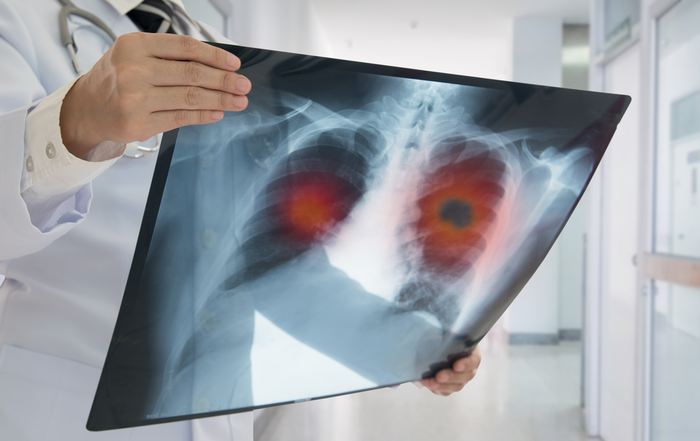
ATS 2022, San Francisco, CA – The first study to look at follow-up for patients deemed at high risk for lung cancer after CT screening found that 47 percent delayed follow-up care, according to research published at the ATS 2022 international conference.
“The fact that nearly half of all patients with abnormal findings in our study experienced delays in following up is alarming,” said the study’s presenting author, Alwiya Ahmed, MD, MPH, internal medicine resident at the University of Washington School of Medicine and physician-scientist at the Seattle Cancer Care Alliance and Fred Hutchinson Cancer Research Center. “Previous studies have shown that participation in lung cancer screening is low relative to other types of screening such as mammography and colorectal cancer screening, but this may be due in part to the fact that lung cancer screening is a relatively new service. Nonetheless, it is disconcerting to see that among those screened who have abnormal findings, there is a significant delay in recommended follow-up. This could ultimately result in delayed diagnosis of lung cancer.”
Dr. Ahmed and colleagues looked at patients enrolled in a Seattle-based CT lung cancer screening program who underwent baseline or annual screening between 2012 and January 2021. Findings were given four classifications based on the Lung-RADS assessment tool, established by the American College of Radiology—Lung-RADS 3, 4A, 4B and 4X—from low to high risk. Follow-up care consisted of a second CT scan, other appropriate imaging, and/or specialty consultation or procedure. Delay time was considered more than 30 days past the recommended follow up, and 30 days for all 4B and 4X patients, who had very suspicious findings.
Three-hundred ninety-seven patients with 464 exams had high-risk findings. Fifty-nine patients (15 percent) were ultimately diagnosed with lung cancer. Median delay time was 91 days, although those with the most severe findings had shorter delays (32 days for Lung-RADS 4B and 4X). Current smokers had longer delays than former smokers, placing them at higher risk for lung cancer.
“Interventions are needed at both the provider and patient levels to ensure that high-risk patients receive adequate follow-up,” said Dr. Ahmed.
Lung cancer remains the leading cause of cancer-related deaths. Lung cancer screening with low-dose chest CT is an evidence-based tool to reduce mortality in patients at the highest risk. Although a number of recent studies have looked at (and found) poor follow-up rates among those with negative baseline exams, until this study, there was no research that examined delays in follow-up for high-risk findings, which are more likely to result in lung cancer diagnoses.
Dr. Ahmed said, “When I started this research with my mentor Dr. Matthew Triplette, I was surprised to learn that most studies focused on the uptake of lung cancer screening and nothing beyond that. There has been quite a bit of work to understand and improve long-term maintenance for people with normal screening exams, but little research on abnormal findings. Given the likely impact of a delay in diagnosis, we are hopeful that our study will spur additional research in this area.”
VIEW ABSTRACT
You may also be interested in other newsworthy research that addresses lung cancer screening, such as Dr. Roger Kim’s presentation “Association of Socioeconomic Status with Adherence to Annual Lung Cancer Screening.”
CONTACT FOR MEDIA (AT SEATTLE CANCER CARE ALLIANCE):
Heather Platisha