• HOME
  • NEWS
  • EXPLORE
    • CAREER
      • Companies
      • Jobs
    • EVENTS
    • iGEM
      • News
      • Team
    • PHOTOS
    • VIDEO
    • WIKI
  • BLOG
  • COMMUNITY
    • FACEBOOK
    • INSTAGRAM
    • TWITTER
Monday, May 11, 2026
BIOENGINEER.ORG
No Result
View All Result
  • Login
  • HOME
  • NEWS
  • EXPLORE
    • CAREER
      • Companies
      • Jobs
        • Lecturer
        • PhD Studentship
        • Postdoc
        • Research Assistant
    • EVENTS
    • iGEM
      • News
      • Team
    • PHOTOS
    • VIDEO
    • WIKI
  • BLOG
  • COMMUNITY
    • FACEBOOK
    • INSTAGRAM
    • TWITTER
  • HOME
  • NEWS
  • EXPLORE
    • CAREER
      • Companies
      • Jobs
        • Lecturer
        • PhD Studentship
        • Postdoc
        • Research Assistant
    • EVENTS
    • iGEM
      • News
      • Team
    • PHOTOS
    • VIDEO
    • WIKI
  • BLOG
  • COMMUNITY
    • FACEBOOK
    • INSTAGRAM
    • TWITTER
No Result
View All Result
Bioengineer.org
No Result
View All Result
Home NEWS Science News

Navy lab develops long range fever detector

Bioengineer by Bioengineer
September 24, 2020
in Science News
Reading Time: 2 mins read
0
IMAGE
Share on FacebookShare on TwitterShare on LinkedinShare on RedditShare on Telegram

Available via royalty-free license agreement
IMAGE

Credit: Courtesy NSWC-Crane

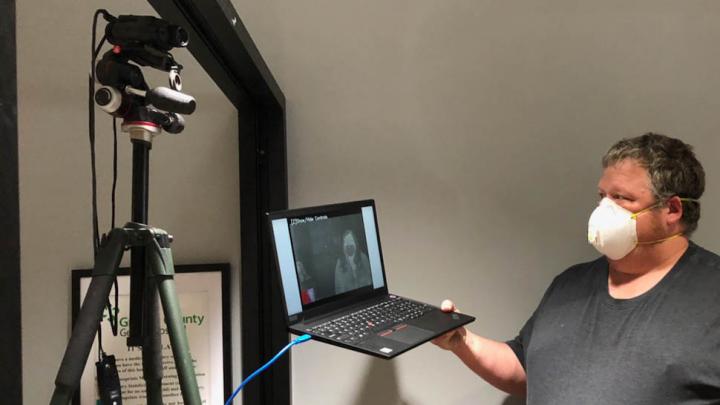
A federal research facility in Crane, Indiana, has developed a temperature scanning sensor system and software to help contain the coronavirus.

The U.S. Naval Surface Warfare Center’s “sensor agnostic thermal imaging system” was licensed to Greene County General Hospital, according to a news release Tuesday, allowing the staff to detect feverish persons up to 200 yards away.

“Since the tech can detect temperatures in a crowd and from a long distance, it’s more flexible than other solutions we had been looking at,” said Stacy Burris, the hospital’s director of community outreach. “This will cause less interruption in normal operations and allow for more social distancing between staff and anyone coming into the hospital. That could mean less screening staff having to quarantine from exposure.”

The U.S. has suffered more than 200,000 deaths from the coronavirus, adding to the one million globally. And public health experts are concerned that a COVID-19 resurgence is mounting as the weather cools and schools and universities reopen.

High body temperature is a key indicator of COVID-19 infection. Burris said the hospital had not found a system for fever detection until they learned of Crane’s thermal imaging technology.

“Without Crane, we might still be weighing the pros and cons of other solutions,” she said. “Instead, we’re already working to schedule a time for the Crane scientists to set the equipment up.”

The software runs on any laptop with USB capability, which is paired with a capture card, a commercial infrared sensor, and a calibrated black body, a temperature reference tool that the software compares with the temperature of a person.

The Navy’s software-enabled system, invented by Aaron Cole and Marcin Malec, is also capable of detecting fevers in near real-time – every 0.016 seconds and works on individuals and moving crowds.

Tech Transfer Opportunity

The Navy’s temp-scanning invention, a novel combination of technical knowledge, sensors, and software, was made available to the hospital via a royalty-free license agreement and a cooperative research and development agreement, with support from Radius Indiana, an economic development agency, and TechLink, the Department of Defense’s national partnership intermediary for tech transfer.

In April, the Navy lab’s Tech Transfer Office, led by Ms. Jenna Dix, made its 300+ patent portfolio available through a new “Rapid Response Licensing Program,” giving licensees up to 18 months to develop COVID-19 related applications before paying the royalties normally part of a patent license agreement.

Dix said that tech transfer allows federal R&D to spur growth in the private sector, creating jobs and new tech solutions for the public. Dix said other private companies and entrepreneurs can also license then use, or license to manufacture and sell, the temp-checking tech.

“This technology was made for sailors and Department of Defense civilians, but has applicability just about anywhere,” said Dix. “We want Crane’s resources to be made available to others-out of the lab and right into the hands of the public.”

###

Media Contact
Troy Carter
[email protected]

Original Source

https://techlinkcenter.org/news/navy-lab-develops-long-range-temp-scanning-tech-distributing-as-covid-19-worries-linger

Tags: Biomedical/Environmental/Chemical EngineeringHealth Care Systems/ServicesMedicine/HealthPublic HealthResearch/DevelopmentTechnology Transfer
Share12Tweet8Share2ShareShareShare2

Related Posts

New Post-Hoc Analysis Explores Daily Oral Orforglipron Use in Adults Over 65 with Obesity, Regardless of Diabetes Status

May 11, 2026

Evaluating Digoxin Use in Patients with Symptomatic Rheumatic Heart Disease

May 10, 2026

Evaluating the Effectiveness and Safety of Digitalis Glycosides in Treating Heart Failure

May 10, 2026

Urdu Fall Risk Questionnaire Adapted for Elderly

May 10, 2026
Please login to join discussion

POPULAR NEWS

  • Research Indicates Potential Connection Between Prenatal Medication Exposure and Elevated Autism Risk

    840 shares
    Share 336 Tweet 210
  • New Study Reveals Plants Can Detect the Sound of Rain

    727 shares
    Share 290 Tweet 181
  • Salmonella Haem Blocks Macrophages, Boosts Infection

    61 shares
    Share 24 Tweet 15
  • Breastmilk Balances E. coli and Beneficial Bacteria in Infant Gut Microbiomes

    57 shares
    Share 23 Tweet 14

About

We bring you the latest biotechnology news from best research centers and universities around the world. Check our website.

Follow us

Recent News

New Post-Hoc Analysis Explores Daily Oral Orforglipron Use in Adults Over 65 with Obesity, Regardless of Diabetes Status

Evaluating Digoxin Use in Patients with Symptomatic Rheumatic Heart Disease

Evaluating the Effectiveness and Safety of Digitalis Glycosides in Treating Heart Failure

Subscribe to Blog via Email

Enter your email address to subscribe to this blog and receive notifications of new posts by email.

Join 82 other subscribers
  • Contact Us

Bioengineer.org © Copyright 2023 All Rights Reserved.

Welcome Back!

Login to your account below

Forgotten Password?

Retrieve your password

Please enter your username or email address to reset your password.

Log In
No Result
View All Result
  • Homepages
    • Home Page 1
    • Home Page 2
  • News
  • National
  • Business
  • Health
  • Lifestyle
  • Science

Bioengineer.org © Copyright 2023 All Rights Reserved.